
Some links in this article are affiliate links. If you buy through them, we may earn a commission at no extra cost to you.
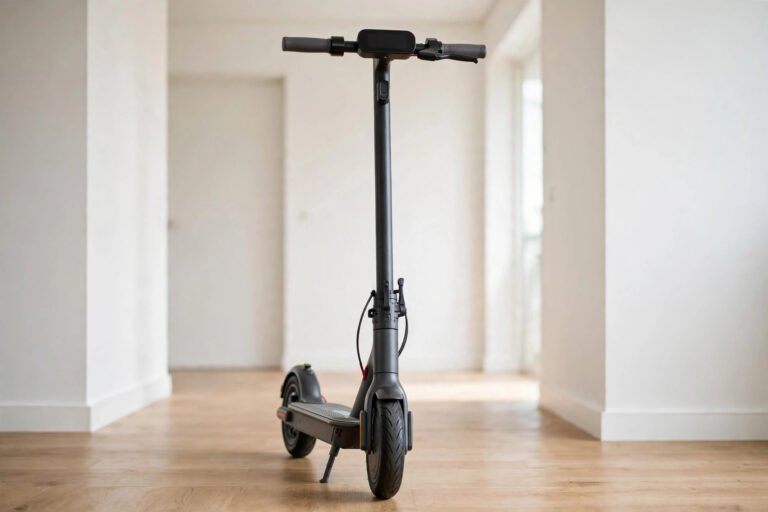
Your scooter’s range has collapsed. It used to do the commute and back; now it barely does one way, and the percentage drops in cliffs — 60, then 40, then dead. The question is whether you buy a new battery or a new scooter — and on a cheap scooter, the battery can cost more than the scooter. A replacement pack costs $150 to $450, and a $150–$300 pack on a Phantomgogo costs more than the scooter it goes into. This guide gives you the three numbers that decide it, the signs that the pack is finished, and the safety rules for the swap — because the maths is simple, and the wrong answer is expensive.
In this guide
The short answer
If the pack costs more than about 40 percent of a better new scooter, the money belongs in the new scooter. A 48-volt pack at $150–$300 makes sense in a MAX G3 and no sense at all in a Phantomgogo. The pack is the decision — and on our cheapest scooters, the pack is the whole scooter. Run the three numbers below, and the answer is arithmetic, not a guess.
The three numbers that decide it
Three numbers decide whether a new battery is worth it, and all three are yours to find before you spend anything.
First, the pack. What does a replacement pack cost for your scooter’s voltage? Levy Electric’s general cost bands, via scootergearlab: a 36-volt pack runs about $80–$150, a 48-volt pack about $150–$300, and a 60-volt pack about $300–$800. A shop swap adds roughly $50–$100 in labour on top of the part. These are general bands, not our catalogue — no replacement pack is in our catalogue, and this guide links no pack at all.
Second, the 40 percent rule. Take the pack cost and compare it with a better new scooter, not with your old one. If the pack costs more than about 40 percent of a better new scooter, buy the new scooter. The new scooter comes with a new battery, a new warranty, and a frame, brakes and tyres that are not three years old. Forty percent is the line where the repair stops being a repair and starts being a bad purchase.
Third, the signs. Is the pack actually finished, or is something else wrong? Range collapse past 60 percent of claimed, the percentage dropping in cliffs, swelling or heat on charge, and a pack that will not hold a charge in storage — those are the signs of a dead pack. A scooter that simply feels slow may need tyres, brakes or a firmware update, and none of those costs a battery. Spend the pack money only when the signs say the pack is the problem.

The nine scooters — the replace-vs-buy maths
Our nine scooters, with what each one costs new today and what a pack for it would run. This is the number the pack has to beat.
| Scooter | New price | Battery | Pack band |
|---|---|---|---|
| Phantomgogo Electric Scooter | Check latest price | Check the label | Check the label |
| WERHY 500W Adult Scooter | Check latest price | Check the label | Check the label |
| HopCycle Electric Scooter | Check latest price | 281Wh (36V) | 36V: $80–$150 |
| Segway Ninebot E2 Plus | Check latest price | 220Wh (21.6V) | Below 36V band |
| Segway Ninebot E2 Pro | Check latest price | 275Wh (36V) | 36V: $80–$150 |
| Hiboy S2 Pro | Check latest price | 418Wh (36V) | 36V: $80–$150 |
| Hiboy S2 MAX | Check latest price | 557Wh (48V) | 48V: $150–$300 |
| Segway Ninebot MAX G2 | Check latest price | 551Wh (36V) | 36V: $80–$150 |
| Segway Ninebot MAX G3 | Check latest price | 597Wh (48V) | 48V: $150–$300 |
The cheapest three are the clearest answer in the table. The Phantomgogo Electric Scooter costs less new than a 48-volt pack, and the WERHY 500W Adult Scooter and the HopCycle Electric Scooter are barely above it. Even a cheap pack costs a large fraction of any of these three — and the new scooter comes with a warranty the pack does not. On the budget end, the answer is almost always a new scooter.
The middle of the table is where the decision lives. The Segway Ninebot E2 Plus runs a small 21.6-volt pack, below the 36-volt band, so a replacement pack is the cheapest of all — but the scooter it goes into is a budget model, so even a cheap pack is a large fraction of the scooter. The Segway Ninebot E2 Pro and the Hiboy S2 Pro take 36-volt packs at $80–$150 — about a fifth to two-fifths of a new scooter, and under the 40 percent line, so a pack can make sense if the rest of the scooter is sound. The Hiboy S2 MAX takes a 48-volt pack at $150–$300, which is roughly a third to three-fifths of a new one — right on the line, and the condition of the frame, brakes and tyres decides it.
The top of the table is where replacing wins. The Segway Ninebot MAX G2 takes a 36-volt pack at $80–$150, well under the 40 percent line. The Segway Ninebot MAX G3 takes a 48-volt pack at $150–$300 — about a fifth to two-fifths of a new scooter, and the pack is the only thing wrong with a scooter that is otherwise worth keeping. Forty percent of the MAX G3’s price is about $308, so even the top of the 48-volt band sits under the line. On the premium scooters, the battery is a repair; on the cheap ones, it is a new scooter.
The signs your battery is dying
A pack does not die all at once. It dies in stages, and each stage is a sign you can read before you spend anything.
Range collapse past 60 percent of claimed. The test from our #76 works here too: charge to 100 percent, ride to 50 percent, and compare the distance with the rated range. A pack that dies at under 60 to 70 percent of its rated distance has lost about a third of its capacity — and a pack that has lost a third is a pack on its way out, not a pack having a bad day. Scooter packs last roughly 300 to 500 charge cycles, and the test shows where yours sits in that span. If the scooter is past 400 cycles and the range has collapsed, the pack is finished — the maths only confirms what the ride already told you.
The percentage dropping in cliffs. A healthy pack falls steadily: 80, 70, 60, 50. A dying pack falls in steps — 70, then 40, then dead — because one cell group has given up and the rest are carrying it. The display is not broken; it is telling you the truth about a pack that can no longer hold its voltage under load. Cliffs mean cells, and cells mean a new pack, not a new charger.
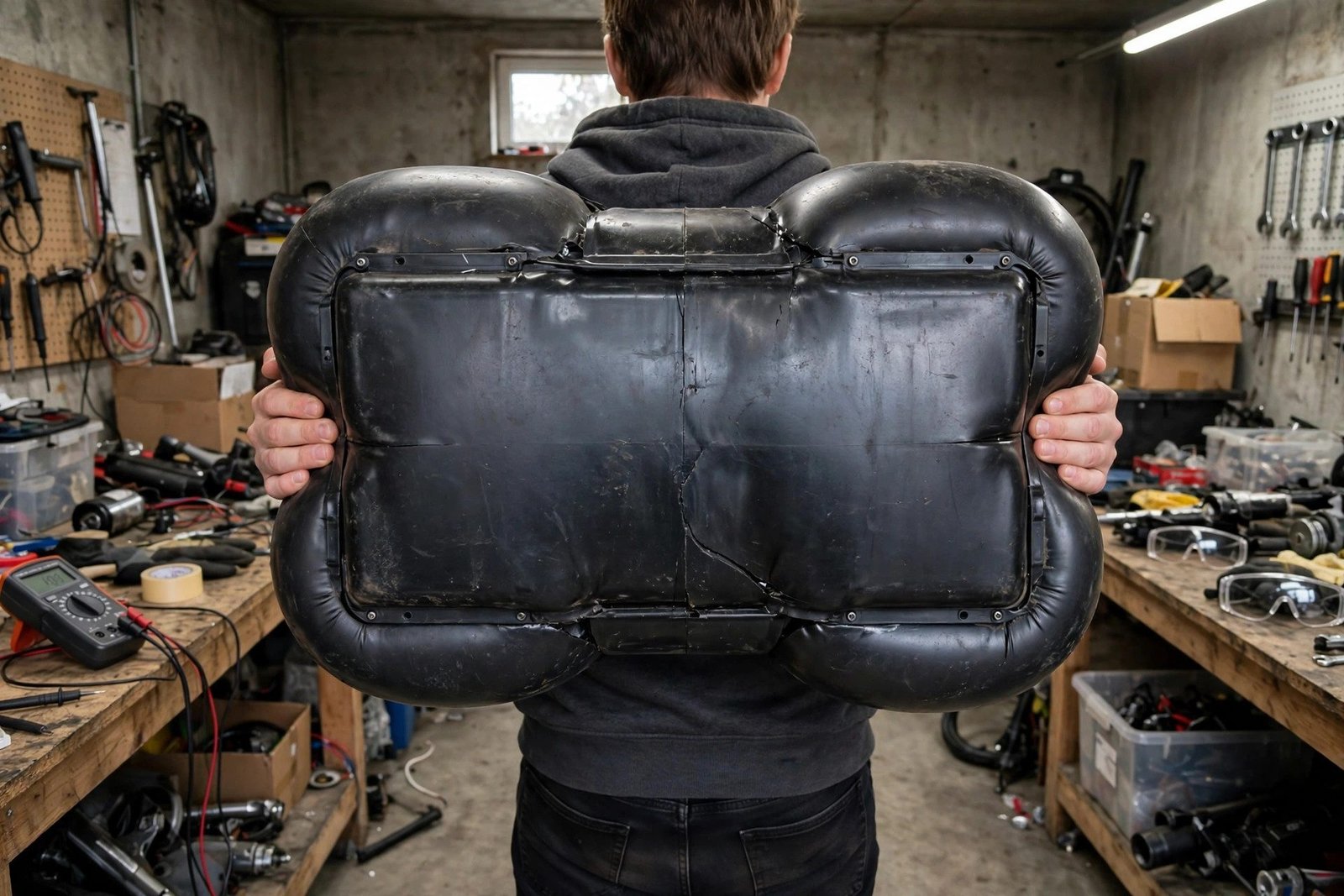
Swelling or heat on charge. A pack that bulges under the deck, or a deck that feels warm to the touch while charging, is a pack that has already failed. Swelling is a stop, not a discount — do not ride it, do not charge it, and do not sell it. Our #34 works through the first 60 seconds of a swelling, smoking or hot battery, and the rule is the same here: the pack goes to a recycling point, not back into service. A swollen pack in the flat is a fire risk in your home, and no saving is worth it.
A pack that will not hold a charge in storage. A scooter left for a month should still show most of its charge when you come back. A pack that drops to empty in storage has a cell that is self-discharging, and it will not get better. Storage is the quietest test of all — it asks nothing of the pack except to sit still, and a pack that fails that test has nothing left to give.
The pack itself — bolted in, not swapped out
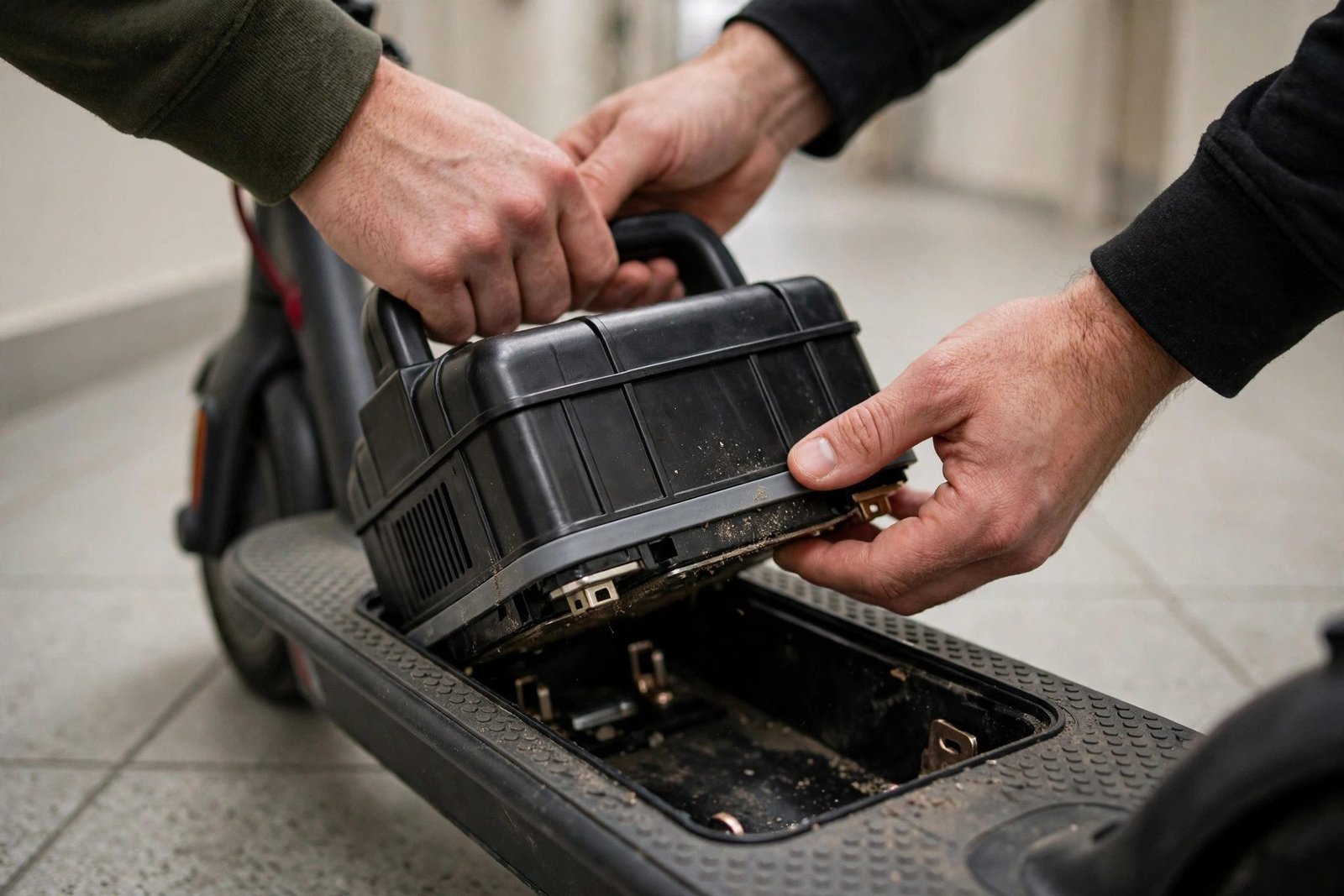
Here is the difference from an e-bike, and the reason the swap is harder than the guides make it sound. An e-bike pack slides out of the frame with a key. A scooter pack is bolted inside the deck.
Segway’s MAX family hides the pack inside the deck behind 18 to 21 screws on the base plate — the iFixit guide for the Ninebot Max counts 18 security Torx screws on the base plate and 10 more holding the battery to the frame. The MAX G3’s internal battery is built in and not removable for everyday swapping — Segway says so plainly, and the only swappable part is an optional external battery that mounts to the scooter to extend the range. The swap is a 20 to 30 minute job with a hex key set, a multimeter and an exact-match pack — and “exact-match” is doing the work in that sentence, because the pack must match the voltage and the connector exactly. Never guess voltage or connector: the wrong voltage damages the pack, and the wrong connector polarity damages the scooter.
The budget models are no simpler. HopCycle, Phantomgogo and WERHY packs are deck-bolted too, and their manuals do not publish the pack size or the connector — the Phantomgogo manual states a charge time but not a battery size, and the WERHY family listings give different packs for different models. Check the label on the battery and the manual before you order a pack, because a pack ordered on a guess is a pack that does not fit. If the label is unreadable or the manual says nothing, the shop does the swap — and the $50–$100 labour is the price of knowing it fits.
The apartment angle — a swollen pack in the flat
The swap happens in the flat, and the flat changes the rules. There is no garage workbench, and a swollen pack in the flat is a fire risk in your home.
Do the swap on the hallway floor, with the scooter upside down on cardboard and the door open. The deck screws are small and the connectors are fiddly, and a hallway floor with good light beats a kitchen table with a cat. Never work on a battery that is charging, or was charging in the last few minutes — power off, unplug, and wait. Photograph the wires before you disconnect them, because the photo is the map back.
The old pack never goes in the trash. A lithium pack in household waste is a fire in a bin lorry, and a swollen pack in a cupboard is a fire in your flat. Take it to a certified lithium drop-off — the council recycling centre, or the shop that sold you the scooter — and let them handle it. Bag a swollen pack, set it aside, and do not handle it more than you have to. The recycling trip is part of the job, not an afterthought, and it costs nothing but the walk.
While the deck is open, look at the rest of the scooter. The brakes, the tyres, the folding latch, the wiring — the deck is open once, and the inspection is free. A scooter with a dead pack and worn brakes is a scooter that needs two repairs, and the second one changes the maths. The 40 percent rule counts the pack; the inspection counts everything else.
The decision maths — run it before you spend
Put the three checks together and the decision is arithmetic. The pack cost, against 40 percent of a better new scooter, against the condition of everything else.
A Phantomgogo new against a $150–$300 pack: the pack costs more than the scooter, and the answer is a new scooter. A MAX G3 new against a $150–$300 pack: the pack is a fifth to two-fifths of a new scooter, and the answer is a new pack. An E2 Pro against a $80–$150 pack: the pack is about a fifth to two-fifths of a new scooter, and the answer is a new pack if the frame, brakes and tyres are sound. Our free Cost-to-Own Calculator runs the same maths for the whole first year — put in the price, the battery, and the miles, and it shows what the scooter really costs to own. Run your numbers before you buy the pack, not after it is already bolted in.

Related reading
- Your E-Bike Battery Is Swelling, Smoking or Hot? What to Do in the First 60 Seconds
- How Long Does an E-Bike Battery Last? (and How to Make Yours Last Longer)
- Article #66 “E-Bike Battery Replacement: When It’s Worth It (and When to Buy New Instead)”.
- Article #76 “Buying a Used Electric Scooter? The Checklist Before You Pay (Battery First)”.
The bottom line
A replacement pack costs $150 to $450 — and on a cheap scooter, the battery can cost more than the scooter. Run the three numbers: the pack against the 40 percent rule, the signs against the test, and the condition of the rest of the scooter against the price of a new one. If the pack is under the line and the scooter is sound, replace it — on the hallway floor, with the right voltage, and the old pack to the recycling point. If the pack is over the line, buy the new scooter, and let the old one go the same way. The battery is the price, and the maths is the answer.
Previous: How to Sell Your Used Electric Scooter (What It’s Worth, and How to Get It)