

Some links in this article are affiliate links. If you buy through them, we may earn a commission at no extra cost to you.
Your e-bike battery is dying, and the bike is three years old. The range has dropped, the charge does not last the commute, and the question is the one every budget e-bike owner asks: do I buy a new battery, or a new bike?
The short answer is that a battery is a consumable — it will die, and when it does, the maths is simple. A battery lasts a few years, not forever, and for a budget folding e-bike the replacement pack often costs more than the bike did. This guide gives you the three numbers that decide it, the worked maths for five bikes you can buy, and the four signs that mean the battery is finished now.
The short answer
If the pack costs more than half the bike, buy a new bike. That is the 50% rule, and it is the whole guide in one sentence. A pack for a budget bike would have to cost less than half the bike’s price — and no replacement pack costs that little. A pack for a dearer bike has to cost less than half its price — possible, but only if the maker still sells it. Check the pack price first, then check whether the pack exists at all. The second check kills more replacements than the first.
The three numbers that decide it
Three numbers, and nothing else. The pack price, the bike price, and the 50% rule.
The pack price. In general, a replacement e-bike battery costs a substantial sum — Himiway’s guide puts the replacement range there, and letrigo’s cost guide agrees. That is the general market, not a price for your bike — and a pack for a specific budget folder is often not sold at all. A rebuild — new cells in your old casing, fitted by a specialist — runs below the cost of a new pack in general, again from Himiway’s guide. No pack price in this guide is a price for a specific bike — the catalogue does not sell replacement packs, and a price for one would be a guess.
The bike price. What the bike would cost new, today. That is the number the pack is measured against, and it is the number below in the worked maths.
The 50% rule. If the pack costs more than half the bike, buy a new bike. Half is the line because a battery is not the only thing wearing out: the tyres, brakes, drivetrain and motor have all done the same three years of work. A new pack in a worn-out bike buys you a new battery and an old everything else. A new bike buys you all of it new — and a fresh warranty.
The worked maths — five bikes, one rule
Here is the rule applied to five bikes from our own catalogue, cheapest first. The pack column in each row uses the general range for a budget-folder pack — not a quoted price for that bike.
| New bike | Price | 50% of the bike | Does a general-range pack pass? |
|---|---|---|---|
| Funhang Step-Through | Check the listing> | —d> | No — the pack costs more than the bike |
| ANCHEER Hummmer | Check the listing | — | No — the pack costs more than the bike |
| AYOLNY 14″ Folding | Check the listing | — | No — the pack costs more than the bike |
| Jasion EB5 | Check the listing | — | No — even the cheapest pack is over half |
| Lectric XP Lite 2.0 | Check the listing | — | Maybe — a pack at the bottom of the general range passes, if it exists |
Check the listing for each bike’s current price, then halve it: if a replacement pack costs more than half the bike, buy a new bike instead.
Read the table from the bottom up. The Lectric is the only bike here where a replacement can pass the rule — and only if the pack is at the bottom of the general range and the maker still sells it. For the other four, the maths is not close: a general-range pack on a budget bike is nearly twice the price of the bike.
Two honest notes on the table. First, the Funhang is sold as UL 2849-certified — the listing says so, and the model (EB-C1 or EB-C2) is unconfirmed — and roundups show it at one price while our sheet price is another, so check the listing. Even at the higher price, the 50% line is well below any pack price, and no pack costs that little. Second, the table assumes the bike is otherwise sound. If the motor, the frame or the brakes are also failing, the answer is a new bike at any price — a new pack does not fix a worn-out bike.
Run your own numbers with our Cost-to-Own Calculator and see which side of the 50% line you land on.
Retire it now — the four signs
Sometimes the maths does not matter, because the battery is finished and the decision is made for you. Four signs mean the pack is done now, not next year.
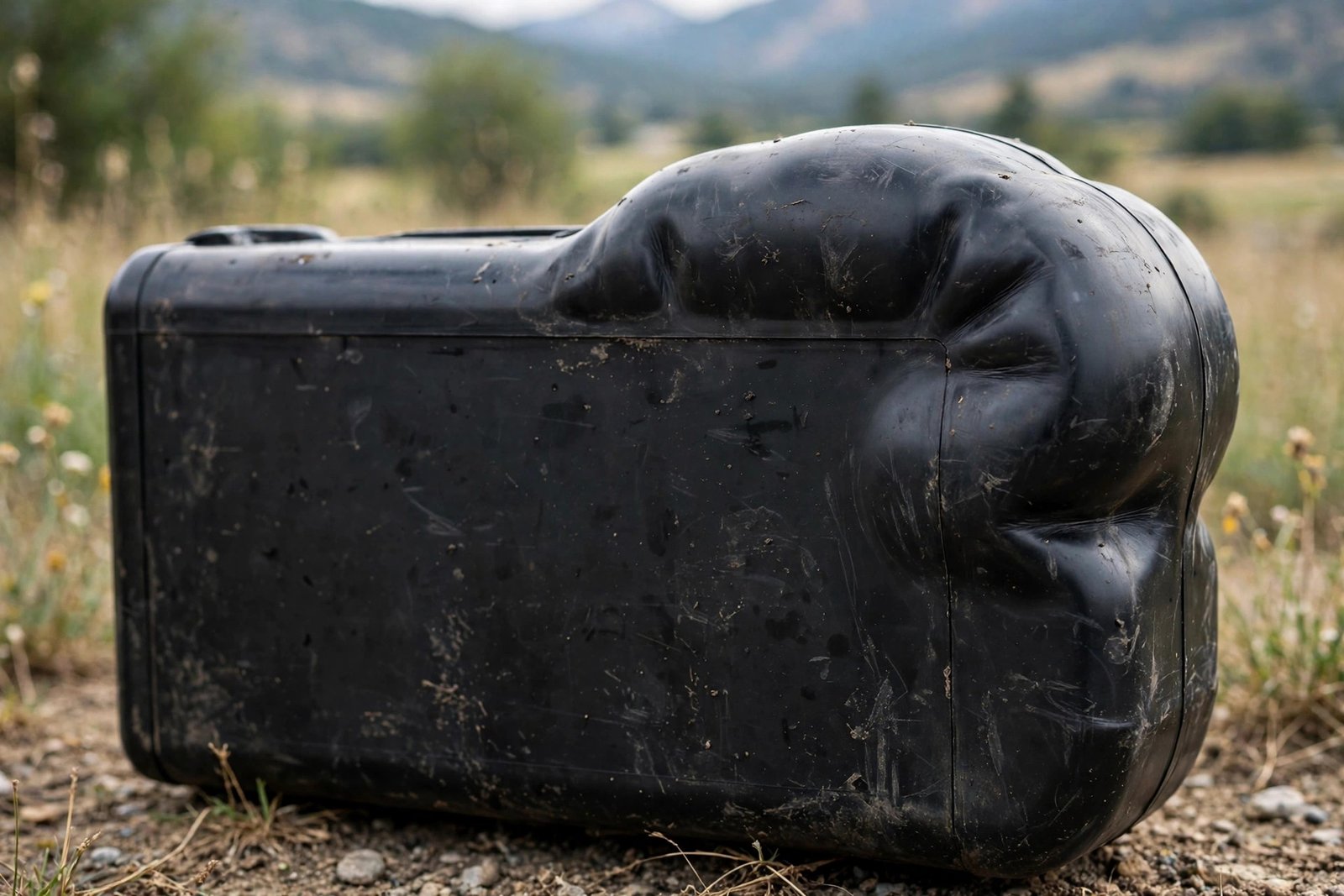
Swelling. The casing bulges, the seams split, or the pack no longer sits flat in its mount. A swollen battery is a damaged battery, and a damaged lithium battery is a fire risk. Stop using it, do not charge it, and do not keep it in the flat. Move it outside, away from anything flammable, and read our swelling guide for the first sixty seconds.
Heat. The pack gets hot while charging, or hot while sitting idle. A warm pack after a long ride is normal. A hot pack after sitting still is not.
Half the range. The bike used to do twenty miles and now does ten, on the same route, in the same weather. A battery loses capacity gradually — GoEBikeLife puts a pack’s life at 500 to 1,000 charge cycles, or three to five years — and half the range is the point where the decline has eaten the commute. If the battery no longer covers the ride you bought it for, it has retired.
It will not hold a charge. The charger says full, the display says full, and the bike dies ten minutes in. Or the charger never turns green at all. Either way the pack is not storing power any more.
If you see swelling, heat or smoke, stop. Do not charge a swollen or hot pack, do not puncture it, and do not put it in the bin. Our swelling guide covers the first sixty seconds.
The parts-page problem — the pack is often not sold at all
Here is the problem nobody mentions in the replacement guides: for a budget folder, the pack is often not sold at all. The brand that sold the bike three years ago may not exist any more. The listing is gone, the maker’s website is gone, and the only packs on the market are generic ones that may or may not fit.
This is the “brand still alive” test from our used-bike checklist, and it applies to new bikes too. Before you buy any e-bike, check whether the maker sells a replacement battery. Go to the maker’s own parts page and look for the pack. If there is no parts page, there is no pack — and when the battery dies, the bike dies with it. A bike with no replacement pack is a disposable bike, and you should know that on the day you buy it.
The same test applies to the bike you already own. Search for the pack by the bike’s exact model name, voltage and amp-hours. If the only results are generic packs from sellers you have never heard of, do not buy one on hope — a pack that does not match is not a replacement, it is a fire risk.
If you do buy a pack — four things to match
If the maths passes and the pack exists, four things have to match before you spend a penny.
Voltage. The pack must be the same voltage as the original — 36V or 48V, whichever your bike takes. A pack at the wrong voltage will damage the motor, the controller, or both. The voltage is printed on the old pack’s label.
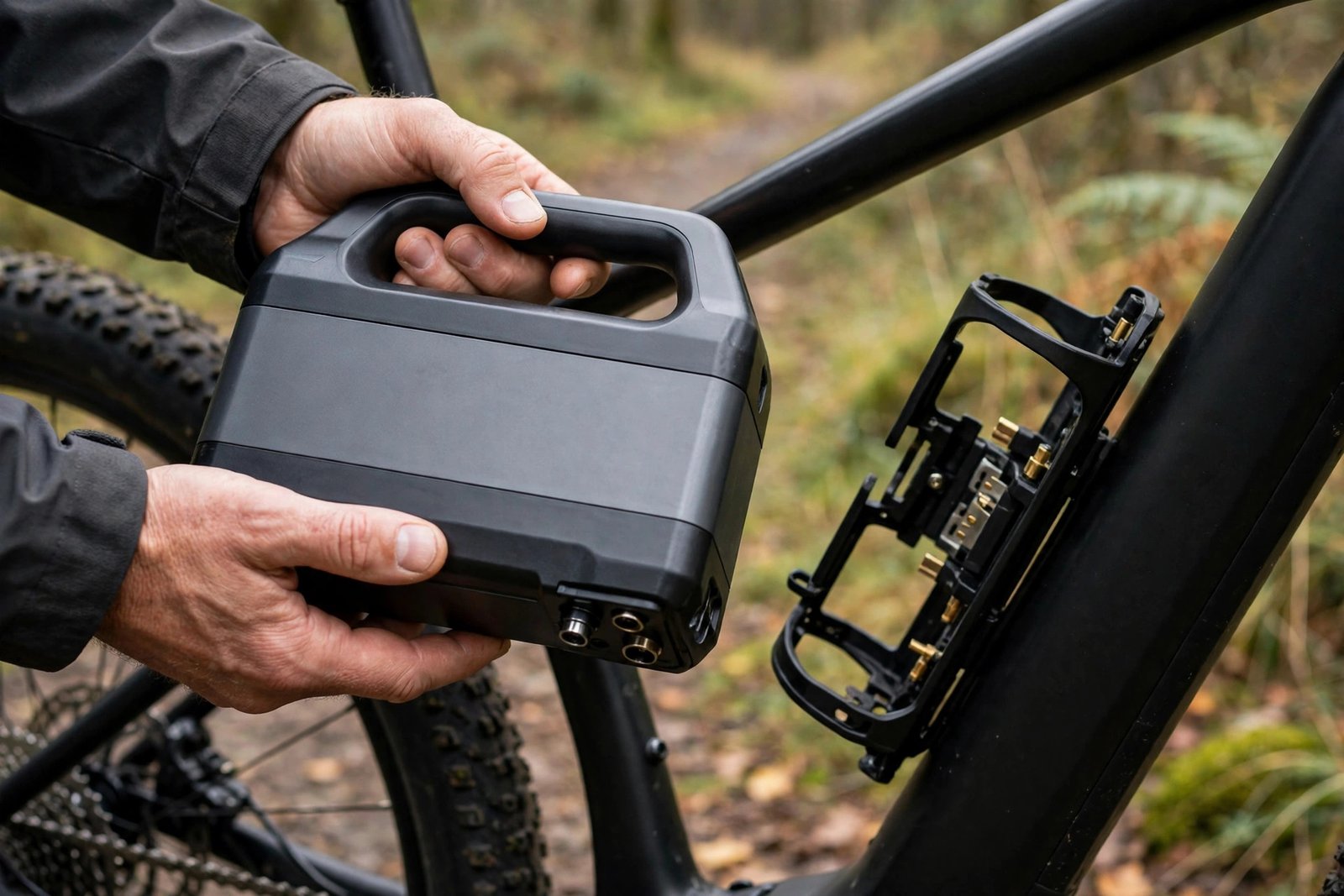
The mount. The pack has to fit the frame or the rack it came from. Folding e-bikes use frame, rack and seat-tube packs, and a pack that does not fit the mount does not fit the bike, however good the price.
The connector. The plug on the pack has to match the socket on the bike. There is no standard connector across brands, and an adapter is not a solution — a loose or adapted high-current connection is a heat risk.
The charger. The old charger has to match the new pack, or the new pack has to come with its own. Buy the pack and the charger as a pair, from the same maker, whenever you can.
And before you pay: look for UL 2271 or UL 2849 on the pack. A certified pack has been tested to a standard. An uncertified pack from an unknown seller has been tested by nobody.
Rebuild vs replace
There is a third option between a new pack and a new bike: a rebuild. A specialist opens your old pack, replaces the cells inside, and sends the same casing back. Himiway’s guide puts a rebuild below the cost of a new pack in general — cheaper than a new pack, because you pay for cells, not for a new casing, mount and connector.
A rebuild is worth it when the bike is good and the casing is sound — the mount fits, the connector is fine, and only the cells have aged. It is not worth it when the casing is swollen, cracked or heat-damaged — the casing is part of the safety system, and a rebuild does not fix a damaged one.
The limit is the same as the new-pack limit: the brand has to still exist, or a specialist has to be willing to work on your pack. If nobody will touch it, the answer is the same — a new bike.
What a new bike buys you
This is the part the replacement guides skip: a new bike is not just a new battery. It is a new motor, new brakes, new tyres, a new drivetrain and a new warranty, all at once. The five comps in the table are what that costs — from a budget Funhang or ANCHEER to a dearer Lectric — and every one comes with a battery that has three to five years of life ahead of it.
The warranty is the part people forget. A new bike carries a maker’s warranty on the battery and the bike. A replacement pack from a third-party seller usually carries a short warranty, or none. A pack with no warranty is a pack the seller will not stand behind.
And the new bike solves the parts-page problem by itself: a bike you buy today, from a brand that is alive today, has a parts page today. Buy the bike whose maker sells the pack.
Store it right, bin it right
Two boxes that decide how long the next pack lasts — and what happens to the old one.
Storing a battery. If the bike sits unused for weeks, store the pack at 40 to 60% charge, in a cool, dry place — not full, not empty, and not in a hot garage. A pack stored full ages faster; a pack stored empty can drop so low it will not take a charge again. Check it every couple of months and top it back to half. The storage charge is the cheapest battery life you will ever buy.
Disposing of a battery. A dead lithium battery never goes in the bin, and never in the recycling box either. Take it to a battery recycling point, a bike shop that takes old packs, or your local household hazardous-waste collection. Tape the terminals first, so the pack cannot short in transit. A lithium battery in a bin lorry is a fire — and it is a fire you caused.
Before you buy your next bike — check the parts page
The lesson of this guide fits in one habit: check the parts page before you buy the bike. Go to the maker’s website, find the parts or spares page, and look for the battery. If it is there, with a price, the bike is a bike you can keep. If it is not there — no parts page, no battery listed, no way to contact the maker — the bike is disposable, and you should pay a disposable price for it.
And if you are buying used, the test matters twice as much — our used-bike checklist covers the brand check, and a used bike with no living maker behind it is a bike with no future.
Related reading
- How Long Does an E-Bike Battery Last? (and How to Make Yours Last Longer)
- Buying a Used E-Bike? The Checklist Before You Pay (Battery First)
- What Does an E-Bike Really Cost to Own? The First-Year Costs Nobody Mentions
- Your E-Bike Battery Is Swelling, Smoking or Hot? What to Do in the First 60 Seconds
- My E-Bike Won’t Turn On (or Won’t Charge)? The 10-Minute Checklist Before You Call the Shop
The bottom line
A battery is a consumable, and the maths is simple: if the pack costs more than half the bike, buy a new bike. For a budget folder, no pack passes the rule. For the Lectric, one might — if the maker still sells it. Check the pack price, check whether the pack exists, and check the parts page before you buy your next bike.
Previous: How to Ride an Electric Scooter Safely (The Beginner’s Technique Guide)
Next: Best Electric Scooter for Hills (Steep Climbs, Tested)
