
Some links in this article are affiliate links. If you buy through them, we may earn a commission at no extra cost to you.
You are halfway through a ride you have done a dozen times, and the battery gauge drops faster than it should. The wind is against you, the last hill is still ahead, and you start doing the maths in your head. That is the exact moment most riders start thinking about a second battery. It sounds like the simplest fix there is: same bike, twice the energy, twice the range. It is not that simple — and for most riders, it is not needed at all.
In this guide
This guide is about the maths, not the marketing. A second battery buys you range, not a new bike, and it buys less range than the numbers on the box suggest. Work through the three numbers below with your own bike and your own rides, and you will know whether a spare pack is worth it for you — or whether the money is better spent on a bike with a bigger battery in the first place.
💡 The short answer
If your regular ride fits comfortably inside one charge, you do not need a second battery. A spare pack only earns its keep when one pack honestly runs dry before the ride does — a long commute, a hilly delivery shift, a weekend route with no charger at the far end. When you do need one, the safest option is a second pack from the same brand and the same voltage, made for your bike — not a cheap generic pack from a listing you have never seen. And a second battery does not double your range in the real world, because you are now carrying the extra pack the whole way there.
🔢 The three numbers that decide it
Everything about a second battery comes down to three numbers, and all three are printed on the battery you already own.
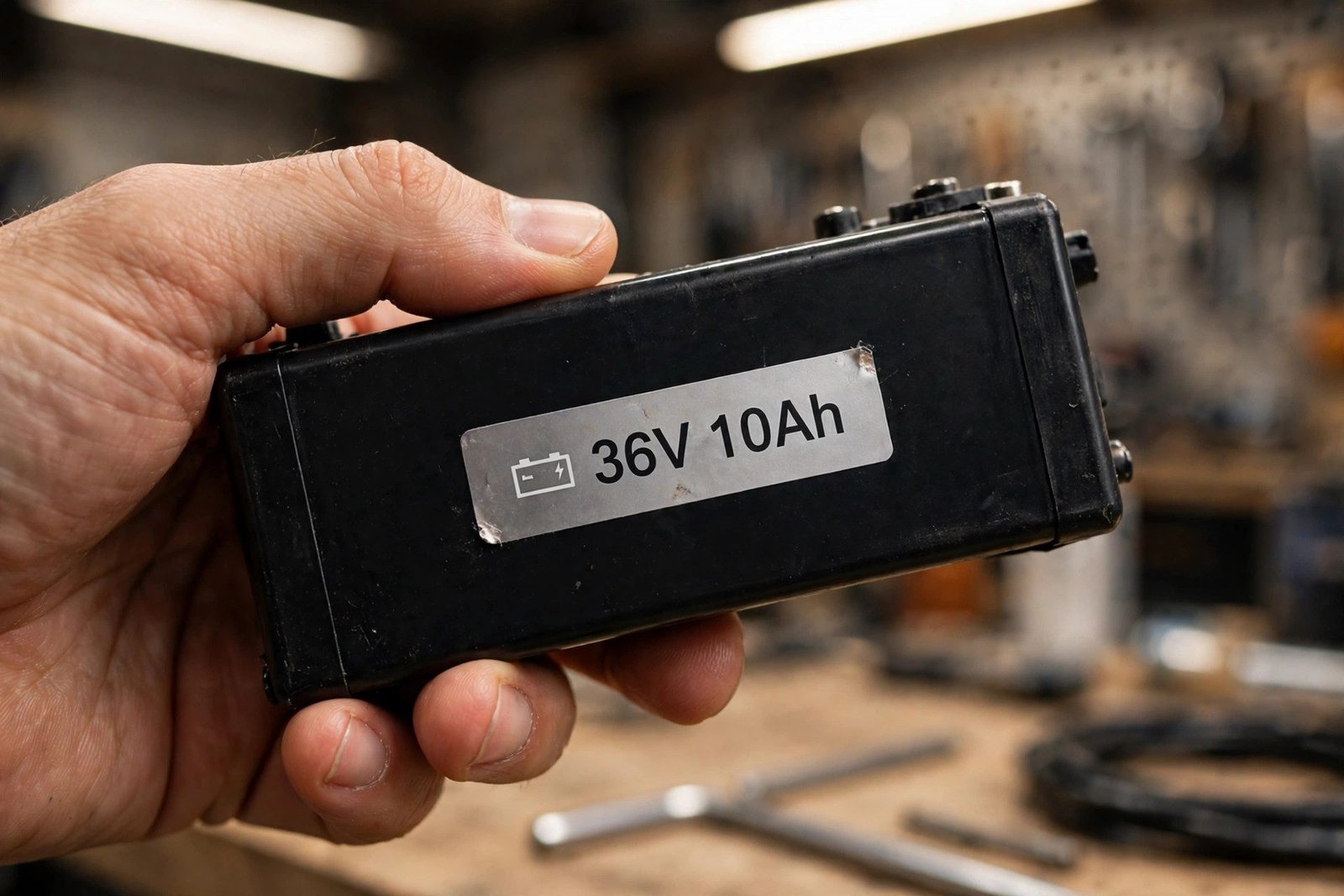
Watt-hours — how much energy you actually have. Forget amp-hours on their own: a 48-volt 15-amp-hour battery and a 36-volt 20-amp-hour battery sound different and hold almost the same energy. Watt-hours is voltage multiplied by amp-hours, and it is the only number that lets you compare packs fairly. A 48V 15Ah pack holds about 720 watt-hours. That is the number to remember, because range comes from watt-hours, not from the “up to” miles on the box.
Watt-hours per mile — how fast you burn it. As a rough rule, an e-bike uses about 10 to 20 watt-hours per mile, depending on how much help you ask for. That is Bosch’s own rule of thumb, and it is the reason the same battery goes twice as far on a gentle flat ride as it does into a headwind on full assist. Take your battery’s watt-hours, divide by 15 for a realistic middle, and you have a rough real range. A 624Wh pack — the size in the Heybike Mars 3.0 — works out to roughly 40 miles that way. A 374Wh pack — the size in the Lectric XP Lite 2.0 — works out to roughly 25 miles. An 840Wh pack — the size in the Aipas M1 Pro — works out to roughly 55 miles. Those are planning numbers, not promises: hills, cold, cargo and a heavy throttle hand all eat into them.
The weight of the spare — what the second pack costs you. A spare e-bike battery weighs roughly 6 to 10 pounds, and you carry it the whole ride, even while you are still running on the first pack. That weight is the reason doubling the watt-hours does not double the miles: the motor is now hauling an extra pack up every hill. On a long flat ride the penalty is small. On a hilly route it is not. If your spare rides in a pannier, remember the rack’s weight limit too — most rear racks are rated for around 55 to 60 pounds, and a battery plus groceries plus a lock gets there faster than you think.
🔀 The three ways a second battery actually works
“Dual battery” covers three genuinely different setups, and which one you are buying changes everything about the answer.
A factory dual-battery bike ships with two packs fitted. The mounting, the wiring and the controller were designed for two packs from the start, and the bike manages them together. This is the safest way to get a second battery, and it is the only one where “twice the range” is anywhere near true. Some bikes are sold in single- and dual-battery versions of the same model — if you are still shopping, the dual-battery version is usually cheaper than buying a second pack later.
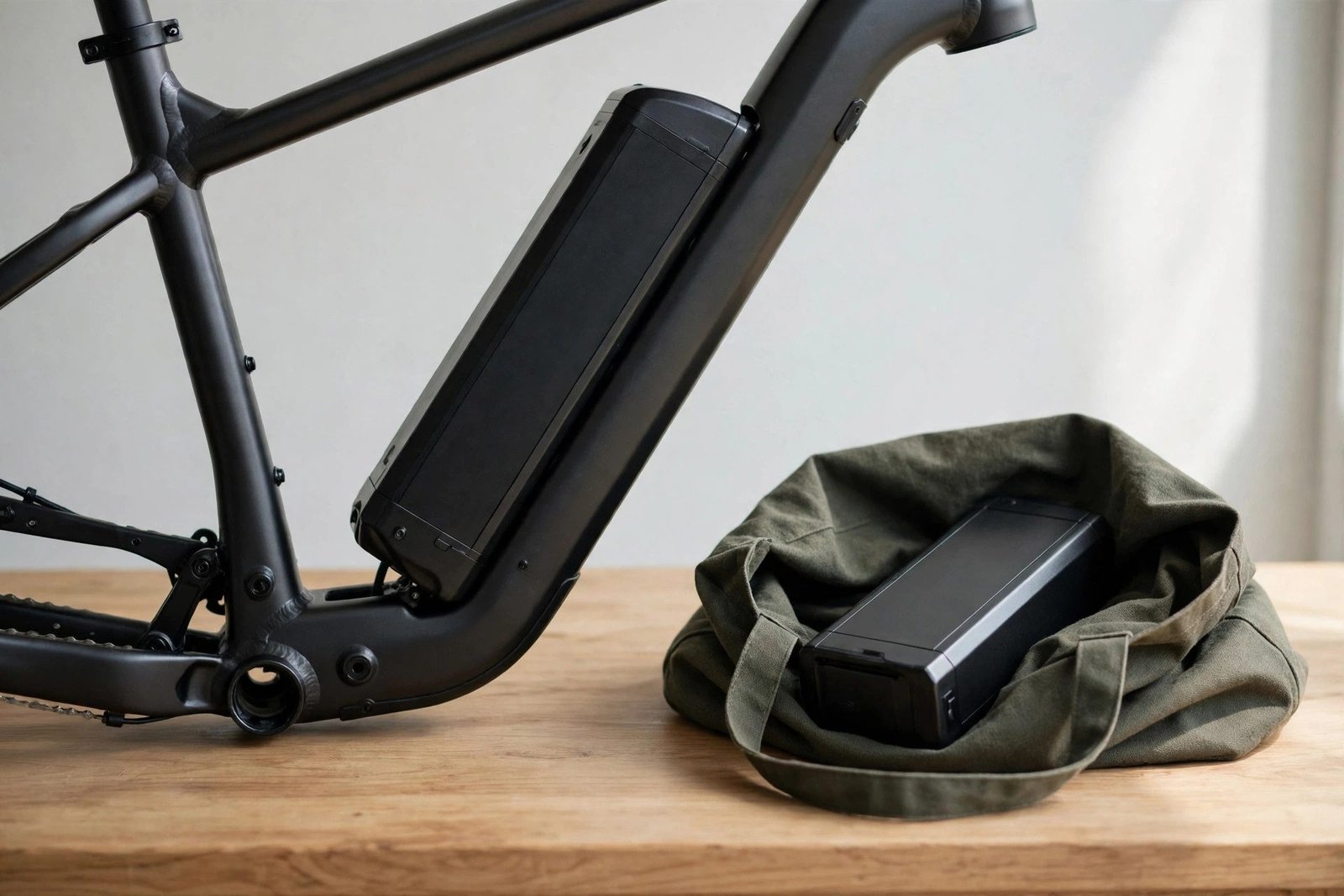
A bolt-on second pack is a spare your bike was designed to take. The maker sells a matching pack and a mount, and the manual tells you how it fits. This is the next-best option, and it is the one most apartment riders actually end up with. Buy the maker’s pack, not a lookalike: the voltage, the connector and the battery management system all have to match, and a pack that “looks the same” can be wrong in all three.
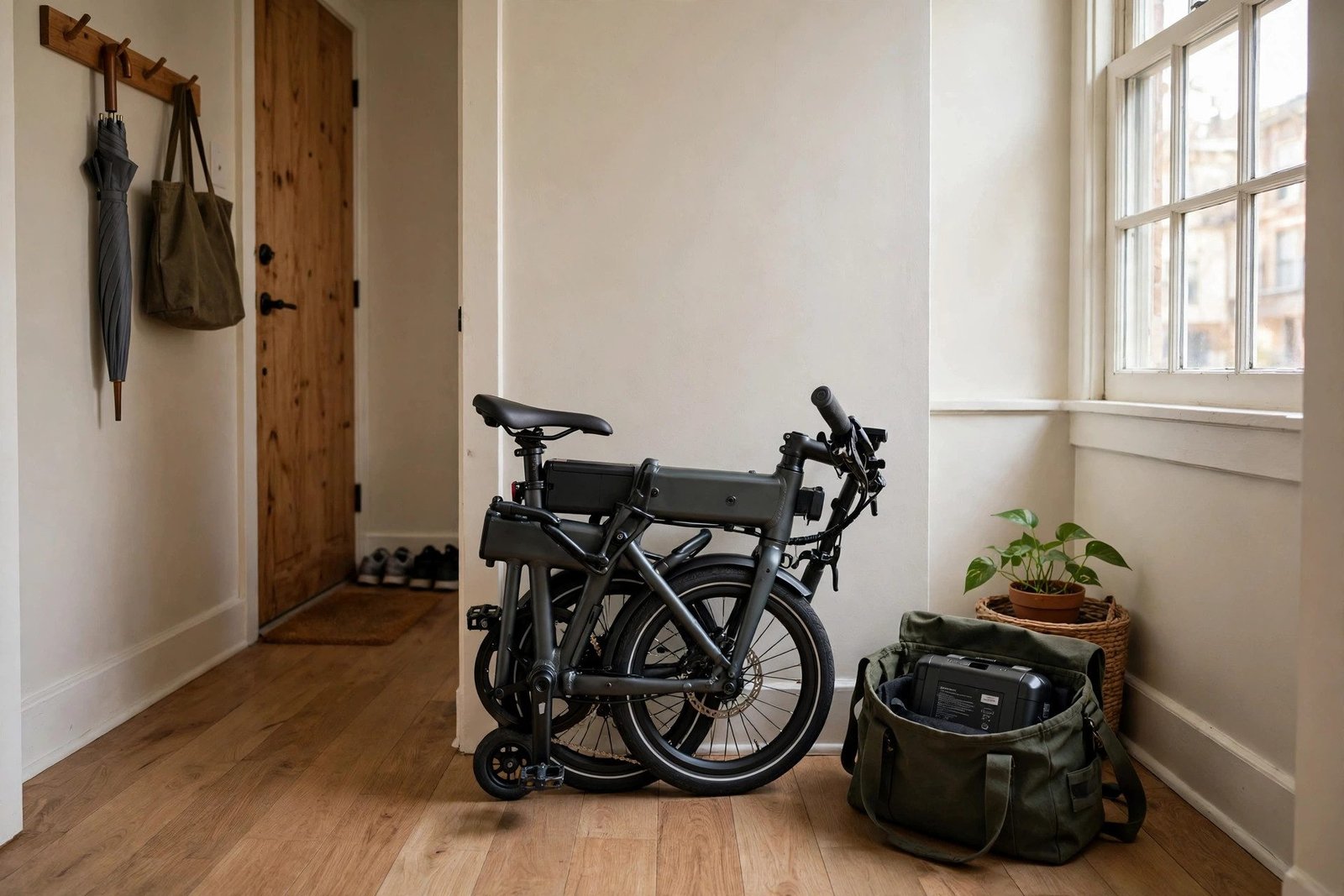
A hot-swap spare is a second pack you carry and click in when the first one is empty. This is the simplest version — no wiring, no mount, just a charged pack in a bag and a two-minute swap at a rest stop. It is also the version where the weight penalty is worst, because you carry a dead-weight pack for the whole first half of the ride. It works best for long, mostly flat rides where the swap happens once, at a planned stop, not for a hilly commute where you are carrying it up every climb.
What does not work is wiring a random second pack into a bike that was never built for one. A 52-volt pack on a 48-volt bike, a connector that “nearly fits”, a parallel adapter from a seller with no manual — any of these can damage the controller, the motor, or the battery itself. If your bike was not built for a second battery, do not improvise one. Buy the bigger-battery bike, or plan your charging instead.
👍 When a second battery is worth it — and when it is not
It is worth it when one pack honestly runs dry before the ride does. That means a commute over 30 miles each way with no charger at work, a delivery shift where the bike is your living, a weekend route into country with no café and no outlet, or a camping trip where the bike is the only way back. In those cases the second pack is not a luxury; it is the difference between finishing the ride and pushing the bike home. A spare also makes sense if your battery is ageing and its real range has shrunk — but check that first, because a new pack for a dying battery is a repair, not an upgrade, and our battery-replacement guide covers that maths separately.
It is not worth it for a short daily commute. Nine out of ten riders over-buy range as it is, on a single pack, before anyone has even mentioned a second one. A 12-mile commute does not need a 140-mile battery, and it definitely does not need two of them. It is also not worth it if the real problem is a charger, not a battery: if you can plug in at work, at a café, or at a friend’s house halfway, a top-up beats a second pack on weight, on cost, and on the simple fact that you are not carrying six to ten pounds of battery everywhere.
And it is not worth buying a cheap generic pack to save money. A spare battery costs several hundred dollars from a reputable maker, and a pack selling for a fraction of that is a warning, not a bargain. A lithium battery is the one part of your bike that can burn your flat down. Buy the pack your bike’s maker sells, or do not buy one.
🏠 The apartment part — charging two packs where you live
A second battery means charging two lithium packs instead of one, and for an apartment rider that is the part that needs the most care.
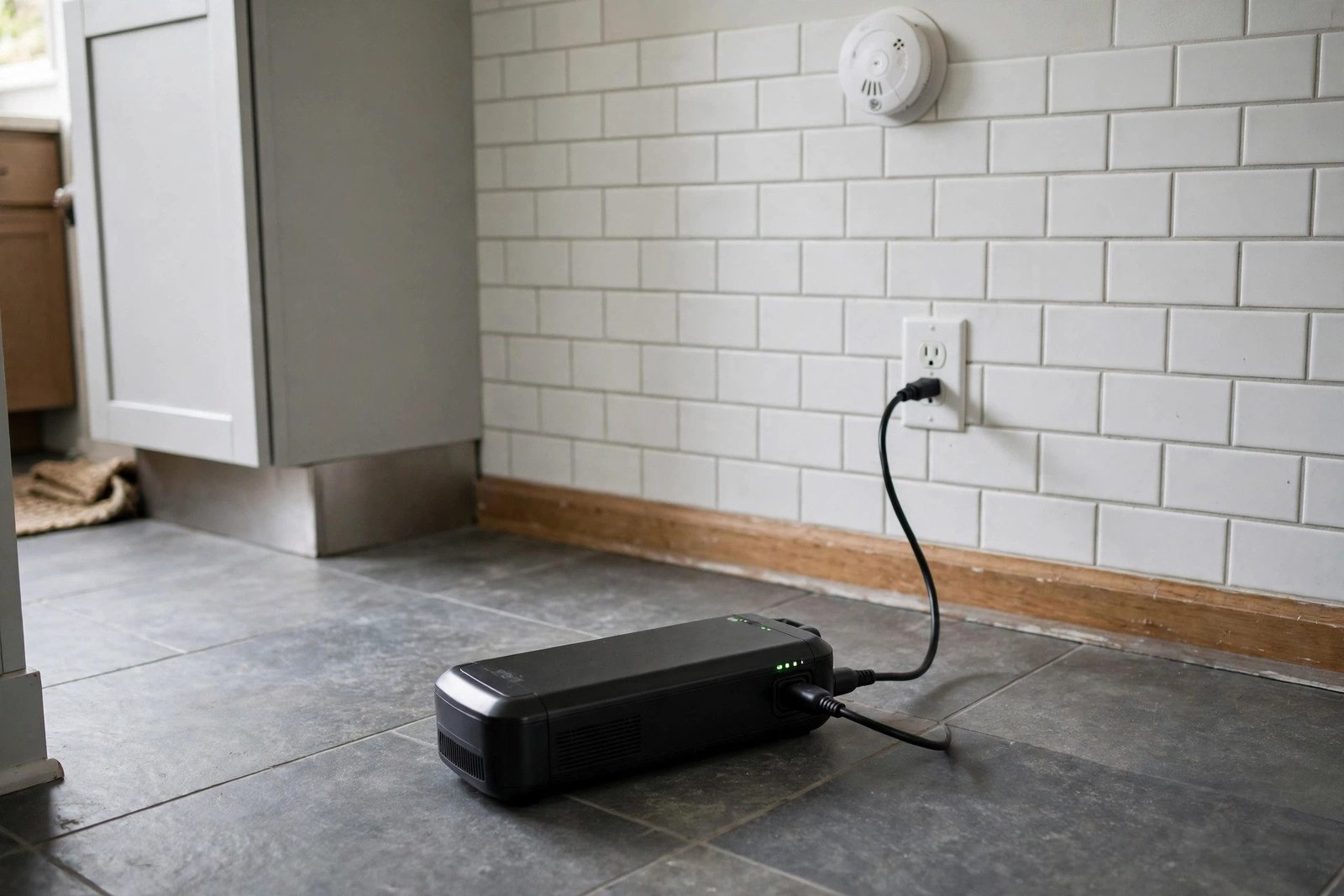
Charge one pack at a time, on a hard floor, with a smoke alarm in the room — the same rules as charging one pack, applied twice. Do not charge either pack overnight while you sleep, and do not charge them stacked together or inside a closed cupboard, where heat builds up. If your battery is removable, take it off the bike to charge it; that is the whole point of a removable battery, and it is the single best safety habit an apartment rider has. A fireproof charging bag is a layer some riders add — it buys time and contains sparks, it does not stop a fire — but a bag is no substitute for the basics: a certified pack, the charger that came with it, and someone awake in the room.
Check the certification on any second pack you buy. In New York City, e-bike batteries sold there must be UL 2849-certified, and that standard is worth looking for wherever you live. A pack with no certification stated anywhere is a pack you should not bring into a flat. If the listing does not say, ask the seller — and if they cannot answer, that is your answer.
Storage matters too. A spare pack lives in a cool, dry place at roughly half charge, not full and not empty, and not on a balcony in summer or a freezing hallway in winter. Our winter-storage guide covers the details, but the short version is simple: a battery stored full for months loses capacity, and a battery stored empty can refuse to wake up at all.
✅ The bottom line
Work out your real range first, from watt-hours, not from the box. If one pack covers your rides with room to spare, a second battery is solving a problem you do not have. If one pack honestly runs dry — a long commute, a delivery shift, a route with no charger — then a second pack from your bike’s own maker, at the same voltage, is worth it. Do not wire in a generic pack your bike was never built for, do not buy the cheapest pack on the listing page, and charge two packs with the same care you charge one. Buy for the trip you actually take, not the one you imagine on a good weekend.
📚 Related reading
- E-Bike and Scooter Range: What You’ll Actually Get vs What the Box Claims
- How Long Does an E-Bike Battery Last (and How to Make Yours Last Longer)
- E-Bike Battery Replacement: When It’s Worth It
- Can You Charge an E-Bike Battery Inside Your Apartment? The Honest Safety Answer
- E-Bike Battery Safety: What UL 2849 Means
- How to Store Your E-Bike for Winter
Previous: Article #97 “Best GPS Tracker for Your E-Bike or Electric Scooter (What Actually Gets It Back)“
Next: Article #99″ Can a Radar Tail Light Save You in Traffic? (Rear Radar for E-Bikes, Explained)”