
Some links in this article are affiliate links. If you buy through them, we may earn a commission at no extra cost to you.
The most dangerous moment in a commute is not the car you can see. It is the one behind you that you never look at. On a bike you check over your shoulder, and every check costs you a second of watching the road ahead. At 28 mph on a Class 3 e-bike, a shoulder check is a bigger balance risk than it is at 12 mph on a normal bike — and most riders, most of the time, simply do not look back as often as they should.
In this guide
A rear radar is the one accessory built for exactly that gap. It watches behind you all the time, and it warns you on a display on your bars when a vehicle is coming up — before you need to look. It is not a mirror, it is not a light, and it does not replace either. This guide explains what it does, what it cannot do, and who it is actually worth it for.
💡 The short answer
A rear radar tells you a vehicle is approaching from behind, how fast it is closing, and when it is safe to move out — without you taking your eyes off the road. It works in the dark, in the rain, and when a mirror would be full of glare. It does not stop the car, it does not make you visible on its own, and it is not a substitute for a light, a helmet, or looking. For a daily commuter on busy roads, it is the most useful safety accessory after lights. For a rider who only rides quiet streets and paths, it is money spent on a problem they do not have.
📡 What a radar tail light actually does
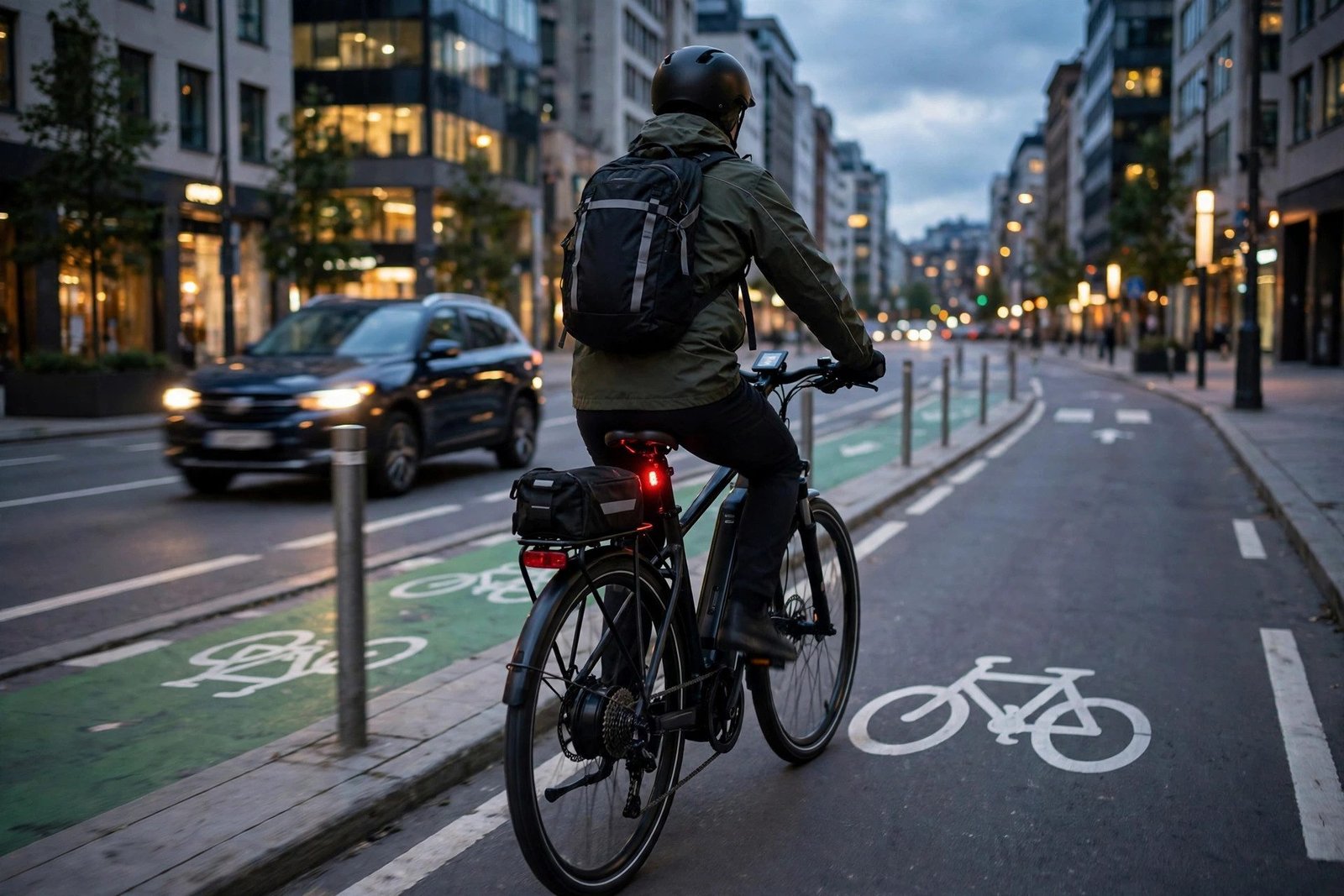
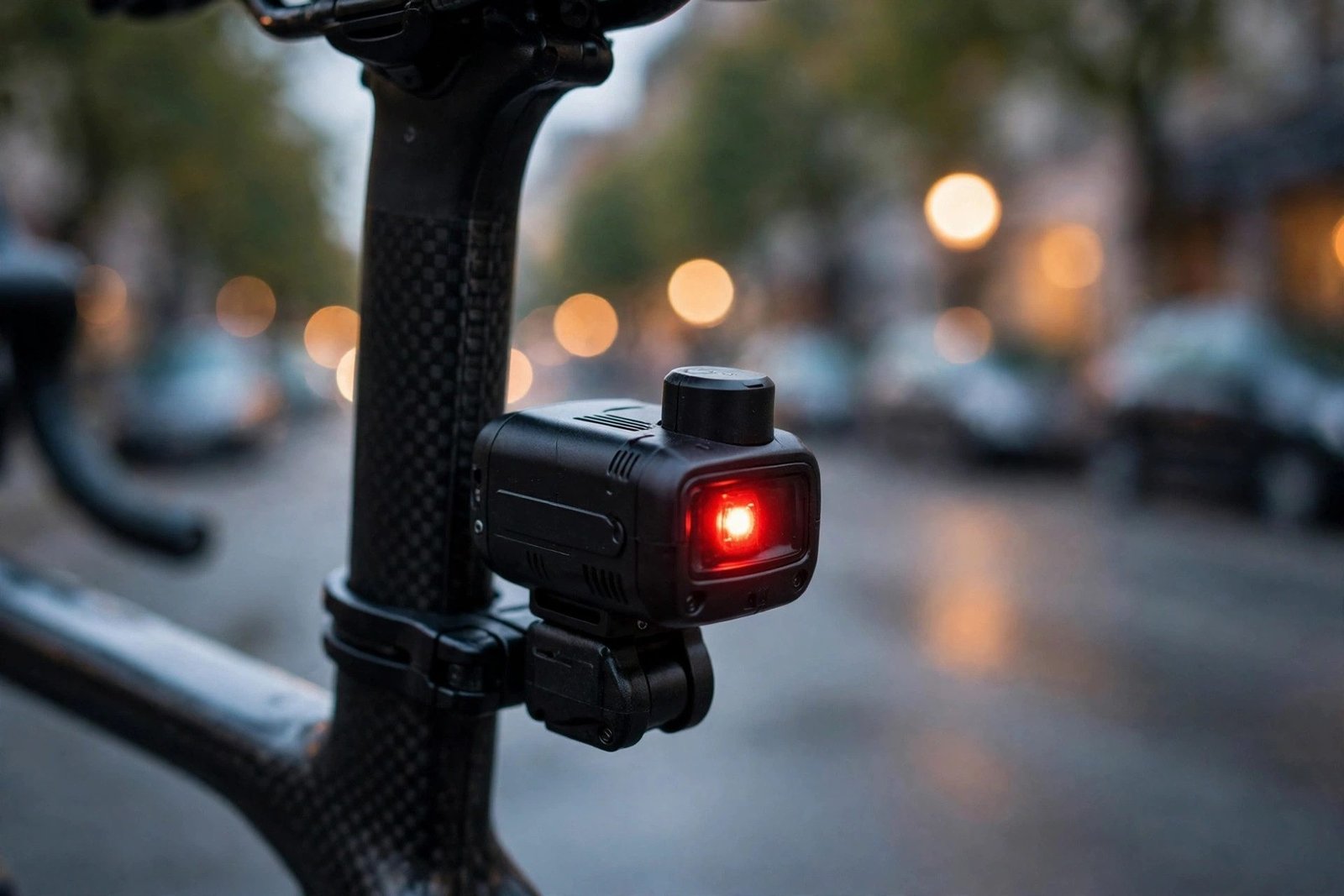
A radar tail light is two things in one small unit on your seat post: a tail light, and a radar sensor that looks backwards down the road.
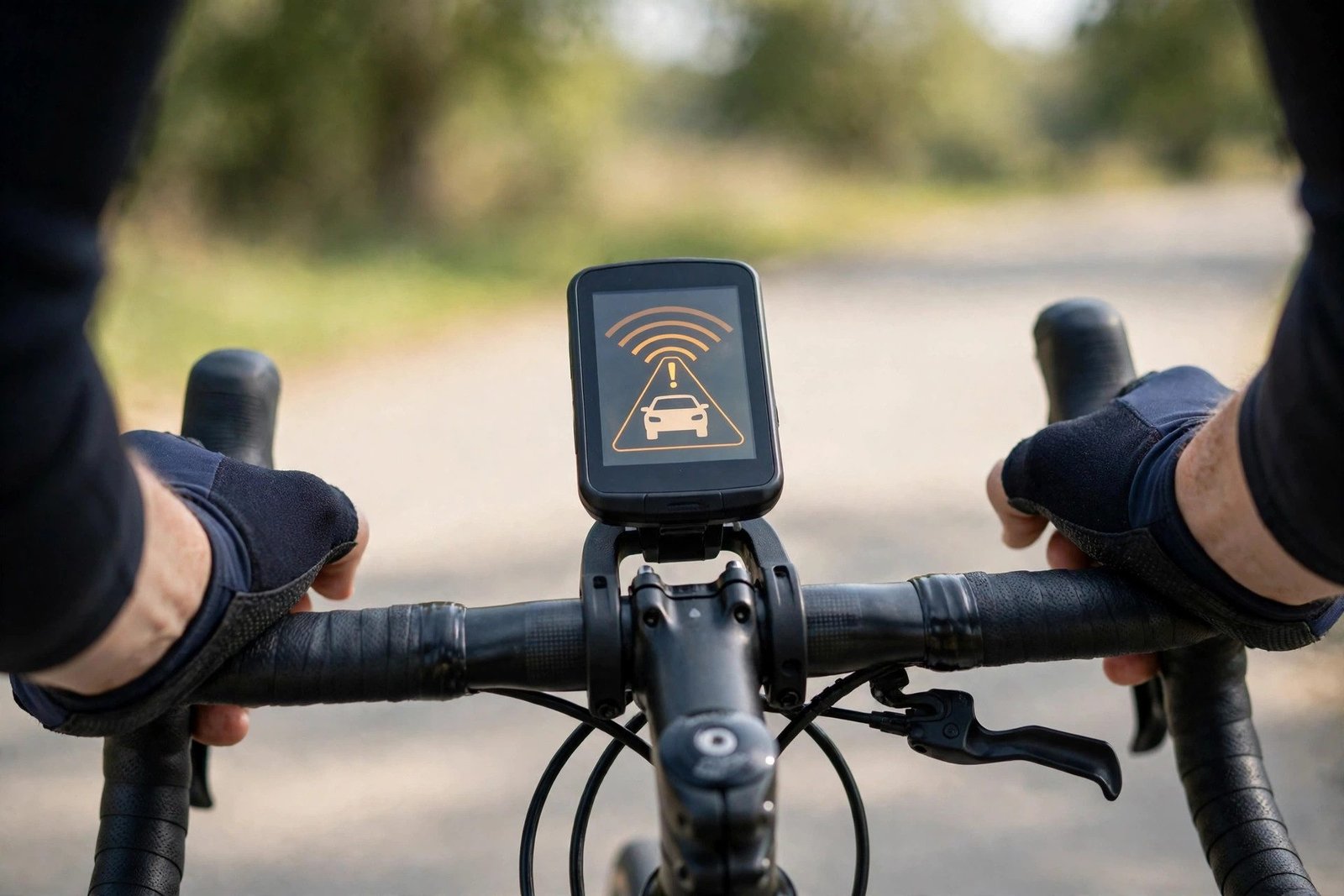
The radar watches the road behind you and warns you when a vehicle approaches. On a paired display — a bike computer or your phone on the bars — you see the approaching vehicle as a dot, and you get an alert as it closes in. The best-known unit watches vehicles up to about 150 yards away, which is far enough that you know about a fast car long before you can hear it. As the vehicle passes, the dot disappears, and the display tells you the road behind is clear again.
That sounds simple, and it is — but the value is in what it changes about how you ride. You stop guessing. Moving out to pass a parked car, turning left across a lane, or pulling out of a bike lane all become decisions you make with information instead of hope. You still look before you move — the radar is a warning, not a permission slip — but you look knowing what is there, instead of looking to find out.
It also works when a mirror does not. In the dark, in rain, or into a low sun, a mirror shows you glare and guesses; the radar shows you a dot and a closing speed. And unlike a mirror, it watches while you are watching the road ahead — which is where your eyes should be most of the time.
🚫 What it cannot do
This is the part the product pages skip, so here it is plainly.
A radar cannot see everything behind you. It is built to pick up vehicles — cars, trucks, motorbikes. A cyclist coming up quietly behind you, a pedestrian stepping off the kerb, or a car that is already alongside you may not show up the way you expect. Treat it as a car detector, not a rear-view camera.
It cannot make you visible. The tail-light half of the unit does that job, and it does it well — but a radar on its own does not stop a driver from failing to see you. You still need a proper light set, and you still need to ride where drivers look. If your budget only stretches to one thing, buy the lights first. The radar is the second purchase, not the first.
It needs a display to be useful. The radar unit on its own can flash its light, but the warnings — the approaching dot, the closing speed, the all-clear — live on a screen on your bars. That means a compatible bike computer or your phone in a mount, charged and running. If you ride with no screen at all, a radar will still work as a tail light, but you will have paid for a warning system you cannot see.
And it does not replace looking. Before you turn, before you change lanes, before you pull out around a parked car — look. The radar tells you when to look and what to expect. It never tells you it is safe to move without looking. Any guide that tells you otherwise is selling you something.
👍 Who it is worth it for — and who should skip it
It is worth it for a daily commuter on busy roads. If your route has fast traffic, multi-lane roads, or stretches where cars overtake you constantly, a radar changes the ride from a series of guesses into a series of informed decisions. It is also worth it for a rider who has had a close pass and now flinches at every engine sound behind them — knowing what is actually there is calmer than imagining it, and a calmer rider is a safer rider.
It is worth it for a Class 3 rider in particular. At 28 mph you are moving at a speed where the gap between you and traffic is smaller, the decisions come faster, and a shoulder check costs you more balance. The faster you go, the more a second pair of eyes behind you is worth.
Skip it if you ride quiet streets, paths and parks. If the loudest thing behind you is another cyclist, a radar will spend most of its time telling you nothing is there — which is true, and not worth paying for. Skip it too if you have no screen on your bars and no plans to add one. And skip it if you have not yet bought a proper light set and a helmet: those come first, every time.
🏷 The pick — and the light-only alternative
There is one radar unit that dominates this category, and it is the one we verified: the Garmin Varia RTL515. It is a rearview radar with a built-in tail light, it watches vehicles approaching from behind, and it warns you on a paired display. It is the No. 2 best seller in Cycling Electronics on Amazon, which is a crowded category — that tells you how many riders have decided this is worth it. It mounts on the seat post, it is rechargeable, and it pairs with a bike computer or a phone app on your bars. Check latest price for the Garmin Varia RTL515.
If the radar is more than you need right now, the light-only answer is a good one and it costs far less. The Ascher Ultra Bright light set is the light we already recommend across the site: a front light and a rear light, USB rechargeable, and the best-selling light set in its category. It makes you visible, it lights the road ahead, and it is the right first purchase. Check latest price for the Ascher Ultra Bright Bike Light Set.
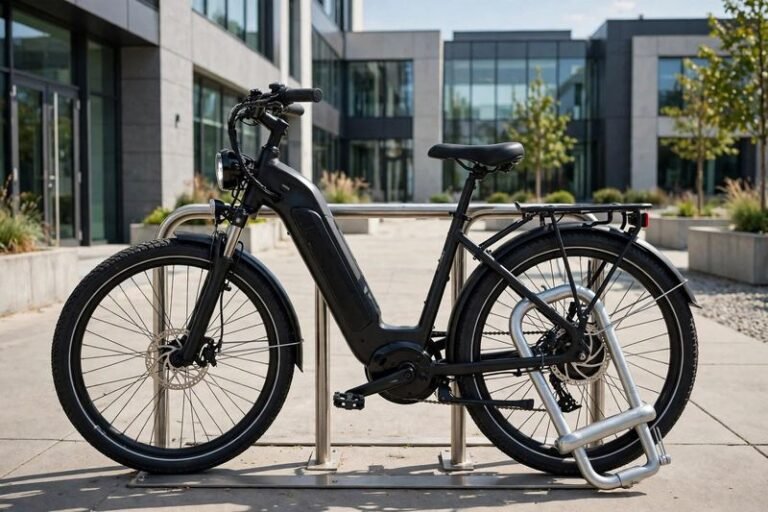
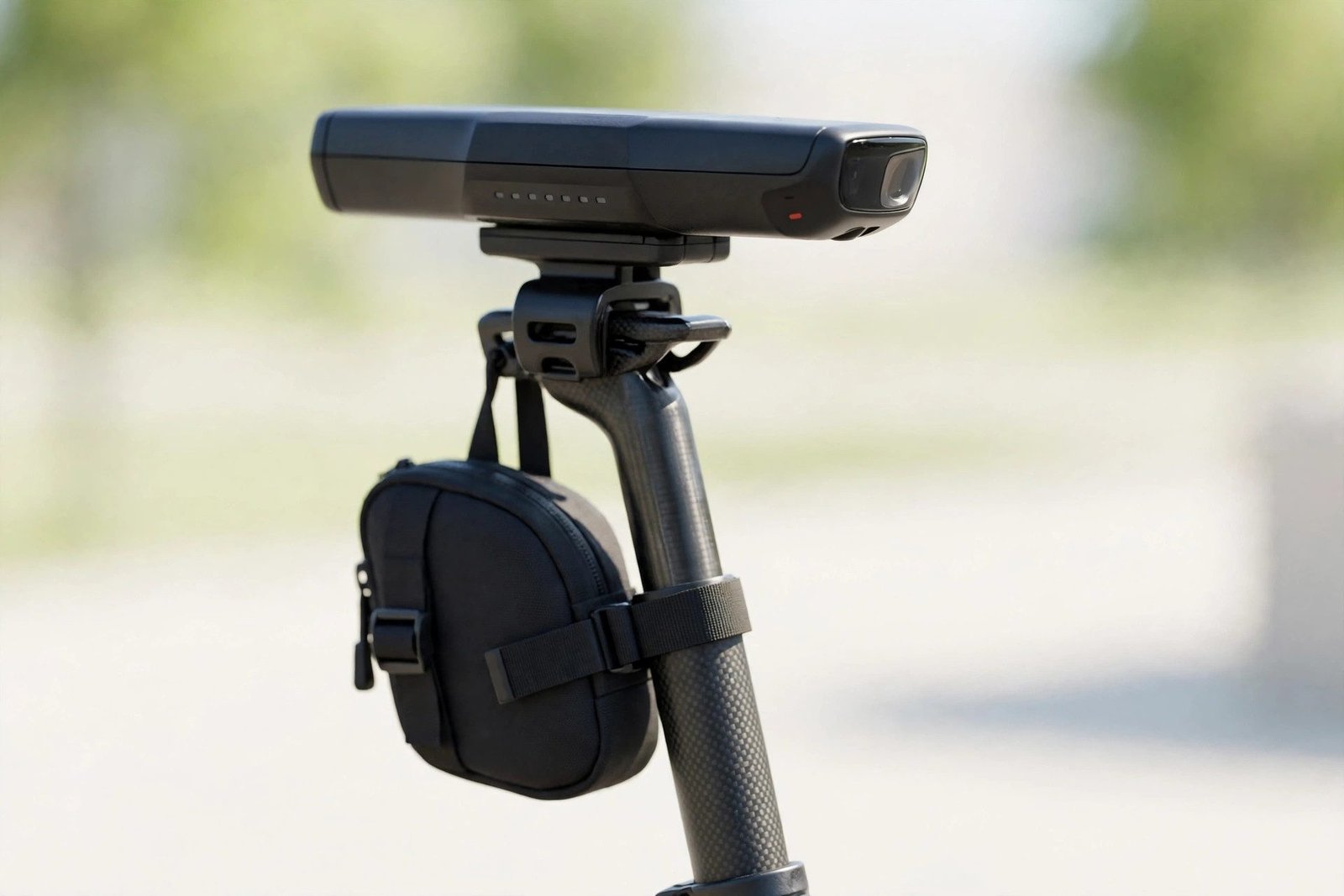
One honest note on fitting: a radar lives on the seat post, and so does a lot of other things — a saddle bag, a rear rack, a child seat. Before you buy, check that your seat post has a clear stretch for the mount, and that the radar’s view backwards is not blocked by a pannier or a bag. A radar staring at the back of your own luggage is a tail light with a fancy name.
✅ The bottom line
A mirror shows you what is behind you when you look. A radar watches when you do not. It will not stop a car, it will not make you visible on its own, and it will not replace looking before you move. But for a commuter on busy roads — especially a fast Class 3 commuter — it turns the most dangerous question in traffic (“is anything behind me?”) from a guess into an answer. Buy the lights first, buy the helmet, and then, if the road you ride every day is full of fast cars, buy the radar. It is the accessory that watches the direction you cannot.
📚 Related reading
- E-Bike Lights for Night Riding: How Many Lumens You Actually Need (and What’s Legal)
- Best E-Bike Helmets for Commuters (MIPS, Under $80)
- How to Ride an Electric Scooter Safely
- Best Electric Scooter Accessories for Commuters (What to Buy First)
- How to Ride an E-Bike in Traffic (Cars, Intersections, and the Dooring Zone)
Previous: Article #98 “Do You Need a Second Battery for Your E-Bike? (The Honest Range Maths)“