
Some links in this article are affiliate links. If you buy through them, we may earn a commission at no extra cost to you.
Every first-time buyer asks the same question: how many watts do I need? The listings make it look simple — 250W, 500W, 750W, 1000W — and the obvious answer is to buy the biggest number you can afford. That answer is wrong, and the box number is usually the wrong number anyway. Watts are not the answer. The hill, the rider and the law are.
In this guide
- The short answer
- Rated vs peak — the first trap
- Torque — the number that climbs the hill
- The law — 750W is the line in the US
- The classes at a glance
- 250W to 350W — the flat-city class
- 500W — the everyday all-rounder
- 750W — steep hills and cargo
- 1000W — off-road and heavy loads
- The flag class — 1800W peak, and the bike with no agreed number
- How to choose — four questions
- The trap list — how to read a listing
- Related reading
- The bottom line
The short answer
For flat city commuting, 250W to 500W is enough. For steep hills, a heavy rider or cargo, 750W is the number. For off-road and heavy loads, 1000W and above is the territory — and above 750W you are outside what US federal law calls an e-bike. The rest of this guide is the proof: what the box numbers mean, why torque matters more than watts on a hill, and how our own catalogue catches listings printing different numbers for the same bike.
Rated vs peak — the first trap
A motor has two wattages, and the listing almost never tells you which one it is printing. Rated power is what the motor can sustain all day. Peak power is the short burst it can deliver for a few seconds — pulling away from a light, or the first metres of a steep hill. Peak is typically 1.5 to 2 times the rated figure, and that gap is where the confusion lives.
Take a bike listed as 500W. If 500W is the rated power, the peak is probably 750W to 1000W. If 500W is the peak, the rated power is probably 250W to 350W. Same number on the box, two completely different bikes.
Our catalogue proves it. The Lectric XP Lite 2.0 is 300W rated with an 819W peak. The Funhang Electric Bike is 500W rated with a 1000W peak. The Hoverfly OUREA is 500W rated with a 750W peak. Three bikes, three different ratios — which is why you read the listing, not the rule. If a listing prints one number, assume it is the bigger one.
Torque — the number that climbs the hill
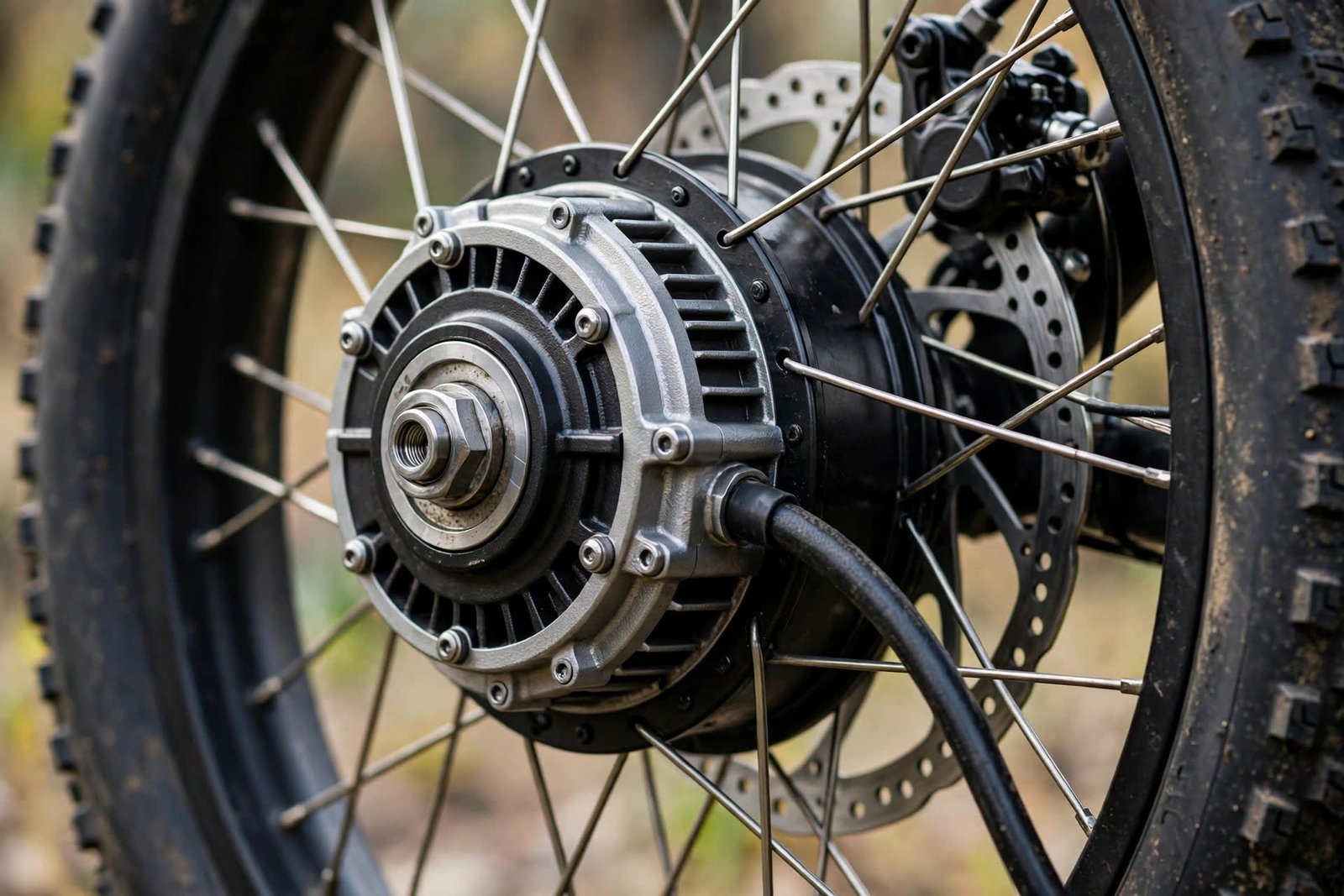
Watts set the top speed. Torque climbs the hill. Torque is measured in newton-metres, written Nm, and it is the twisting force the motor applies to the wheel. A motor can have big watts and modest torque, or modest watts and big torque. If your ride has hills, torque is the number that decides whether you arrive pedalling or pushing.
The bands are simple. 40 to 60 Nm is enough for the city — flat streets, gentle rises, a normal-weight rider. The Funhang, at 62 Nm, sits just above that band, which is why a 500W bike with good torque feels stronger than its watts suggest. 80 Nm and above is the hill number — steep streets, a heavy rider, a loaded rack, or all three at once. The Mars 3.0‘s 95 Nm and the Aipas M1 Pro‘s 110 Nm are the hill numbers in this guide — and, with the Funhang’s 62 Nm, the only torque figures our makers publish.
The law — 750W is the line in the US
Wattage is not just a performance choice. It is a legal one. In the United States, the federal definition of an e-bike caps the motor at 750W — a bike above that is not an e-bike under federal law, whatever the listing calls it. The 250W, 500W and 750W classes all sit inside that line. The 1000W class and above sits outside it.
The caps are different elsewhere: 250W is the cap in the EU and the UK, and 500W is Canada’s. A bike that is perfectly legal in one country can be over the limit in another.
State law adds a second layer on top of the federal line. Some states follow the federal 750W cap, some set their own limits, and the class system — Class 1, 2 and 3 — decides where each bike may ride. Our E-Bike Classes Explained guide covers the class system: wattage decides what the bike can do, and the class decides where it may do it.
The classes at a glance
| Class | Rated power | Best for | Our examples |
|---|---|---|---|
| Light city | 250–350W | Flat commuting, light riders, short trips | Lectric XP Lite 2.0, ANCHEER Foldable |
| Everyday all-rounder | 500W | Mixed city riding, gentle hills, most riders | Funhang, ANCHEER 500W, Hoverfly OUREA |
| Hills and cargo | 750W | Steep hills, heavy riders, loaded racks | Mars 3.0, RetroVolt, TST |
| Off-road and heavy loads | 1000W+ | Trails, heavy loads, steep off-road climbs | AMYET EB26, Jasion EB5, AYOLNY 26″, isinwheel M10 Plus |
| Beyond the e-bike line | 1800W peak | Off-road only, and check your state law first | Aipas M1 Pro |
250W to 350W — the flat-city class
If your ride is flat, short and light, 250W to 350W is enough — and it is the cheapest way into an e-bike. These are the lightest bikes in our catalogue, the easiest to carry up apartment stairs, and the ones with the smallest batteries, which is why they cost the least. The trade is simple: less power, less weight, less money.
The Lectric XP Lite 2.0 is the class example with the clearest numbers: 300W rated, 819W peak, 49 lb, and a 48V 7.8Ah removable battery. The 819W peak pulls it away from a light; the 300W rated is what it sustains on the flat.
The ANCHEER Foldable Electric Bike is the budget end of the class: a 350W motor in a folding frame, and the cheapest e-bike in this guide. A 350W folder is a flat-city commuter, not a hill bike.
500W — the everyday all-rounder
500W is the class most buyers should buy — strong enough for gentle hills and a heavier rider, light enough to carry, cheap enough to be the default. If you are unsure which class you need, start here.
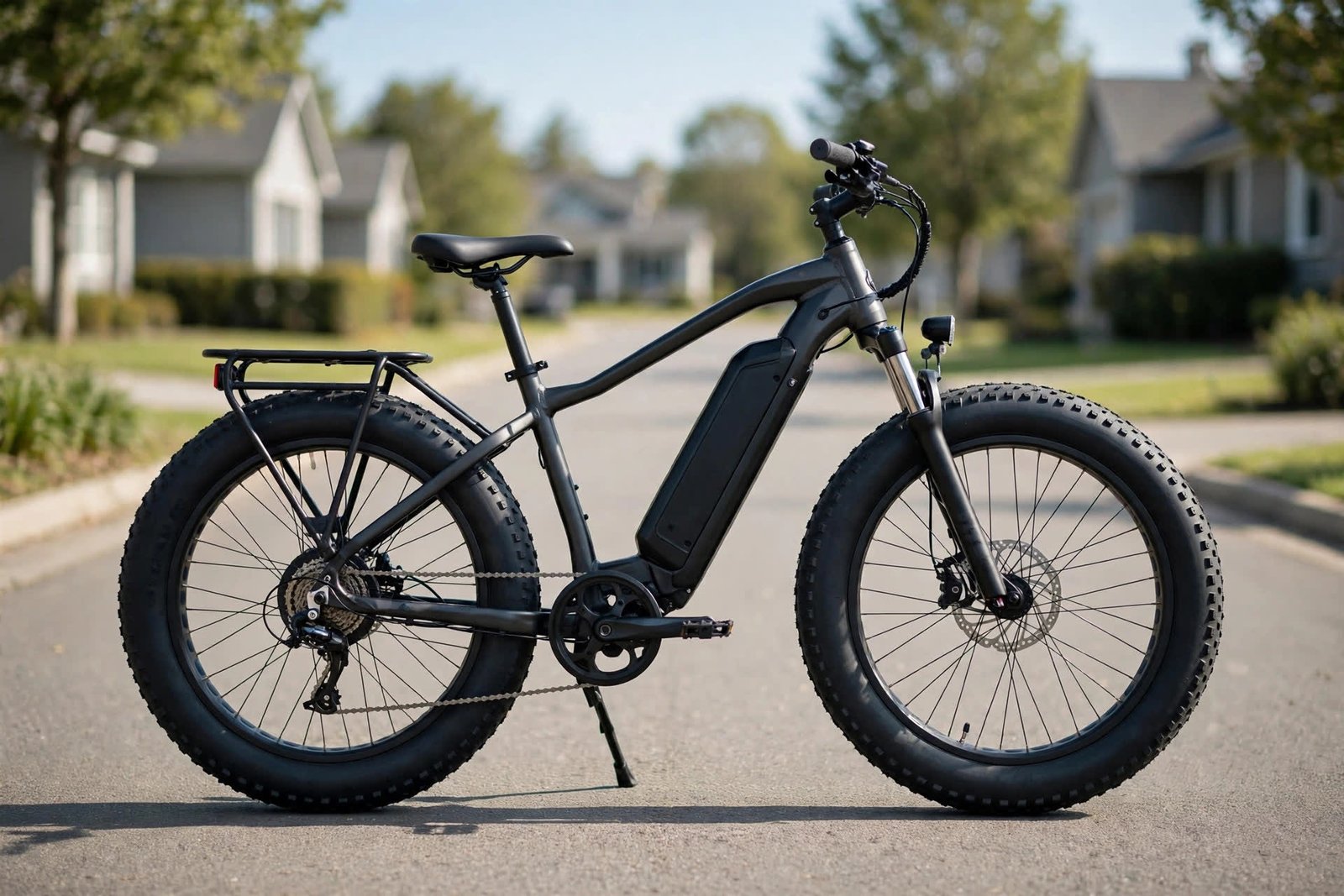
The Funhang Electric Bike is the budget proof: 500W rated, 1000W peak, 62 Nm, a 48V 374.4Wh battery, and a 300 lb payload. The 62 Nm is the number that makes it climb better than its price suggests. It is a city bike — 26″×1.95″ city tyres, front fork only, not a fat-tyre bike — sold as UL 2849-certified.
The ANCHEER 500W 48V Electric Bike is the same class at a higher price, and the Hoverfly OUREA sits between them at 500W rated and 750W peak. Three bikes, one class, three prices — and the wattage is the same on all three: within a class, the price buys the battery, the brakes and the build, not the motor.
750W — steep hills and cargo
750W is the hill class, and it is also the legal ceiling in the US — the most power you can buy while still riding an e-bike under federal law.
The Heybike Mars 3.0 is the lead example: 750W rated, 1400W peak, 95 Nm, a 624Wh battery, and a 440 lb payload. The 95 Nm is the hill number and the 440 lb payload is the cargo number. Its battery is UL 2271 certified, not UL 2849, and it is removable — though the frame must be folded first to slide it out.
The RetroVolt Electric Bike is the value end of the class: 750W rated, 2000W peak, a 48V 15Ah removable battery, 20×4.0 fat tyres, a 330 lb payload, and UL 2849 certification. A 2000W peak on a 750W rated motor is the widest rated-to-peak gap in this guide — nearly three times.
The TST Electric Bike is the warning inside the class: the linked listing says 750W rated and 1500W peak, but other listings print 749W and 2000W peak. Three different peak figures for one bike, and the 2000W figure is never cited as fact here. The 15Ah variant (720Wh) is the one linked here, and “dual-battery” means two battery options, not two batteries fitted at once.
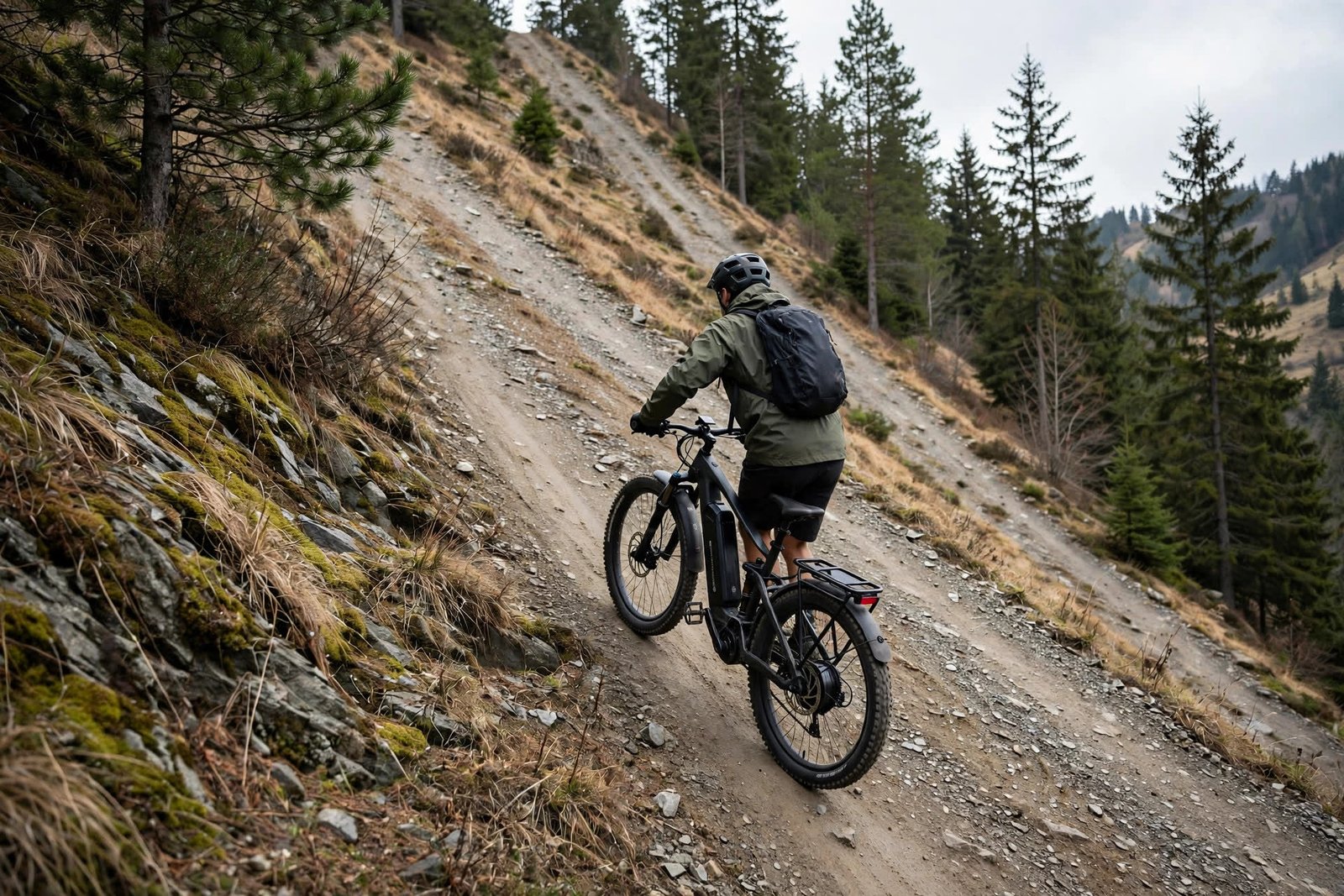
Buy this class if your ride has real hills, you are a heavier rider, or you carry cargo — the most power the law allows, with no second thought.
1000W — off-road and heavy loads
1000W is where the e-bike line ends and the off-road class begins. Every bike here is above the 750W US federal cap, so it is not an e-bike under federal law — these are trail and heavy-load bikes, not city commuters. If your riding is on roads and bike paths, you do not need this class. If it is on trails, you might.
The AMYET EB26 is the most expensive bike here, and its manual is the clearest: 1000W rated and 1500W peak. The listing title prints 2000W peak, and that figure is never cited as fact here.
The Jasion EB5 is the budget end of the class at 1000W peak, and the AYOLNY 26″ Electric Bike is cheaper still at 1000W peak, with a 36V 10.4Ah battery, 375Wh, 20 mph, and up to 40 miles claimed. Both listings print the peak figure only: a “1000W” bike that never says rated is probably a 500W rated bike with a 1000W burst.
The isinwheel M10 Plus is the second warning: the listing says 1000W peak and the manual says 900W peak. Same pattern as the TST and the AMYET — the listing prints the bigger number, and the manual prints the honest one.
Buy this class only if your riding is genuinely off-road or genuinely heavy. And check your state law first.
The flag class — 1800W peak, and the bike with no agreed number
Two bikes in our catalogue do not fit the classes above.
The Aipas M1 Pro is the most powerful bike in this guide: an 1800W peak motor, 110 Nm of torque, and a 48V 17.5Ah removable battery. But its rated watts are not stated anywhere — not on the listing, and not in the roundups. Every source gives the peak and the torque and stops there. A bike that prints only its peak is a bike whose rated power you cannot know, and that is itself the information.
The Aipas also carries a second flag: a claimed top speed of 36 mph. 36 mph is faster than any e-bike class allows — Class 3 tops out at 28 mph — so a bike that claims 36 mph is claiming a speed no e-bike class permits. That makes it a bike for private land and trails. Its payload is disputed too — 450 lb or 500 lb — so this guide gives neither number, and it does not fold.
The Jasion EB6 is the opposite problem: a bike whose peak motor is disputed — 1000W or 1200W — and whose battery is disputed too, 10.5Ah or 13Ah. This guide cites neither figure — only the 48V battery, which is the one number every listing agrees on.
How to choose — four questions
Forget the wattage for a minute and answer four questions instead.
First, how steep are your hills? Flat streets need 250W to 500W, gentle rises need 500W, and steep residential streets need 750W and 80 Nm or more. Buy for the steepest hill on your route, not the average one.
Second, how heavy is the load? A 300 lb total load on flat ground is a 500W job; the same load on a hill is a 750W job with high torque. The Mars 3.0’s 440 lb payload and the RetroVolt’s 330 lb payload are the cargo numbers in this guide.
Third, how far do you ride? Watts are not range — the battery is. A 500W bike with a big battery goes further than a 1000W bike with a small one. If range is the problem, buy battery watt-hours, not motor watts.
Fourth, where do you ride? Roads and bike paths mean the 750W cap applies. Trails and private land mean it does not bind you the same way. Buy the bike for where you actually ride.
The trap list — how to read a listing
Five checks before you buy — they catch every trap in this guide.
One: does the listing print rated and peak, or just one number? Both numbers is honest. One number is almost certainly the peak, and the rated power underneath is roughly half of it.
Two: does the listing print torque? Watts without torque is a bike you cannot judge on hills.
Three: do the title and the manual agree? The AMYET’s title says 2000W peak and its manual says 1500W. The isinwheel’s listing says 1000W peak and its manual says 900W. When they disagree, the manual wins.
Four: do two listings for the same bike agree? The TST prints 749W, 1500W and 2000W peak across listings; the Jasion EB6 prints 1000W and 1200W. A bike with three different wattages has no verified wattage.
Five: is the top speed legal? Class 3 tops out at 28 mph, and a bike that claims 36 mph, like the Aipas, claims a speed no e-bike class allows. That is not a reason to reject the bike — it is a reason to know where you may ride it.
Related reading
- E-Bike Classes Explained: Class 1 vs 2 vs 3, and Where You Can Legally Ride Each One
- Best E-Bike for Hills (Under $1,000): Torque That Actually Climbs
- Hub Motor vs Mid-Drive E-Bike: Which One Should You Actually Buy? (The Budget Truth)
- Throttle vs Pedal Assist on an E-Bike: When to Use Each (and What It Does to Your Range)
- What Does an E-Bike Really Cost to Own? The First-Year Costs Nobody Mentions
The bottom line
Watts are not the answer — the hill, the rider and the law are. For flat city riding, 250W to 500W is enough. For steep hills and cargo, 750W is the number — the most power the US calls an e-bike. Above 750W you are off-road, outside the federal definition, buying torque and battery, not a bigger box number. Read every listing twice: rated and peak are two different numbers, and the honest listing prints both.
Previous: How to Ride an E-Bike in Summer Heat