
Some links in this article are affiliate links. If you buy through them, we may earn a commission at no extra cost to you.
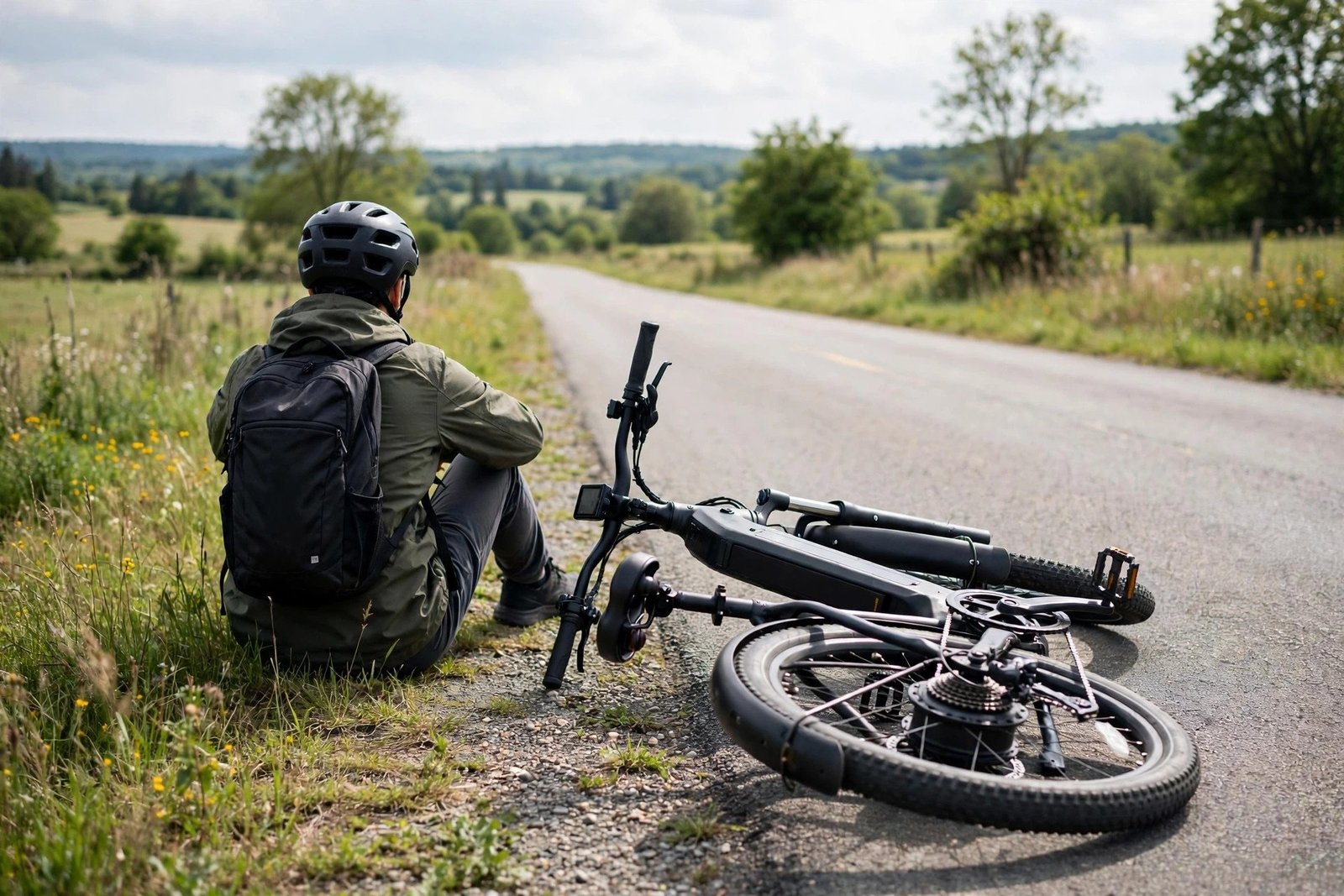
You are on the ground, the bike is on its side, and the shock has not worn off. The question every rider asks in the same moment: what do I do right now, in what order, before the shock wears off?
In this guide
- The short answer
- First, you — adrenaline hides injuries
- Second, the scene — photos, details, and never admit fault
- Third, the bike — the battery case, the fork, the frame, the folding mechanism, and the helmet
- The apartment rule — a cracked battery does not come inside
- The paperwork — what to do in the hours after
- What not to do after a crash
- Related reading
- The bottom line
The first hour after a crash decides three things: your health, your evidence, and whether your bike is safe to bring inside. In that order — you first, then the scene, then the bike. This guide walks through the three checks in the order that matters, and the apartment rule that most guides never mention: a crashed battery does not come into your flat until it is checked.
One thing before the steps. This is general information, not legal or medical advice. If you are hurt, get medical help. If another party is involved, the police and your insurer are the ones to talk to.
The short answer
You, then the scene, then the bike. Check yourself first, because adrenaline hides injuries — watch the concussion signs for hours, not minutes. Then secure the scene: photos, the other party’s details, witnesses, the police report, and never admit fault. Then check the bike: the battery case, the fork, the frame, the folding mechanism, and the helmet. And the rule that decides the rest of the evening: a bike with a cracked battery case does not come inside the flat until it is checked.
First, you — adrenaline hides injuries
The first check is yourself, and the hardest part is that you cannot trust how you feel. Adrenaline hides injuries. It dulls pain, sharpens focus, and tells you that you are fine. You may not be fine. Riders have walked away feeling untouched and found a fracture or a concussion hours later, when the adrenaline wore off.
So do not trust the first minute. Sit down and run the check slowly. Can you move your arms and legs? Is anything bleeding? Is your head clear? If anything feels wrong, do not get up and ride home — sit still and call for help: 911 if it is serious.
The signs to watch are the concussion signs, and a concussion does not always show itself at once. Headache, nausea, blurred vision, memory issues, dizziness — those five are the list to watch for hours, not minutes. If you cannot remember the crash, that is a memory issue — get checked the same day. If your vision blurs, if the room spins when you stand, if you feel sick — do not ride, do not drive, and do not go to sleep without being checked. A concussion is not a headache you sleep off; it needs a clinician’s eyes on it.
Tell someone what happened and ask them to check on you — if a new symptom appears hours later, it is still the crash, so get checked and say so when you arrive.
Second, the scene — photos, details, and never admit fault
Once you are safe enough to move, the second check is the scene, and the clock on it is short. Evidence fades fast. The other driver leaves, the witness walks away, the skid mark washes off in the rain. The first hour is when the evidence exists — after that it is mostly memory.
Start with the phone, wide first. Photograph everything before anything moves — the bike where it fell, the car or the obstacle, the road surface, the traffic light, the street sign, the skid marks, the damage. Then the close shots: cracked part, bent wheel, torn clothing, bruise. More photos is better than fewer — you can delete the useless ones later, but you cannot go back and take the one you missed.
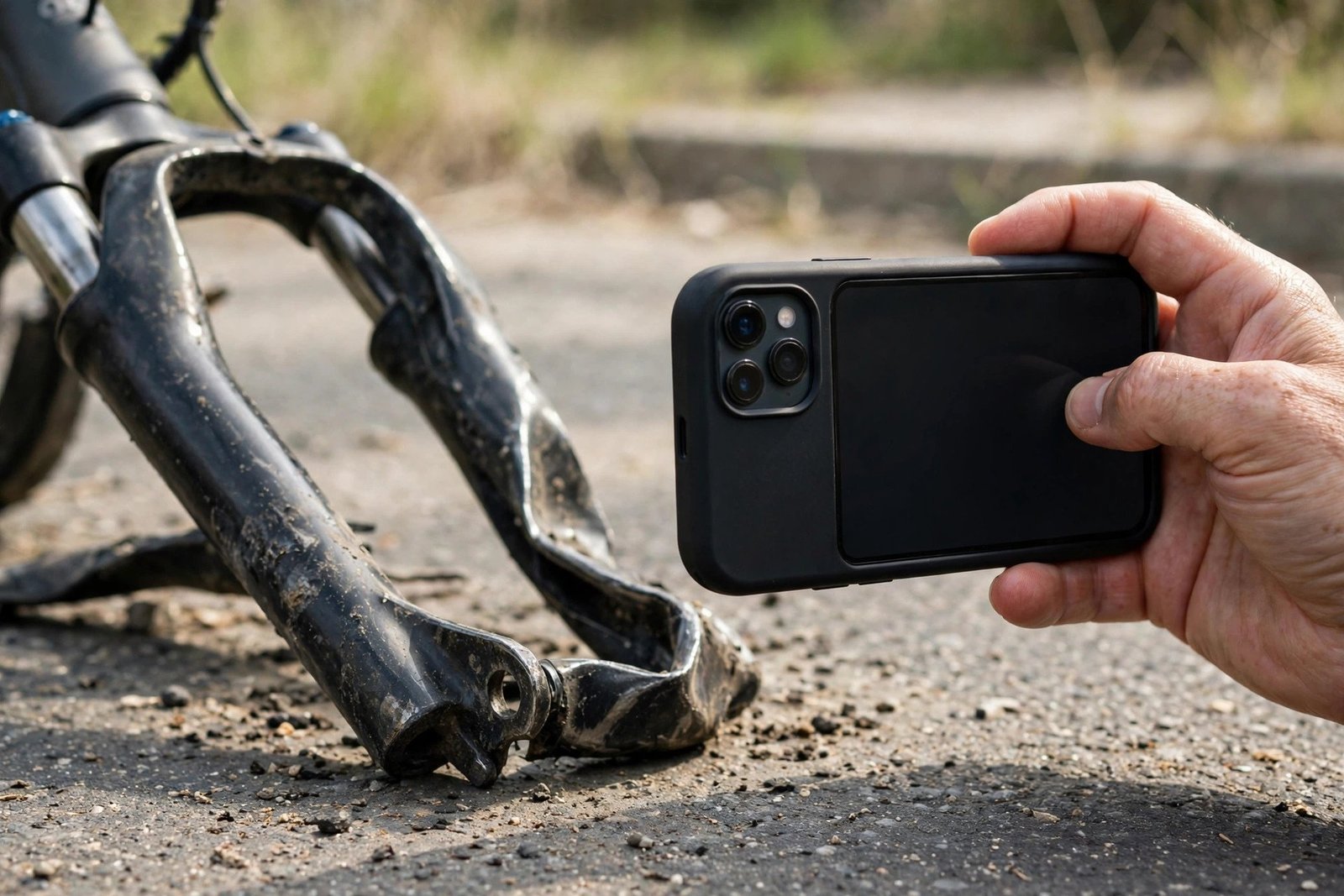
Then the people. Get the other party’s details before they leave — name, phone, vehicle registration, insurance if they will give it. If there are witnesses, get their names and numbers too; a witness who walks away is gone for good. Write it down on the spot, in your phone, not in your head — the shock will eat your memory of a number plate.
Then the police. If anyone is hurt, or another party is involved, call the police and get a report. It is the record everyone else works from — your insurer, theirs, and anyone deciding what happened. Ask for the report number before the officer leaves. If the police will not attend because nobody is hurt, note that you called, and when — it matters.
And the one thing not to say: never admit fault at the scene. Not to the other driver, not to a witness, not to the police officer in passing. You do not know yet what happened — shock and adrenaline make your first account unreliable. Say what you saw, not what you think caused it. Fault is for the report, the insurers, and the evidence you just collected — not for a conversation at the kerb while you are still shaking.
Third, the bike — the battery case, the fork, the frame, the folding mechanism, and the helmet
The third check is the bike, and it is the check most riders rush. Do not ride a crashed bike home until you have checked it. A bent fork, a cracked frame, or a damaged battery can turn a survivable crash into a second one, and the second one happens at speed.
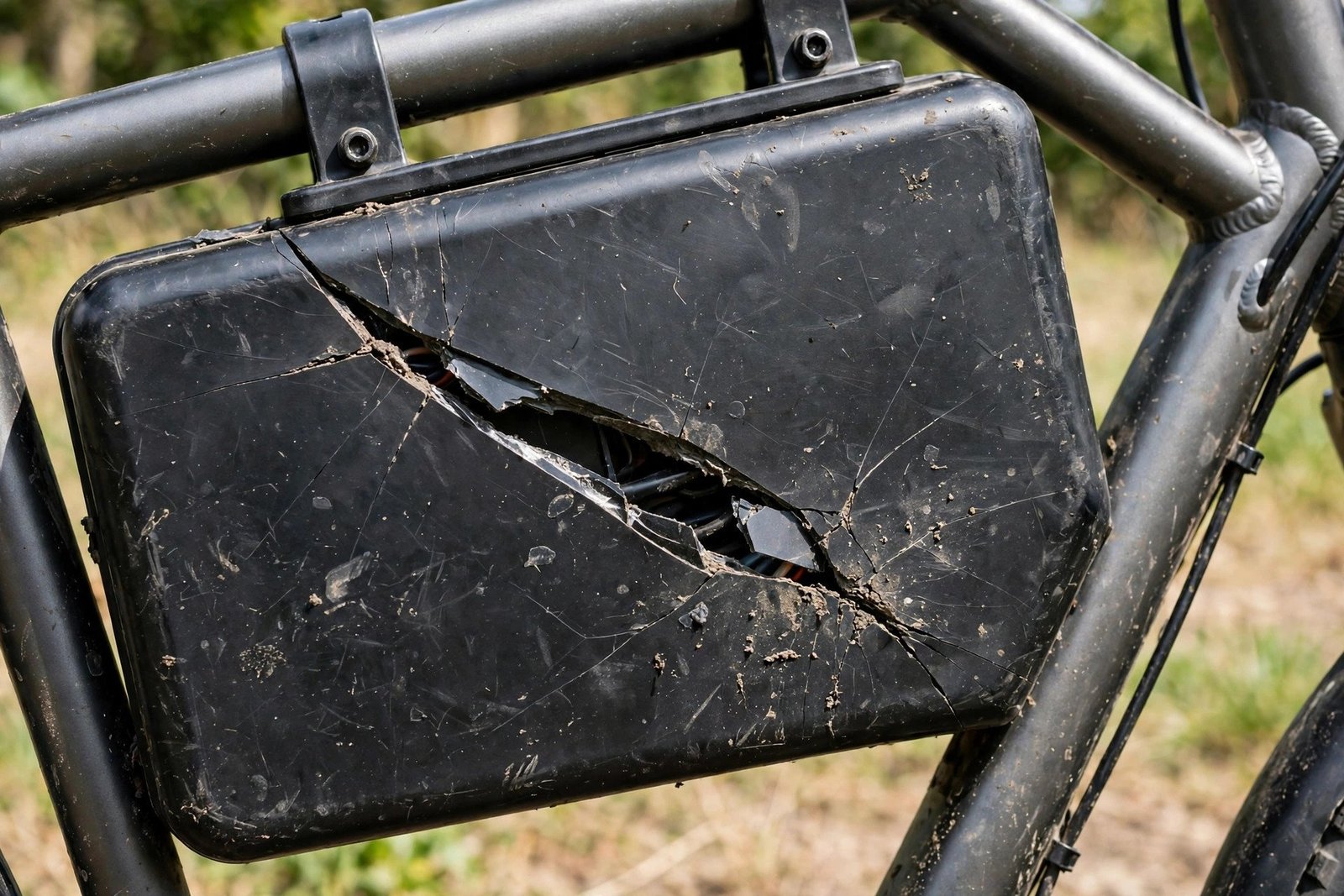
Start with the battery case — the most dangerous part to get wrong. Look at the battery case first, before anything else on the bike. A crack, a dent, a split seam, a case that no longer sits flush — any of those means the cells inside may be damaged, and a damaged lithium cell can catch fire hours later. A cracked battery case is a fire risk, not a cosmetic problem. If the case is cracked, do not charge the battery, do not bring it inside, and do not leave it in the car.
Then the fork. Look down the fork from the front and check that both legs are straight and parallel. A bent fork pulls the bike to one side, and a bike that pulls to one side at speed steers itself into traffic. If the fork is bent or cracked, the bike does not ride home — it walks, or it goes in a car.
Then the frame and the folding mechanism. Check the frame for cracks, especially at the welds and around the folding hinge. On a folder, the hinge takes the force in a fall, and a hinge that is bent, loose, or no longer locks cleanly can fold while you are riding. The Lectric XP Lite 2.0 (Check latest price) is the 49 lb folder — open its latch, close it, and feel whether it locks the way it did before the crash. If the latch feels different, the bike does not ride. The same check applies to the Heybike Mars 3.0, the 70 lb fat-tire folder.
Then the wheels, the brakes, and the handlebars. Spin each wheel and watch it run true — a wobble means a bent rim or a broken spoke, and a wobbling wheel at speed can lock. Squeeze both brakes and feel them bite before the lever reaches the bar. Turn the bars and feel whether the front wheel follows smoothly. If any of those feel wrong, the bike walks home.
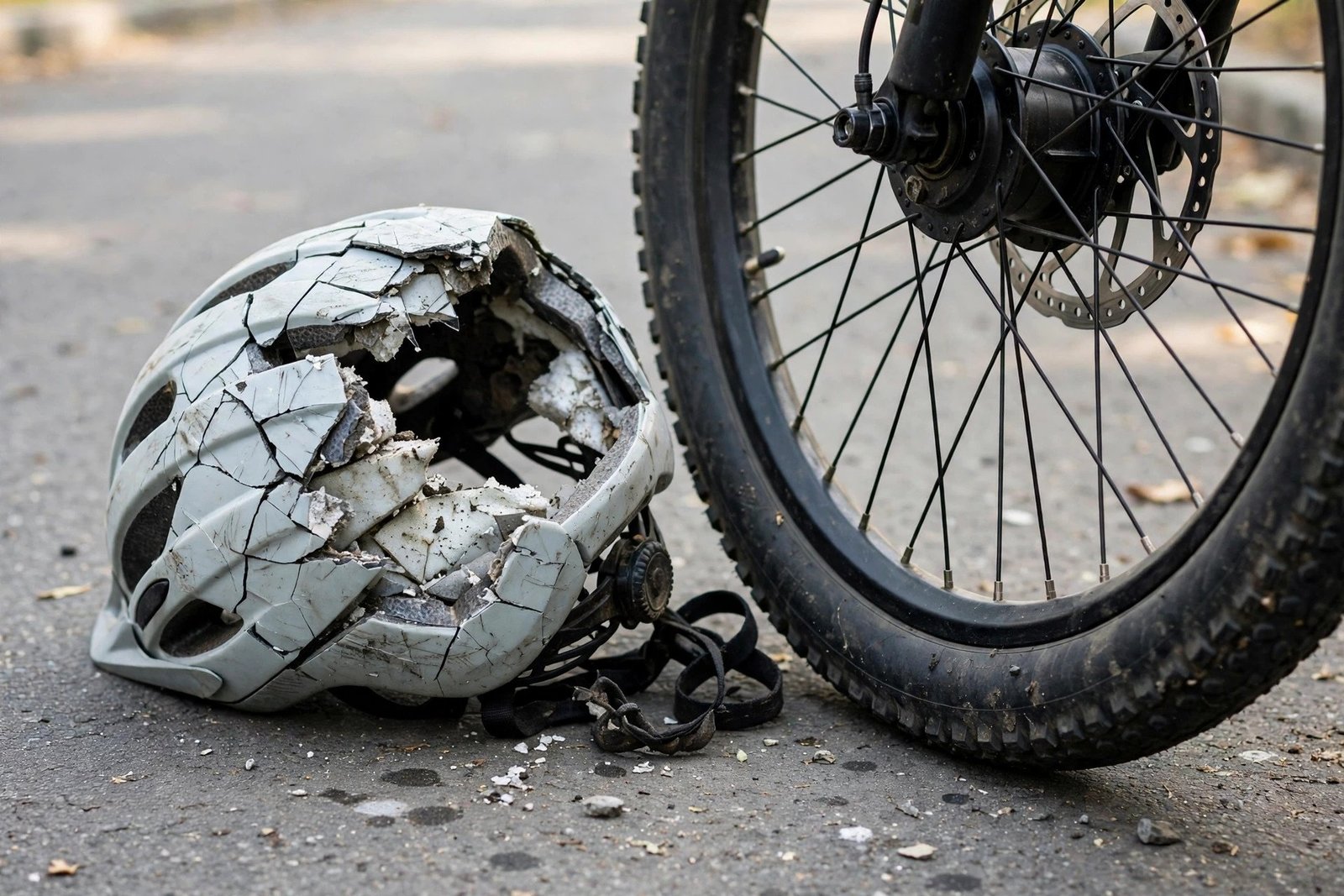
And then the helmet — not part of the bike, but part of the check. Replace the helmet after ANY impact, even if it looks fine. A helmet absorbs a crash by crushing its inner liner, and that crushing is invisible from the outside — the shell can look perfect while the liner inside is spent. A helmet that has taken a hit has done its job once, and it does not get a second job. The Giro Isode MIPS II (Check latest price) is the example with both MIPS and CPSC. The OutdoorMaster Gem (Check latest price) is also MIPS, and it is Virginia Tech 4-star — not 5-star, stated plainly. The Retrospec Dakota (Check latest price) is the budget example — Retrospec states the Dakota complies with the U.S. CPSC Safety Standard. Whichever one you were wearing, if it hit the ground, it is retired — keep it for the photos, then replace it.
The apartment rule — a cracked battery does not come inside
Here is the part no step-list guide writes. The bike lives in your flat, so a cracked battery in the hallway is a fire risk in your home, not a garage problem.
A house has a garage or a driveway — somewhere to put a damaged battery that is not where you sleep. A flat does not. The hallway, the living room, the bedroom are all the same room as far as a battery fire is concerned — a lithium battery burns hot and fast, and fills a flat with toxic smoke in minutes.
So the rule is absolute. A bike with a cracked battery case does NOT come inside the flat until it is checked. Not into the hallway, not onto the balcony with the door open — outside, away from the building, until a shop has looked at it. If the battery is swelling, smoking, or hot: outside, away from people and anything flammable, and call the fire service if it is smoking — the full sixty-second routine is in our battery guide.
If the case looks fine — no crack, no dent, no swelling — bring the bike in, but do not charge it that night. Charge it the next day, somewhere you can watch it, and check it first: any warmth, smell, or swelling means it goes outside and stays there. A battery that survived the crash can still fail the next day — damage inside a cell does not always show on the case.
The paperwork — what to do in the hours after
The first hour is the checks. The hours after are the paperwork, and the paperwork is what turns the crash into a claim, a repair, or a replacement.
Tell your insurer the same day, even if you are not sure you will claim. Most policies have a notification window, and missing it is the easiest way to lose a claim you would otherwise have won. Say what happened, in the order it happened, and stick to what you saw. Give them the photos, the report number, the other party’s details, and the witness numbers — and keep a copy of everything you send.
The question that catches most riders is the one our insurance guide asks first: whether your policy covers the bike at all. A home or renter’s policy may cover a bike, or it may not; a dedicated e-bike policy may cover the battery, or it may exclude it. Check the policy before you assume it covers anything — and if it does not, close that gap before the next ride, not after the next crash.
Then the bike’s own paperwork. Get a written assessment from a shop before you authorise any repair. The shop’s written list — bent fork, cracked case, buckled wheel — is the document the insurer works from, and it tells you whether the bike is worth repairing at all. A repair quote is evidence, and it is also a decision — if the repair costs more than the bike is worth, the honest answer may be a replacement, not a repair.
And keep the broken parts. Do not throw away the helmet, the cracked case, or the bent part until the claim is settled. The insurer may want to see them, and the helmet in particular is the proof you were wearing one — a helmet you threw away is a helmet you cannot prove you wore.
What not to do after a crash
The mistakes after a crash are as predictable as the steps.
Do not ride the bike home untested. The fork you did not check, the wheel you did not spin, the brake you did not squeeze — any of them can fail at speed, and the second crash is worse than the first.
Do not charge a damaged battery. A cracked case, a battery that is warm, swollen, or smelling — charging it is the fastest way to turn damage into a fire. Outside, unplugged, checked by a shop first.
Do not throw away the helmet. It looks fine, it feels fine, and it is spent. Keep it for the photos and the claim, then replace it.
Do not admit fault, do not settle on the spot, and do not sign anything at the scene. The shock is still in your body, and a signature given in shock is a signature you cannot take back.
Do not skip the medical check because you feel fine. The headache at midnight, the wrist that swells by dinner, the memory gap the next morning — all of them are still the crash, hours later. Get checked, and say it was a crash.
Related reading
- My E-Bike Was Stolen — What to Do in the First 30 Minutes (and How to Get It Back)
- Your E-Bike Battery Is Swelling, Smoking or Hot? What to Do in the First 60 Seconds
- Do You Need Insurance for Your E-Bike? (What Apartment Renters Should Check First)
- Best E-Bike Helmets for Commuters (MIPS, Under $80): What Actually Protects You
The bottom line
The first hour after a crash decides three things: your health, your evidence, and whether your bike is safe to bring inside. Check yourself first — adrenaline hides injuries, and concussion signs take hours to show. Secure the scene second — evidence fades fast. Check the bike third — a cracked battery, a bent fork, or a spent helmet can turn one crash into two. And the rule that decides the rest of the evening: a bike with a cracked battery case does not come inside the flat until it is checked. Then the paperwork, the repair, and the new helmet — and the next ride, when you are ready.
Previous: How to Ride an E-Bike Safely (The Beginner’s Technique Guide)
Next: How to Buy an Electric Scooter on Amazon (Read the Listing Like We Do)