Some links in this article are affiliate links. If you buy through them, we may earn a commission at no extra cost to you.
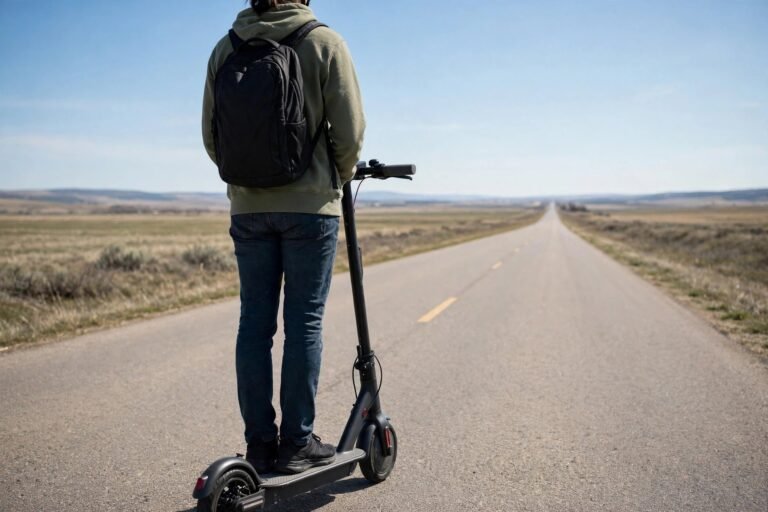
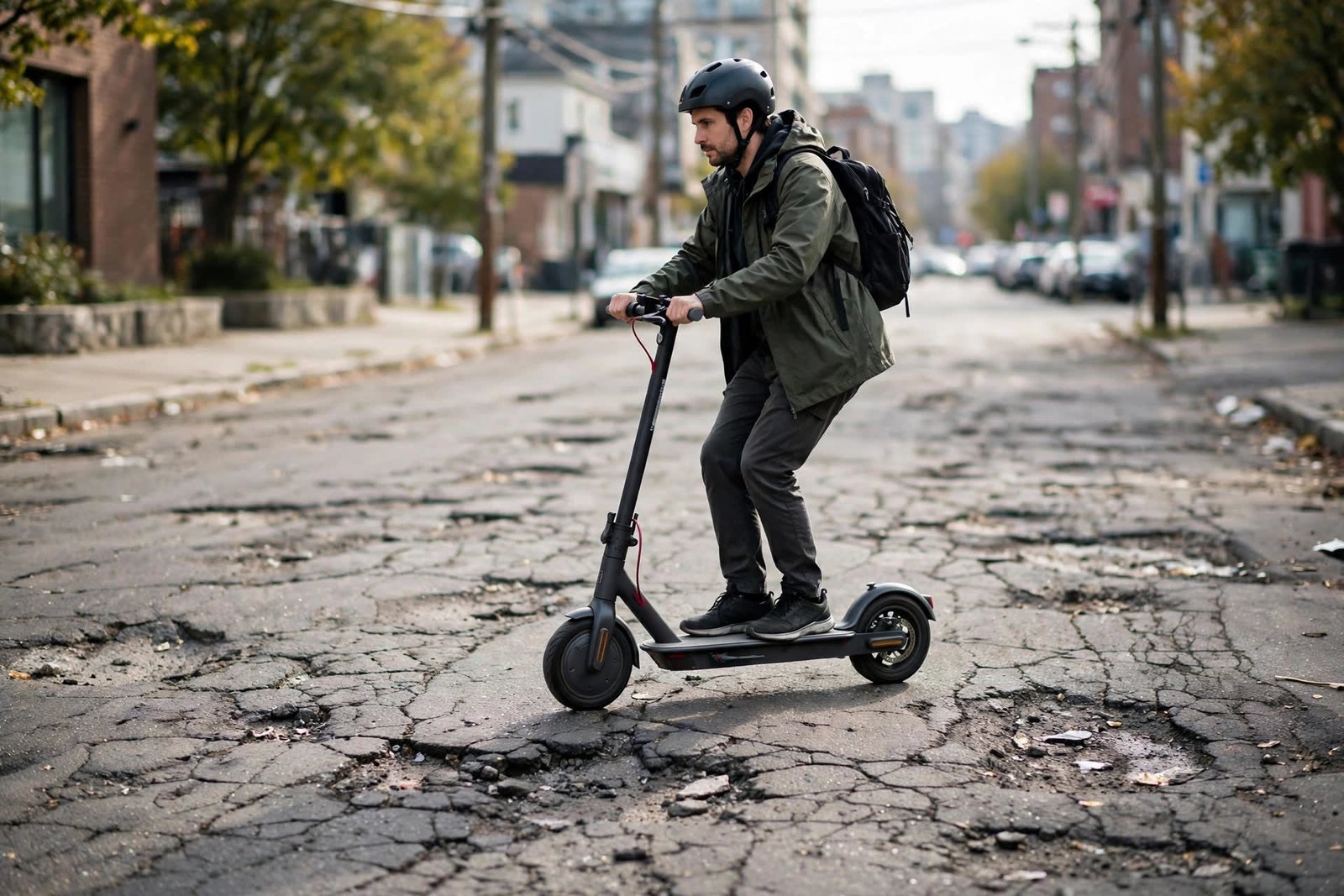
Your commute is not a smooth bike path. It is cracked asphalt, patched potholes, raised manhole covers, and the curb ramp you did not see — and a scooter with no suspension turns every one of them into a jolt through your knees. The guides that rank scooters for rough roads all push the same four-figure machines: the Apollo City, the Kaabo Mantis, the Hiboy Titan, the EMOVE Cruiser, the Apollo Phantom. Nobody writes the budget version — the rough-roads scooter under $800, graded honestly on the parts that actually smooth the ride.
In this guide
💡 The short answer
Buy the scooter with dual suspension and pneumatic tyres, and check the weight before you buy. Dual suspension — front and rear — is the smoothest combination. Pneumatic tyres absorb the small stuff a suspension misses. And a 54 lb scooter is stable over a pothole and a punishment to carry up the stairs — so the rough-roads pick is the one you do not have to carry.
🔢 The three numbers that decide it
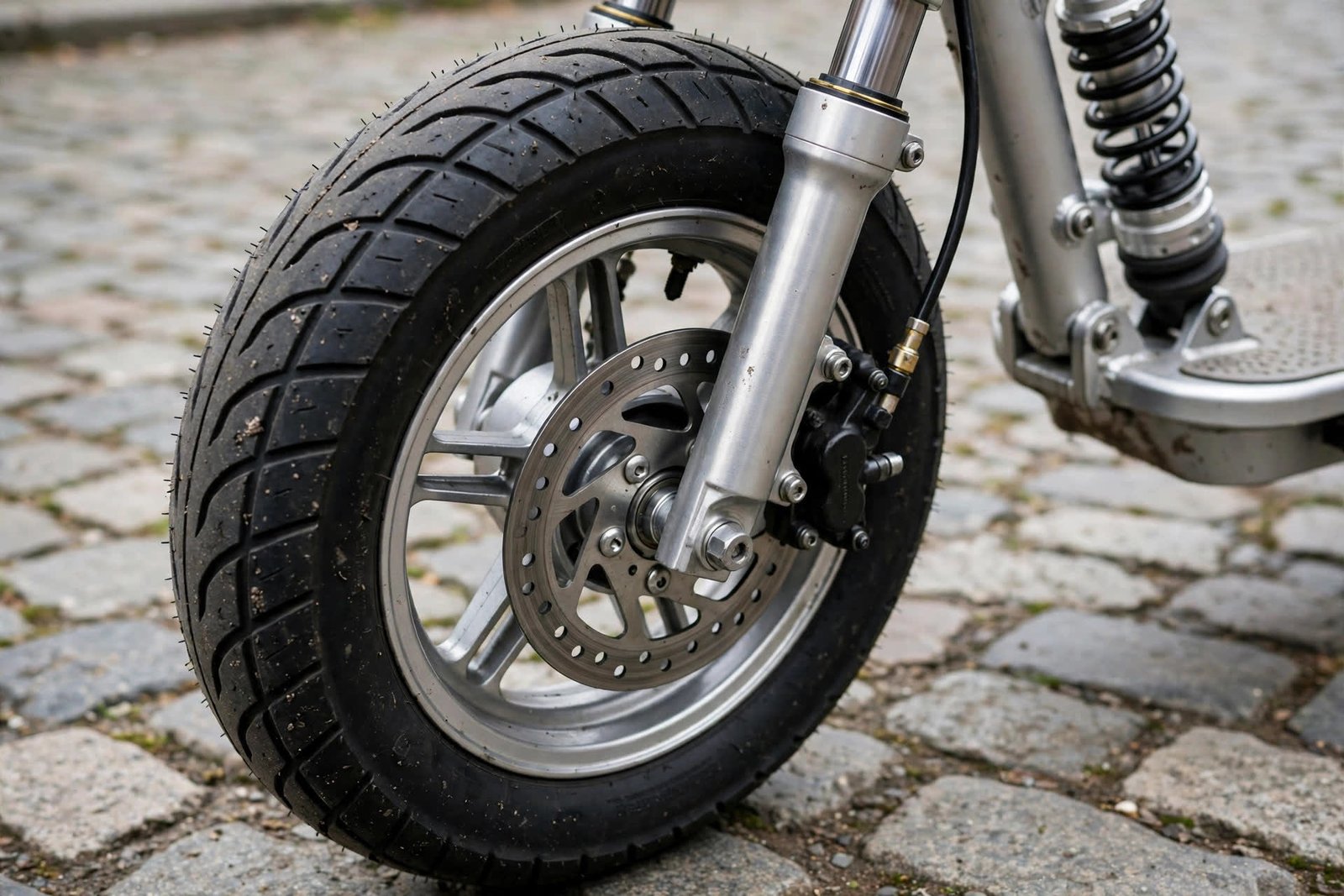
Suspension. Dual suspension — front and rear — is the smoothest combination, because the front wheel hits the pothole first and the rear wheel hits it a moment later, and each end needs its own shock absorber. Front-only suspension is half the answer: the front wheel is cushioned and the rear wheel still kicks. No suspension at all is the warning — every bump goes straight through the deck into your knees.
Tyres. Pneumatic tyres — air-filled — absorb the small stuff: the cracks, the seams, the gravel. One comfort test found pneumatic tyres cut vibration by up to 40% against solid tyres. Solid tyres never puncture and never forgive the road: they pass every shock into your knees, and on a rough road that is the whole ride. The smoothest scooter is the one with both — pneumatic tyres AND dual suspension.
Weight. A heavy scooter is stable over a pothole: 54 lb of scooter does not bounce off a crack the way a 30 lb scooter does. But a 54 lb scooter is a punishment to carry up the stairs, into the office, and onto the train. If your commute ends with a flight of stairs, the lightest scooter that still has pneumatic tyres beats the heaviest scooter with the best suspension. The rough-roads pick is the one you do not have to carry.
Wheel size. A bigger wheel rolls over a pothole instead of dropping into it: an 11-inch wheel bridges a crack that an 8.5-inch wheel falls into. That is why the MAX G3’s 11-inch tyres matter more than they look — the wheel itself is part of the suspension. It is not a substitute for suspension, but on the same rough road, the bigger wheel rides smoother.
📊 The comparison — suspension, tyres, and weight, scooter by scooter
| Scooter | Suspension | Tyres | Weight | Price |
|---|---|---|---|---|
| Segway Ninebot MAX G2 | Dual suspension | 10″ self-sealing pneumatic, 42–48 PSI | 53.5 lb | Check latest price |
| Segway Ninebot MAX G3 | Dual hydraulic, front + rear, adjustable | 11″ tubeless self-sealing, 42–48 PSI | 54.2 lb | Check latest price |
| Hiboy S2 MAX | Dual shock absorbers | 10″ self-healing tubeless | 40 lb | Check latest price |
| Segway Ninebot E2 Pro | None stated | 10″ tubeless pneumatic, 45 PSI | ~41 lb | Check latest price |
| HopCycle | None stated | 8.5″ pneumatic | 31.5 lb | Check latest price |
| Segway Ninebot E2 Plus | None stated | 8.1″ inner hollow | ~31.7 lb | Check latest price |
| Phantomgogo | None stated | 8.5″ (reviews call them solid) | ~30 lb | Check latest price |
| Hiboy S2 Pro | Rear dual shocks only | 10″ solid honeycomb | 37.4 lb | Check latest price |
🏆 The picks
1. Segway Ninebot MAX G2 — the lead pick
The MAX G2 is the lead pick because it is the cheapest scooter in this guide with real dual suspension — front and rear — and the suspension is verified, not assumed. Its 10-inch self-sealing tubeless pneumatic tyres run at 42–48 PSI, so the tyres absorb the small stuff and the suspension absorbs the big stuff. At 53.5 lb it is heavy enough to stay planted over a pothole, and it costs less than half of the Apollo City the roundups push. The trade-off is the weight: if your commute ends with stairs, the MAX G2 is a two-handed carry. But on the road itself, nothing under $800 rides smoother.
The self-sealing tyres are worth a sentence: sealant inside the tyre closes small punctures as they happen, so a nail in the road is a slow leak you notice at home, not a flat you walk home with. On a rough road, where debris is part of the surface, that is not a luxury — it is the difference between riding home and carrying the scooter home.
2. Segway Ninebot MAX G3 — the long-range pick
The MAX G3 is the most comfortable scooter in this guide, and the suspension is verified from Segway’s own user manual: a front twin-tube hydraulic shock absorber and rear dual hydraulic shock absorbers, adjustable at both ends. Its 11-inch tubeless self-sealing tyres are the biggest in this guide — a bigger wheel rolls over a pothole instead of dropping into it — and they run at 42–48 PSI. At 54.2 lb it is the heaviest and the most expensive pick here, but it is also the only one with hydraulic suspension and a 597Wh battery that claims 50 miles. If your road is truly bad and your commute is long, this is the scooter that makes it bearable.
3. Hiboy S2 MAX — the value pick
The S2 MAX is the value pick: dual shock absorbers and 10-inch self-healing tubeless tyres. The shocks are not hydraulic, so the ride is firmer than the Segways’, but the combination of dual shocks and air-filled tyres handles cracked streets and potholes honestly. At 40 lb it is 13 lb lighter than the MAX G2, which matters if you carry it up a flight of stairs every day. The S2 MAX is the pick for a rider whose road is rough but whose budget is not $700.
4. Segway Ninebot E2 Pro — the budget comfort pick
The E2 Pro is the budget comfort pick, and it is graded on its tyres alone: 10-inch tubeless pneumatic tyres at 45 PSI, with no suspension stated anywhere. That sounds like a weakness, and it is — but the tyres are the right size and the right type, and pneumatic tyres alone cut vibration by up to 40% against solid tyres. At about 41 lb, it is the cheapest scooter here with 10-inch pneumatic tyres, and it is light enough to carry. It will not float over a pothole the way the MAX G2 does. It will ride a cracked street without punishing your knees, and that is what a budget comfort pick needs to do.
5. HopCycle — the lightest pick
The HopCycle is the lightest pick at 31.5 lb, and the lightest scooter you can carry up the stairs without thinking about it. Its 8.5-inch pneumatic tyres are air-filled, so they absorb the small stuff, but no suspension is stated for this model — so it is graded on tyres and weight alone, and the article says so. It is the cheapest scooter here with pneumatic tyres, and the small wheels are the trade-off: an 8.5-inch wheel drops into a pothole that an 11-inch wheel rolls over. If your road is cracked but not cratered, and your commute ends with stairs, the HopCycle is the honest pick.
6. Segway Ninebot E2 Plus — the second budget pick
The E2 Plus is the second budget pick, and it is graded on its tyres alone: 8.1-inch inner hollow tyres, with no suspension stated. The inner hollow design is puncture-proof and absorbs more shock than solid rubber — Segway’s own description — but it is not a pneumatic tyre, and the 8.1-inch size is the smallest in this guide. Do not confuse it with the E2 Plus II, which has a 27 mm front spring suspension: that suspension belongs to the II only, and the II is a different scooter we do not link. At about 31.7 lb, the E2 Plus is light and cheap, and its ride is firm. It is the pick for a smooth road with a rough patch, not a rough road all the way.
7. Phantomgogo — the cheapest pick
The Phantomgogo is the cheapest pick, and the firmest ride in this guide. Its 8.5-inch tyres are solid according to two independent reviews — the listing does not state the type — and no suspension is stated anywhere. Solid tyres never puncture, and they never forgive the road: every crack and pothole goes straight through the deck. At about 30 lb it is the lightest scooter here, and it folds flat for the apartment. Buy it for the price and the weight, not for the ride — and if your road is genuinely rough, buy the HopCycle instead, for pneumatic tyres.
The warning — Hiboy S2 Pro: do not buy it for rough roads
The Hiboy S2 Pro looks like a commuter and rides like a jackhammer on a rough road, and it is the warning in this guide. Its 10-inch tyres are solid honeycomb — they never puncture, and they never absorb anything — and its suspension is rear dual shocks only, with no front suspension at all. The front wheel, which hits every pothole first, has nothing to cushion it. It costs more than the E2 Pro, which has pneumatic tyres, and less than the S2 MAX, which has dual shocks and pneumatic tyres. If your road is rough, the S2 Pro is the wrong scooter at the wrong price — buy the S2 MAX instead.
🛞 The PSI check — lower pressure for rough roads, never below the sidewall minimum
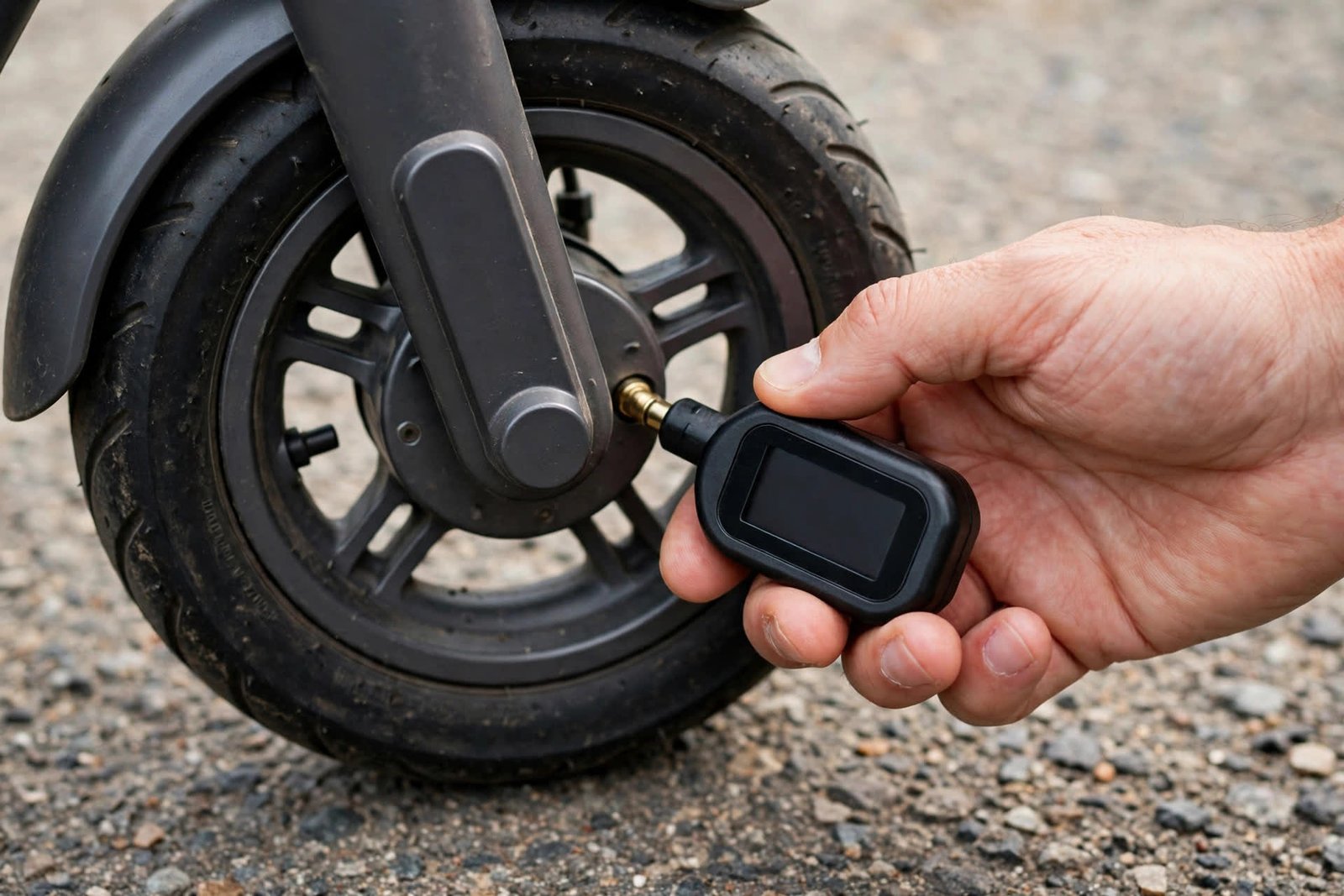
Suspension and tyres do the work, but pressure decides how much of it they do. Lower pressure for rough roads: a softer tyre deforms around a crack instead of bouncing off it. But never below the sidewall minimum — the minimum pressure printed on the tyre’s sidewall — because a tyre run too soft will pinch, overheat, and wear out fast. Check the sidewall, check the pressure, and check it weekly: a pneumatic tyre loses air slowly, and a tyre that was right last month is soft today.
Cold weather drops pressure too: a tyre that was right in September is soft in November, because air contracts as it cools. Check the pressure when the season changes, not just when the tyre looks flat — by the time a pneumatic tyre looks flat, it is already far too soft.
Our Tire Pressure Calculator gives you the right pressure for your weight and your tyres — run it once for your scooter, and write the number on a sticker on the stem. The calculator is free, and it takes less than a minute.
🚫 What not to do
Do not buy the cheapest scooter and hope the road is kind. The Phantomgogo and the S2 Pro are both in this guide for a reason — one is cheap and firm, the other is expensive and firm — and neither is the rough-roads pick. Do not buy suspension you cannot verify: if the listing and the manual do not say it, it is not there. And do not forget the stairs: the smoothest scooter in the world is the wrong scooter if you cannot carry it into your flat. The rough-roads pick is the one with dual suspension, pneumatic tyres, and a weight you can live with — in that order.
📚 Related reading
- Best Electric Scooter for Long Commutes (10+ Miles): Real Range, Not the Box Claim
- Solid vs Pneumatic Scooter Tires: Which One for Commuting? (Flats vs Comfort)
- How to Fix a Flat Tire on Your E-Bike or Scooter (the Commuter’s Roadside Guide)
- Best Electric Scooter for Hills (Steep Climbs, Tested)
✅ The bottom line
A pothole is a suspension question, not a motor question — and the cheapest scooter that answers it is not the cheapest scooter. The MAX G2 is the lead pick: dual suspension and pneumatic tyres. The S2 MAX is the value pick. And the S2 Pro is the warning: solid tyres, no front suspension, and a price that buys you a worse ride than the dearer S2 MAX. Check the suspension, check the tyres, check the weight — and check the pressure every week.
Previous: Article #91 “How to Ride an E-Bike in Traffic (Cars, Intersections, and the Dooring Zone)”
Next: Article #93 “Can I Charge My Electric Scooter at Work? (The Commuter’s Guide — Ask First, Then Plug In)”