Some links in this article are affiliate links. If you buy through them, we may earn a commission at no extra cost to you.
You stopped riding because your back hurt. Now you are wondering whether an e-bike changes anything. It can — but only if the bike is built for a sore back, not just fitted with a motor. A motor helps your legs, not the lean or the bumps. This guide is about the bike that fixes both, at a price a commuter can pay.
In this guide
This guide compares design features; it does not diagnose or treat back, knee, hip or neck conditions. If riding causes persistent, worsening or radiating pain, stop riding and speak with a qualified healthcare professional. No bike on this page cures back pain.
The short answer
Buy an upright, step-through e-bike with a suspension fork and fat tyres, and make sure it fits you. That is the whole guide in one sentence. Below is how to tell, bike by bike, whether those three things are really there — because listings claim all of them, and half of them are lying.
The three features that actually help
Check these three first, against the listing, not the headline.
1. Upright geometry — handlebars above the saddle
What you want is swept-back handlebars on an adjustable stem, with the grips at or above saddle height. Swept-back bars curve toward you, and an adjustable stem lets you raise the bars without a bike shop. Sit on the bike and check: if your back is straight and your elbows are slightly bent, the geometry is right.

2. A step-through frame — no high leg swing to mount
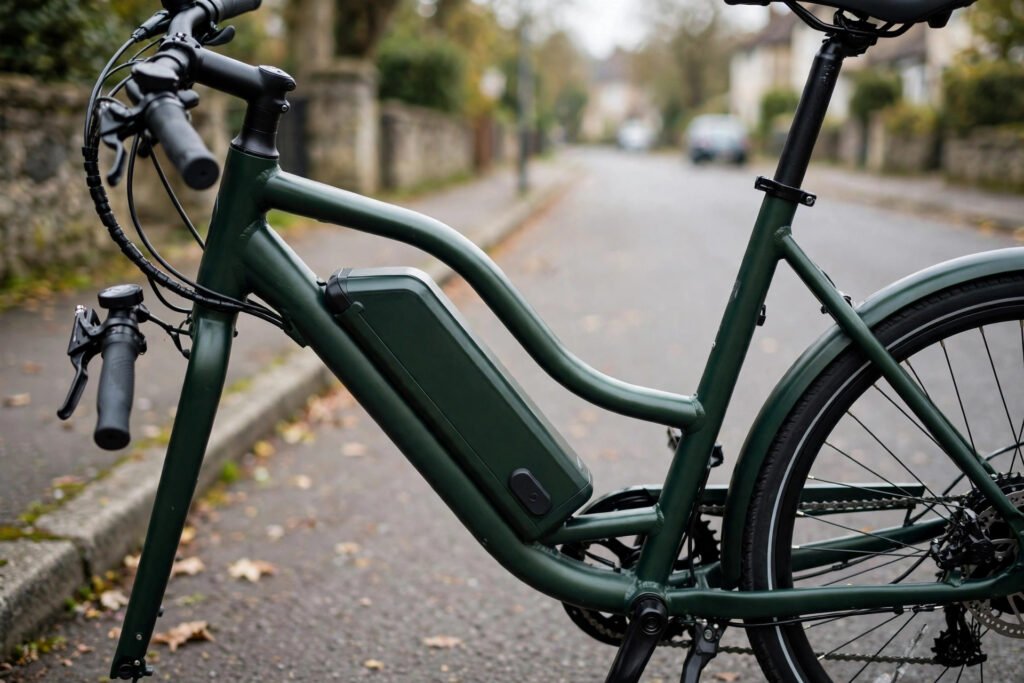
On a step-through frame the top tube dips low between the handlebars and the seat, so you step through the bike instead of swinging a leg high over the back wheel. Mounting is where a sore back complains first, before you have ridden a metre. Seven of the ten bikes on this page are step-through, and the three that are not are flagged as such.
3. Suspension and fat tyres — the bumps stop at the bike
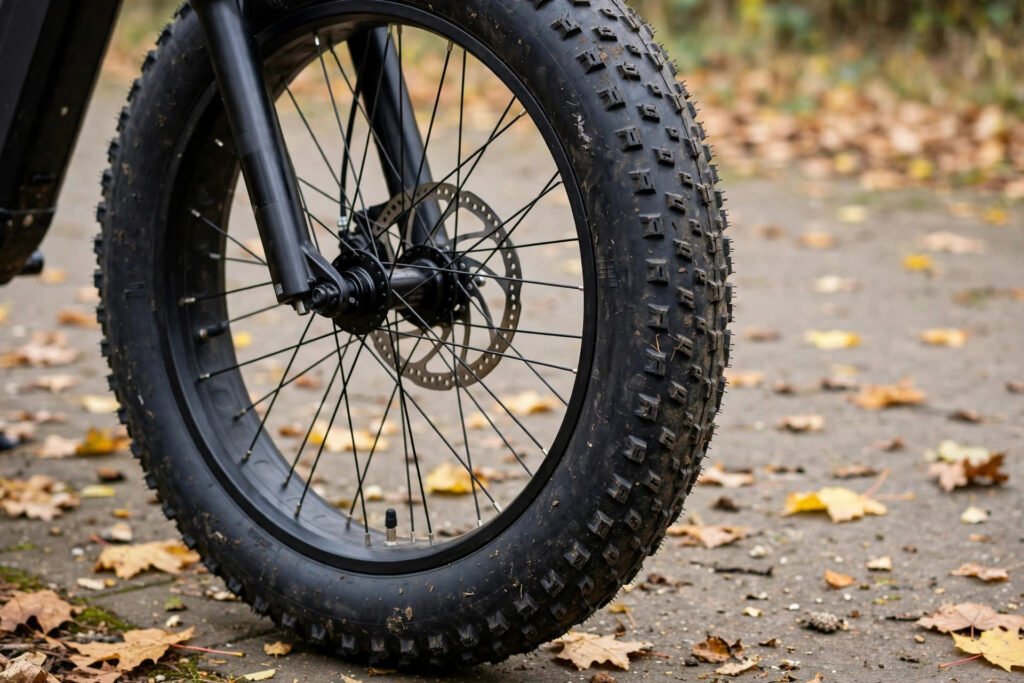
A suspension fork takes the edge off curbs and potholes. A fat tyre — 4 inches wide, run at low pressure — spreads every bump over a bigger patch of rubber. Together they make a fat-tyre e-bike ride softer than a city bike with skinny tyres and no suspension. The bikes that do both are the ones that feel different on a rough road, not just on paper. Never buy a back-pain bike with neither — a rigid fork and 2-inch tyres on a potholed street is the exact ride that made you stop riding.
The ten picks at a glance
| Bike | Step-through? | Suspension | Tyres | Price |
|---|---|---|---|---|
| Heybike Mars 3.0 | Yes | Full (front + rear) | 20″ x 4.0″ fat | No price quoted |
| Aipas M1 Pro | Yes | Full | 26″ x 4.0″ fat | Check latest price |
| Jasion RetroVolt | Yes | Dual (front + rear) | 20″ x 4.0″ fat | Check latest price |
| TST Electric Bike | No — folding frame | Dual (front + rear) | 20″ x 4.0″ fat | Check latest price |
| isinwheel M10 Plus | No | Not stated | 26″ x 4.0″ fat | Check latest price |
| Lectric XP Lite 2.0 | Yes | None — rigid fork | 20″ x 2.5″ street | Check latest price |
| Jasion EB6 | Yes | Front | 20″ wheels | Check latest price |
| Jasion EB5 | Yes | Front (80 mm) | 26″ x 1.95″ | Check latest price |
| Funhang EB-M1 | No | Front | Not stated | Check latest price |
| AYOLNY 26″ | Yes | Front | 26″ x 1.95″ | Check latest price |
The full-comfort picks
If your back is the reason you stopped riding, start here.
Heybike Mars 3.0 — the lead pick
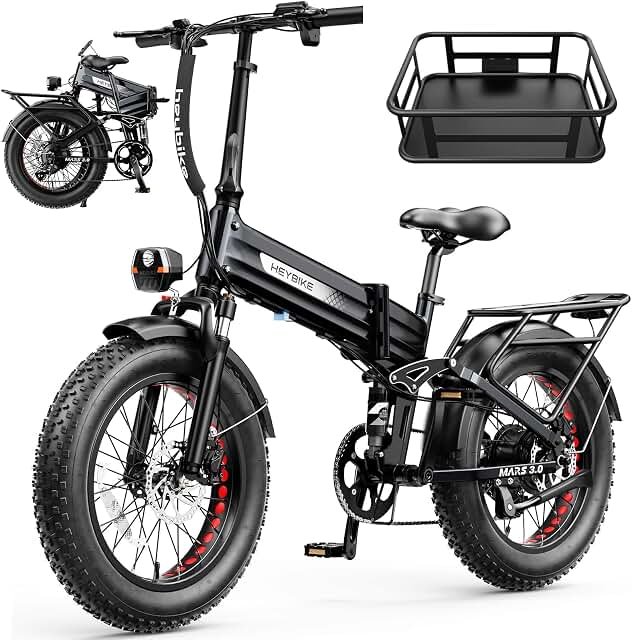
The Mars 3.0 is the most complete back-pain bike in our catalogue. It is a step-through — Popular Science describes it as “a dirtbike-ish with a step-through aluminum frame” — with full suspension: a front hydraulic fork with 65 mm of travel and a rear Horst-link shock. The 20″ x 4.0″ fat tyres add the second layer, and the 750W motor with 1,400W peak and 95 Nm of torque means you never have to stand on the pedals to get up a hill. At 70 lb it is heavy, and the battery comes out only after you fold the frame. At 70 lb, do not buy this bike if you have to carry it up apartment stairs. It carries up to 440 lb and runs a 624Wh battery. We never quote a price for the Mars 3.0, and we never claim UL 2849 for it — its battery is UL 2271 only.
Aipas M1 Pro — the big fat-tyre pick
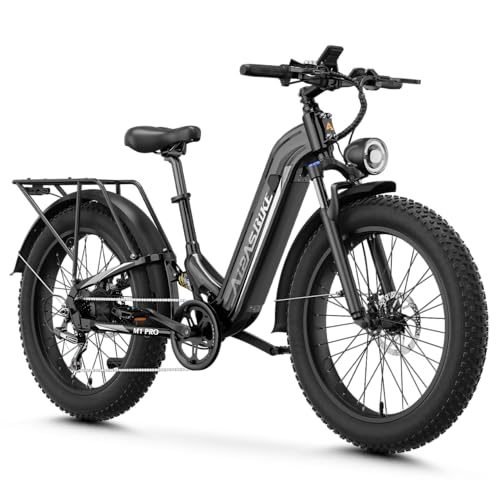
The Aipas M1 Pro is the biggest and most powerful bike on this page. It is a step-through with full suspension, 26″ x 4.0″ fat tyres, an 1,800W peak motor and 110 Nm of torque — the most torque of any bike here. On a steep hill, torque keeps you seated instead of standing and pushing. The trade-offs are size and weight: 88 lb, and a 26-inch frame that takes up real space in a hallway. The payload is listed as 450 lb in some places and 500 lb in others, so we do not fix it to one number — plan around the lower figure.
Jasion RetroVolt — the comfort pick under $550
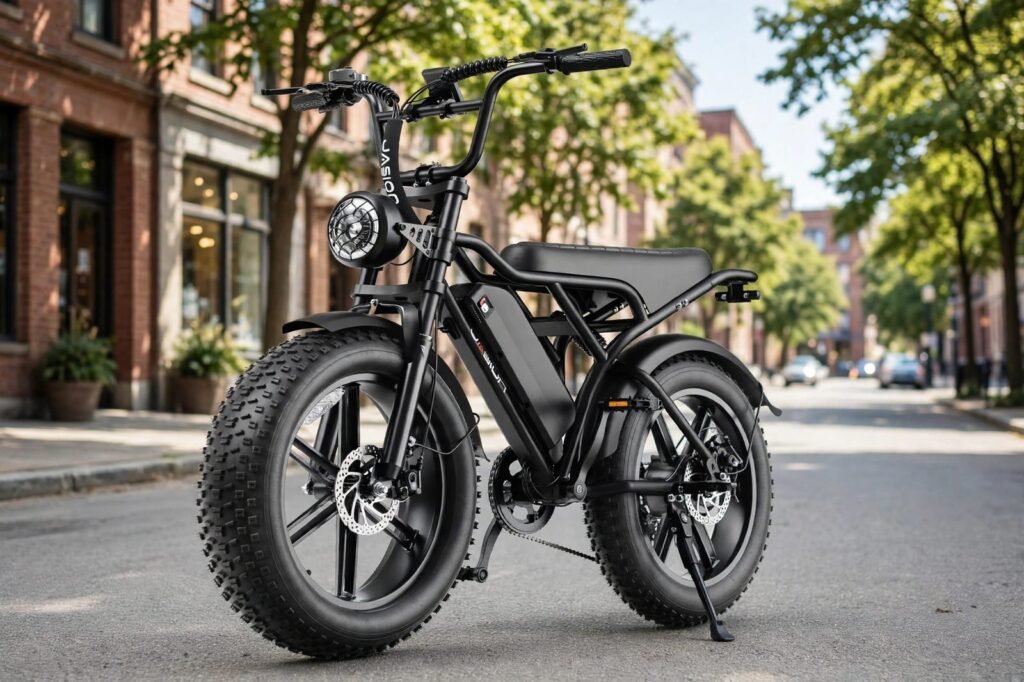
The RetroVolt is a step-through with dual suspension and fat tyres for around half the price of the Aipas. It is a step-through — one review puts it plainly, “features a step-through geometry for easy mounting” — with front and rear suspension, 20″ x 4.0″ fat tyres, a 750W rated motor with 2,000W peak, and a 48V battery listed at 15Ah (one review prints 13Ah — we use the listing’s figure). Class 2, UL 2849 certified, with up to 70 miles on pedal assist and a 330 lb payload. For a sore back on a budget, this is the best value on the page: step-through, suspension at both ends, and fat tyres. Do not confuse it with the RetroVolt Pro (2,000W peak, 52V 20Ah, 90 miles) — a different bike.
The value picks
Three of these four are step-through with a front suspension fork; the Funhang is the step-over exception. They do one layer of bump absorption instead of two, and they cost a third to a half of the full-comfort picks.

Funhang EB-M1 — cheap, but a step-over
The Funhang is the cheapest bike on this page. It is a step-over, not a step-through — only buy it if you can lift a leg over a top tube without pain — with a front suspension fork and full fenders included. The 500W motor with 1,000W peak is modest, and the cushion comes from the front fork alone. Riders from 5’3″ to 6’1″ are the listed height range, but every one of them has to swing a leg over the top tube to mount. No weight is stated on the listing — figures conflict (62.83 lb in our records, 49.6 lb on sibling listings) — so we do not quote one here. It is sold as UL 2849-certified, with a 300 lb payload.

AYOLNY 26″ — the budget pick
The AYOLNY is the budget step-through on this page. It is a step-through — the listing says “carbon steel step-through frame for easy mounting and dismounting” — with front suspension, a 1,000W peak motor, a 36V 10.4Ah battery, a 20 mph top speed and up to 40 miles on pedal assist. The 26″ x 1.95″ tyres are city tyres, not fat tyres, so the fork does the bump work alone. The step-through frame and the price are the point. One flag: the U2 variant listing prints 750W peak and a 36V 13Ah battery. Those figures belong to a different variant — the linked model is the 1,000W peak with the 36V 10.4Ah battery.

Jasion EB5 — the cruiser pick
The Jasion EB5 is the cruiser of this page: a step-through built for a relaxed, upright ride. Jasion’s own page calls it a step-through cruiser with an 80 mm front suspension fork, a 1,200W peak motor, 60 Nm of torque, a 48V 11Ah removable battery, 26″ x 1.95″ tyres and a 28 mph top speed. The listing prints 1,000W peak instead — we use Jasion’s figure. The payload is listed as 300 lb in the description and 330 lb in the spec table, so plan around 300 lb. Its case is the riding position: a cruiser frame with swept-back bars and a fork that takes the edge off the road. The 26″ x 1.95″ tyres are regular-width tyres — Jasion’s own page calls them “fat tires”, but 1.95 inches is a regular width. Do not confuse it with the EB5 Ultra, a different, unverified model.

Jasion EB6 — the folding step-through pick
The Jasion EB6 is the only folding step-through on this page, and that combination matters in an apartment. It is a step-through with front suspension, 20-inch wheels, a folding frame, a 7-speed drivetrain and dual disc brakes, at around 59 lb. It folds for the hallway or the car boot. Two numbers we do not cite: the peak motor (1,000W vs 1,200W) and the battery (10.5Ah vs 13Ah). The 48V battery is the only figure all the listings agree on, so that is the only one this guide states.
The honest trade-offs
Each one is missing a feature the picks above have, and this section says so plainly.
Lectric XP Lite 2.0 — step-through, but no suspension
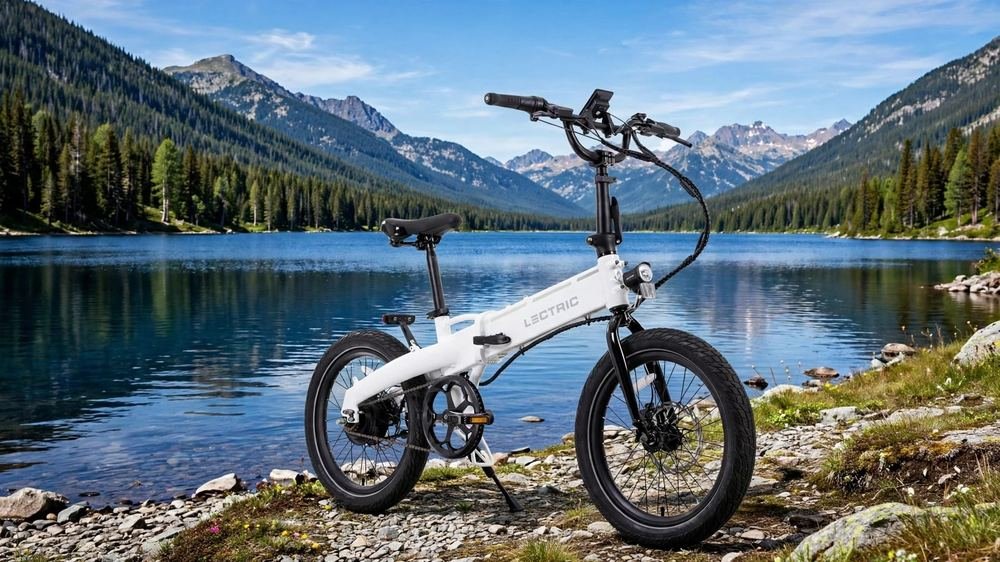
The Lectric is the lightest bike on this page at 49 lb — 41 lb with the battery out. It is a step-through with a low 22-inch step-over, a 300W motor with 819W peak, 28 Nm of torque, a 48V 7.8Ah battery, 20″ x 2.5″ street tyres and a 275 lb payload, for riders from 4’8″ to 6’2″. But it has no suspension — the fork is rigid steel, and this guide does not claim otherwise. On broken pavement, the bumps go straight through the rigid fork into your hands and your spine. Buy this one if your roads are smooth and you need the lightest bike.
TST Electric Bike — dual suspension, but a folding frame, not step-through
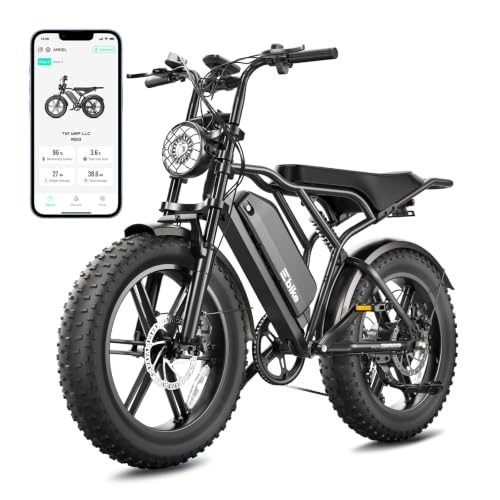
The TST is the value fat-tyre pick, and the only bike on this page with dual suspension at this price that is not the RetroVolt. The R004 manual lists a 750W motor with 1,500W peak and 90 Nm of torque, a 48V 15Ah removable battery, 20″ x 4″ fat tyres, and dual suspension — front and rear hydraulic. The 720Wh battery and the 450 lb payload make it a strong all-rounder for the 15Ah variant. The trade-off is the mount: this is a 20-inch folding frame, not a step-through. You swing a leg over to get on. If mounting is your main problem, the step-through picks above are the better choice; if the bumps are your main problem, the TST’s dual suspension and fat tyres are the best cushion at this price. We do not cite the 2,000W peak some listings print — the manual says 1,500W peak. The manual lists the weight at 66 lb (one roundup prints 87.76 lb).
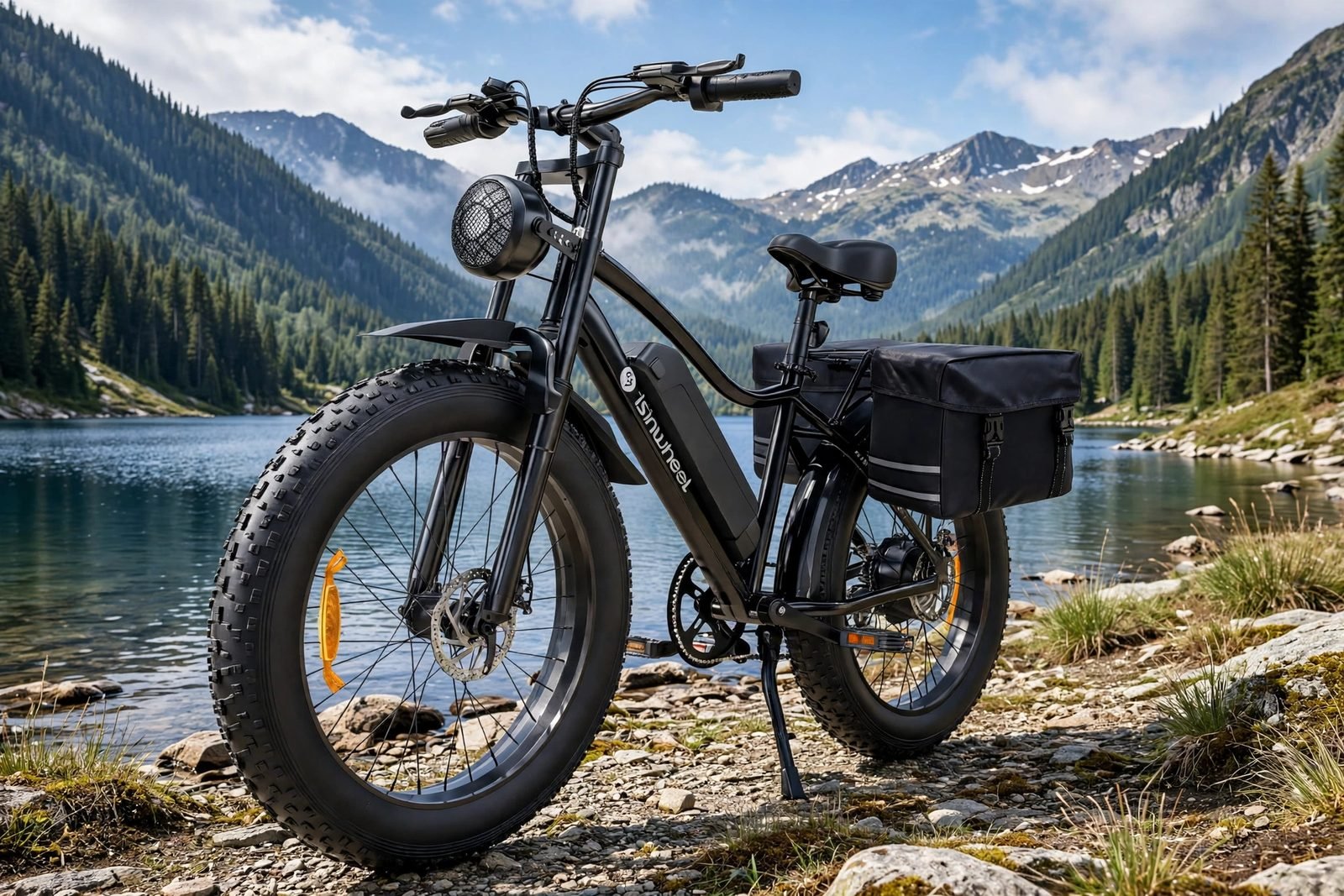
isinwheel M10 Plus — fat tyres without the easy mount
The isinwheel M10 Plus is the warning example on this page: a bike with the right tyres and the wrong frame for a sore back. It has 26″ x 4.0″ fat tyres — the biggest cushion on this page after the Aipas. But it is not a step-through, and this guide says so plainly. You swing a leg over a full-size 26-inch frame to mount it. Its suspension is also not stated in the listing, so this guide grades it on its tyres alone and does not claim a fork it may not have. The motor is listed at 1,000W peak against 900W in the manual, and the range at 75 miles against 45–65 miles — both conflicts stated, not resolved. Buy this one for the tyres if the mount does not bother you.
The five-minute test before you keep the bike
A bike’s comfort is decided in the first five minutes. Ride it the way you will actually ride it — over the worst stretch of road near your home, not around a car park. These are the four checks.
First, the mount. Step on and off five times. If any one of them makes your back complain, the frame is wrong for you.
Second, the posture. Sit upright: your back straight, your elbows slightly bent. If you are reaching forward and down, raise the stem — and if the stem does not go high enough, the bike does not fit you.
Third, the bump test. Ride over a curb cut and a patched stretch of road. You should feel the bump in the bike, not in your spine.
Fourth, the fit. The wrong size forces a lean no stem adjustment can fix. Our Size & Fit Finder takes your height and inseam and tells you which of our bikes fit you. Use it before you buy, not after the box arrives.
Related reading
- Best E-Bikes for Bad Knees & Arthritis (Under $800): Step-Through, Throttle, and No Pain
- Best E-Bikes for Short Riders (Under 5’4″): Low Step-Over, Under $800
- Best Step-Through E-Bikes for Seniors in Apartments (Folding, Under $1,000)
- Will a Folding E-Bike Fit You? Height, Standover and the One-Size Problem
- Best E-Bike for College Students (Check the Dorm Rules First)
The bottom line
Back pain on a bike is a geometry problem and a bump problem, and both are fixed by the bike, not by you. The Mars 3.0 is the most complete answer, the RetroVolt is the best value, and the Funhang is the cheapest bike here — but only if you can mount a step-over without pain. None of them cures back pain. The right one makes riding possible again.
Previous: Article #89 “Can You Take an Electric Scooter on a Plane? (The Battery Rules That Decide It)“
Next: Article #91 “How to Ride an E-Bike in Traffic (Cars, Intersections, and the Dooring Zone)”