
Some links in this article are affiliate links. If you buy through them, we may earn a commission at no extra cost to you.
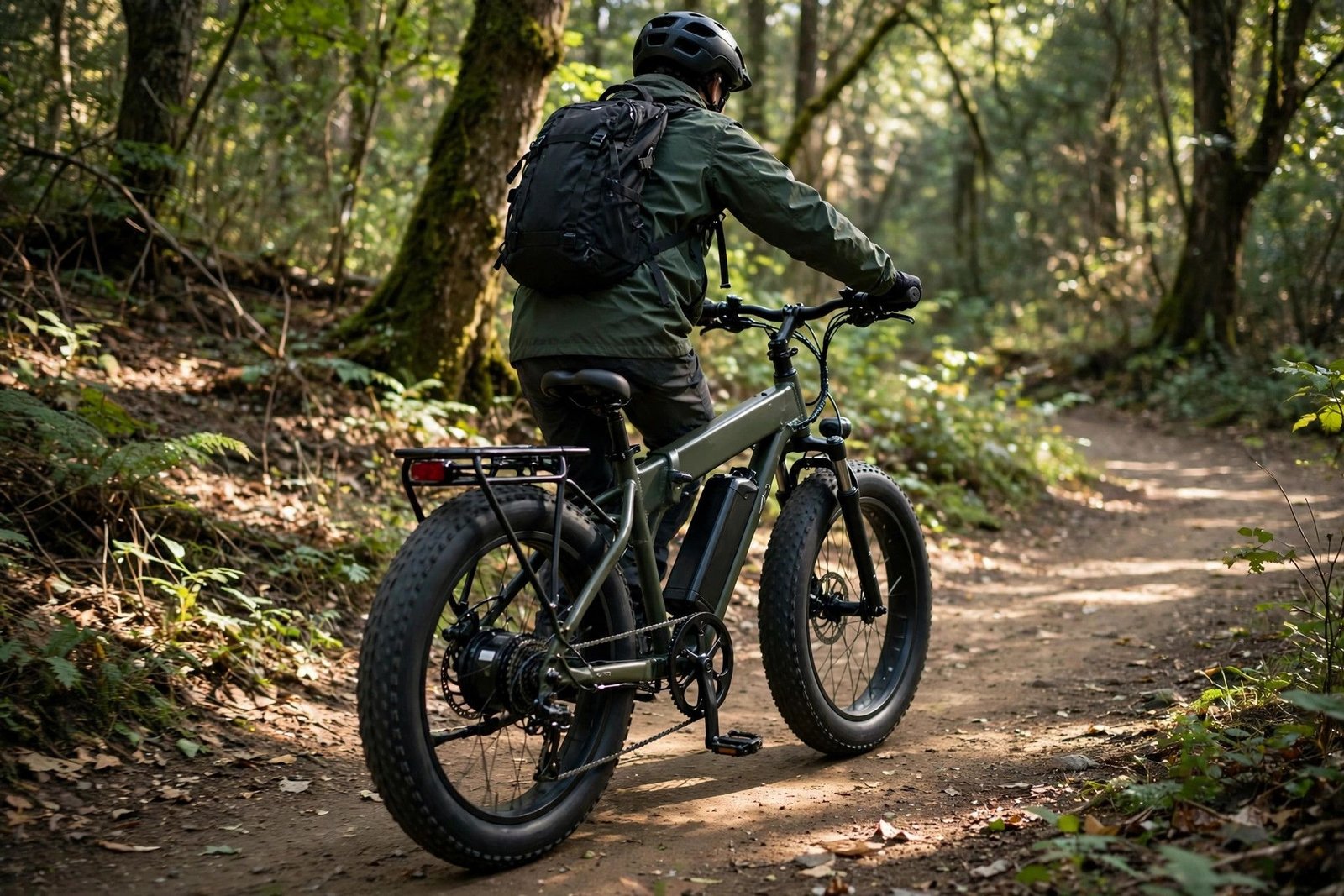
Your weekend plan is simple: ride dirt trails, not pavement. Gravel, packed dirt, roots, mud — and a bike that does not rattle apart halfway through. Which affordable e-bike actually handles trails instead of falling apart on them?
In this guide
- The short answer
- The three numbers that decide a trail bike
- A budget trail bike is not a dirt bike
- The picks — seven bikes, cheapest first
- The lead pick — Funhang Electric Bike
- The certified pick — Hoverfly OUREA 26″ Electric Bike
- The full-suspension pick — TST Electric Bike
- The balanced pick — isinwheel M10 Plus
- The torque pick — Aipas M1 Pro Electric Bike
- The full-suspension pick — Heybike Mars 3.0
- The power pick — AMYET EB26 26″ Electric Bike
- The trail rules — which trails allow e-bikes
- Trails eat range — plan for it
- The honest limit — a light-trail bike, not a downhill bike
- Before you buy
- Related reading
- The bottom line
The answer is not the wattage on the box. A trail bike is a suspension question first, a tyre question second, and a motor question third — and it is not a dirt bike. Here are the three numbers, the trail rules, and seven bikes from our own catalogue, cheapest first.
The short answer
Buy the bike with the suspension and the tyres, not the one with the biggest motor. The TST Electric Bike (Check latest price) is the only pick here with full suspension and fat tyres for under $600 — and on a trail, that combination matters more than any wattage figure. If your trails are dirt and roots, the TST is the answer. If your trails are steep, the Aipas M1 Pro’s 110 Nm is the number that climbs.
The three numbers that decide a trail bike
Three numbers, and nothing else. The suspension, the tyre, and the torque.
The suspension. A front fork takes the bumps the front wheel hits; a rear shock takes the ones the back wheel hits. A front fork alone is not a trail bike — it is a commuter with a cushion. Full suspension keeps both wheels on the ground over roots and rocks, so the bike still steers.
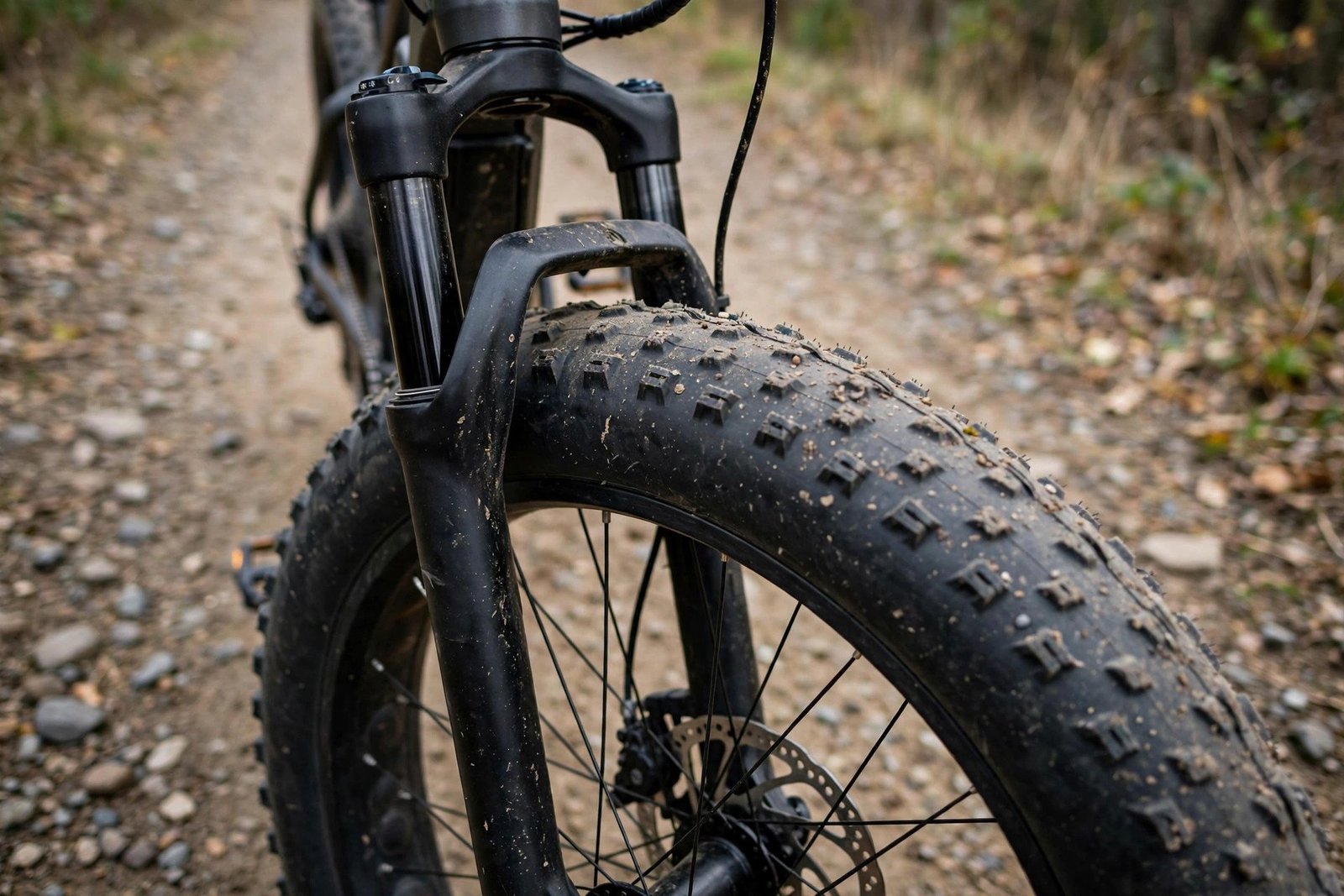
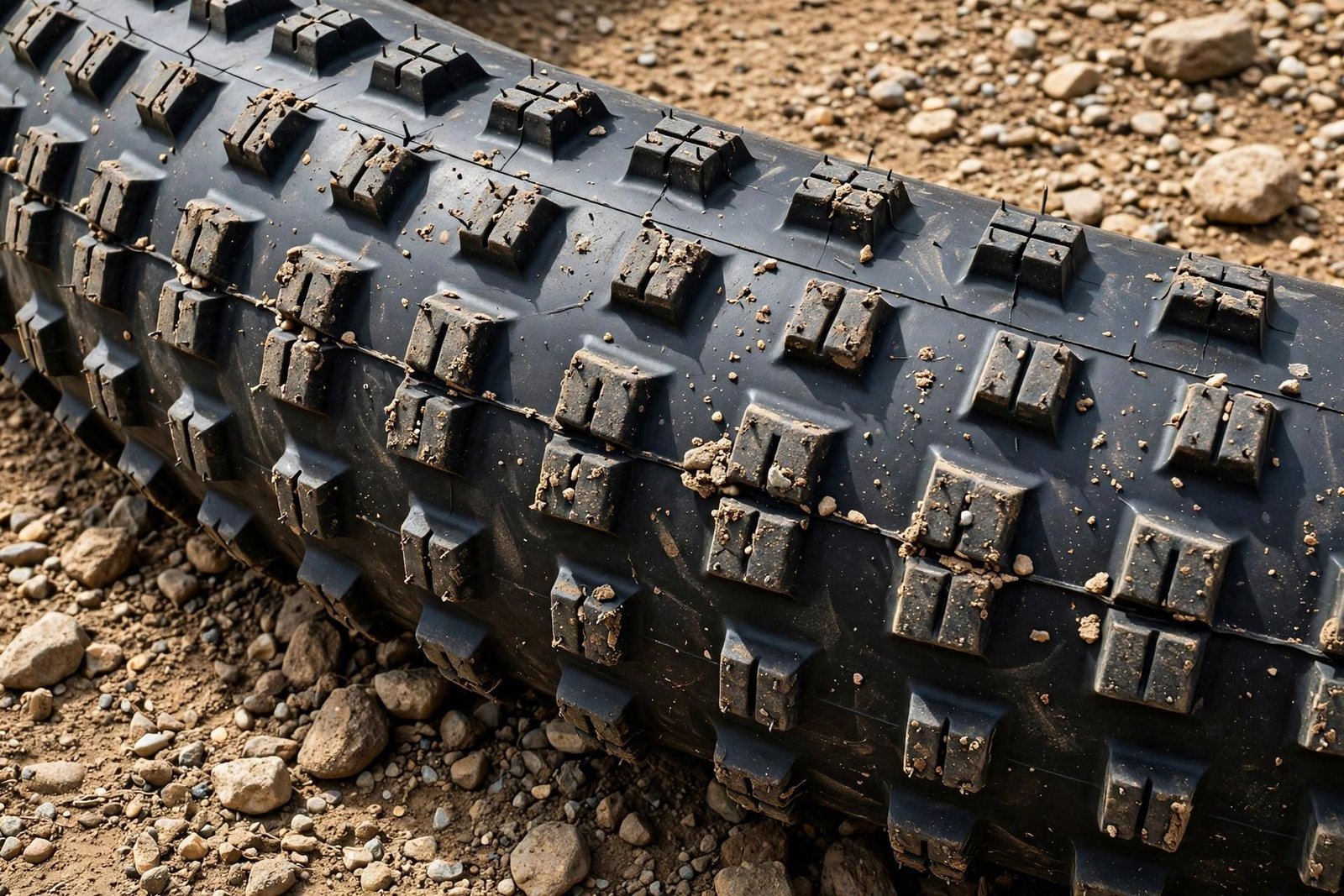
The tyre. A 4.0-inch tyre floats on loose dirt where a narrow tyre digs in. A narrow tyre on loose dirt is a shovel, not a wheel. Five of the seven bikes here run 4.0-inch tyres, and two picks are not fat-tire bikes at all, whatever their listings say.
The torque. Torque is the push that turns the wheel against the ground, and on a trail the ground pushes back. Wattage is the size of the motor; torque is the strength of the push. For steep trail sections, 80 to 110 Nm is the range that climbs — the Aipas at 110 Nm, the Mars at 95 Nm, the TST at 90 Nm.
A budget trail bike is not a dirt bike
The guides for this price split into two kinds, and only one is about bicycles. The others are dirt-bike guides — Razor MX650, MotoTec, Sur-Ron-style mini e-motos, 40 mph pit bikes. Those are motorcycles, not e-bikes, and they do not belong on a bike trail.
A $1,000 e-MTB is a bicycle with a motor, not a motorcycle. It has pedals and an e-bike class, and it rides trails legally where a dirt bike does not. A dirt bike is a motorcycle. An e-MTB is a bicycle.
The picks — seven bikes, cheapest first
Seven bikes from our own catalogue, cheapest first. Prices change — check the latest price on the listing.
| Bike | Price | Tyres | Suspension |
|---|---|---|---|
| Funhang Electric Bike | Check latest price | 26″ city tyres | Front fork |
| Hoverfly OUREA 26″ Electric Bike | Check latest price | 26 x 2.0″ | Front fork |
| TST Electric Bike | Check latest price | 20 x 4.0″ | Full (front + rear) |
| isinwheel M10 Plus | Check latest price | 26 x 4.0″ | Full (front + rear) |
| Aipas M1 Pro Electric Bike | Check latest price | 26 x 4.0″ | Dual |
| Heybike Mars 3.0 | No price quoted | 20 x 4.0″ | Full (front + rear) |
| AMYET EB26 26″ Electric Bike | Check latest price | 26 x 4.0″ | Front fork + rear shock |
The lead pick — Funhang Electric Bike
The Funhang Electric Bike (Check latest price) is the lead pick because it is the cheapest bike here and the most complete kit: a 500W rated motor with 1000W peak, a 48V 374.4Wh removable battery, up to 50 miles in pedal assist (20 to 30 on throttle), 7-speed shifting, dual disc brakes, a rear rack, full fenders, a headlight, an electric horn and an LCD display. It is a 26-inch step-through at 62.83 lb with a 300 lb payload, sold as UL 2849-certified, with UL 2271 for the battery.
But the Funhang is not a fat-tire bike — its tyres are 26-inch city tyres, not 4.0-inch fat tyres — and its suspension is a front fork only, with a rigid rear. On loose dirt, mud and roots, the narrow tyres dig in and the rigid rear bounces.
Other guides show different figures for the same model. The price moves, and it varies by variant — check the listing before you buy. EB-C1 vs EB-C2 unconfirmed.
Buy the Funhang for light trails, not rough ones.
The certified pick — Hoverfly OUREA 26″ Electric Bike
The Hoverfly OUREA 26″ Electric Bike (Check latest price) is the certified pick — and the lightest here at 53.5 lb. It runs a 500W rated motor with 750W peak, a 48V 374.4Wh removable battery, up to 40 miles in pedal assist (20 on throttle), 7-speed gearing, mechanical disc brakes, and a lockable front suspension fork. It is sold as UL 2849-certified and carries a 264 lb payload.
Like the Funhang, the OUREA is not a fat-tire bike — its tyres are 26 by 2.0 inches, not 4.0 — and its suspension is a front fork only. A fat-tire title with 2.0-inch tyres is a commuter, not a trail bike. On smooth trails it is comfortable and light; on loose dirt it is the tyres that set the limit, not the motor.
Buy the OUREA for light trails and the ride there, not for mud and roots.
The full-suspension pick — TST Electric Bike
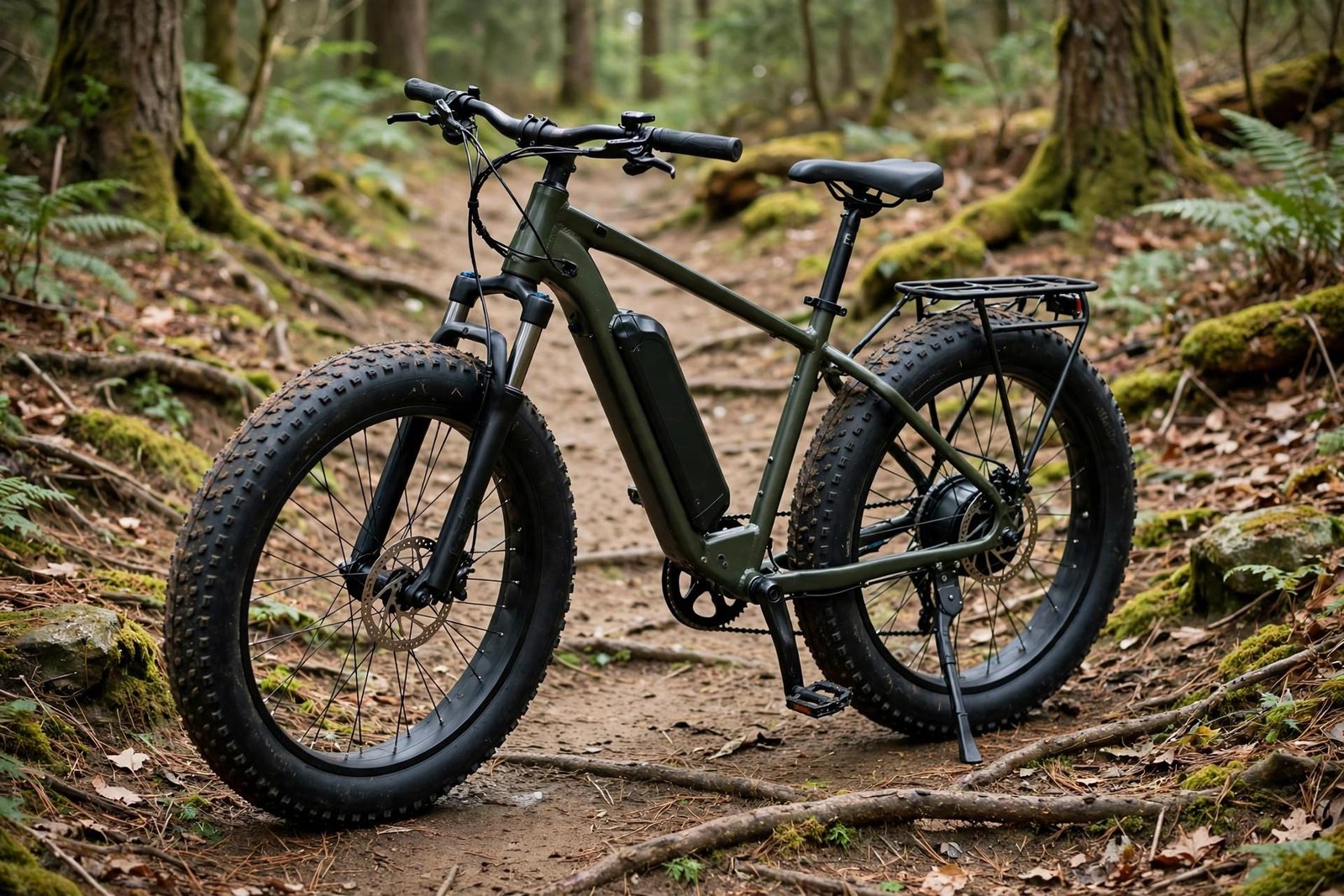
The TST Electric Bike (Check latest price) is the full-suspension pick — and the only bike here with full suspension and fat tyres for under $600. It runs 20 by 4.0-inch fat tyres, full suspension front and rear, a 750W rated motor with 2000W peak, and a 48V removable battery, claiming up to 65 miles in pedal assist, a 28 mph top speed, 90 Nm of torque, a 450 lb payload, 7-speed gearing, and app control.
Full suspension is the difference between riding a trail and surviving it. The fork takes the roots the front wheel hits; the rear shock takes the ones the back wheel hits.
The price shown is the 15Ah variant as listed (720Wh), and the listing also shows larger battery options. Check which battery the price covers before you buy — the range follows the battery, not the bike.
The TST is the pick for real dirt trails on a budget.
The balanced pick — isinwheel M10 Plus
The isinwheel M10 Plus (Check latest price) is the balanced trail bike — fat tyres, dual suspension, and a solid battery in one package. It runs 26 by 4.0-inch fat tyres, dual suspension front and rear, a 1000W peak motor as listed, and a 48V 13Ah removable battery (624Wh). It claims 75 miles, a 28 mph top speed, a 7-speed shifter, and a 330 lb payload.
The M10 Plus is the pick for the rider who wants every trail number in one bike.
The torque pick — Aipas M1 Pro Electric Bike
The Aipas M1 Pro Electric Bike (Check latest price) is the torque pick — 110 Nm, the strongest here. It runs an 1800W peak motor, 26 by 4.0-inch fat tyres, dual suspension with a lockable front fork and a rear shock, and a 48V 17.5Ah removable battery (840Wh, the biggest here), claiming 25 to 85 miles, a 36 mph top speed, and 7-speed gearing, at 88 lb.
110 Nm is the number that climbs. On a steep trail section under a heavy rider, the push decides whether the bike climbs or spins.
Two honest flags. First, the payload: the payload is 450 lb in one spec table and 500 lb in another — we do not fix it to one number. Check the listing. Second, the speed: 36 mph is faster than any e-bike class allows — a bike that fast may not be legal on trails that allow only Class 1, 2 or 3.
The M1 Pro is the pick for steep trails under a heavy rider — if your trails allow it.
The full-suspension pick — Heybike Mars 3.0
The Heybike Mars 3.0 is the second fat-tire pick — and the only one here with full suspension and a torque sensor. It runs 20 by 4.0-inch fat tyres, full suspension with a 65mm coil fork with hydraulic lockout and a Horst Link rear, a 750W sustained motor with 1400W peak, and 95 Nm of torque. Its 624Wh battery is removable, it claims up to 65 miles and a 28 mph top speed, with a 440 lb payload, at 70 lb. Its battery is UL 2271.
Full suspension plus fat tyres is the trail combination — the fork takes the front, the rear shock takes the back, and the tyres float over the loose stuff. The torque sensor measures how hard you pedal and matches the assist to it, so the power arrives smoothly instead of in a surge.
We never quote a price for the Mars 3.0. The Mars 3.0 is the pick for the rider who wants the trail bike, not the compromise.
The power pick — AMYET EB26 26″ Electric Bike
The AMYET EB26 26″ Electric Bike (Check latest price) is the power pick — and the one pick over $1,000. It runs a 1000W rated motor with 1500W peak, 26 by 4.0-inch fat tyres, a lockable front suspension fork with a dual shock absorber, and a 48V 15Ah removable battery (720Wh), claiming 38 to 65 miles, a 28 to 32 mph top speed, 7-speed gearing, and a 330 lb payload, at about 77 lb.
The listing title says 2000W peak; the manual says 1000W rated and 1500W peak — we use the manual’s figure.
Our link’s price breaks this guide’s $1,000 ceiling — but the price moves a lot on this one, and other sellers show it well under $1,000, so check the listing.
The trail rules — which trails allow e-bikes
A trail bike is only useful on a trail that allows it, and the rules are about classes, not brands. Most natural-surface trails that allow e-bikes allow Class 1 only. Class 1 is pedal assist to 20 mph, with no throttle. Class 2 adds a throttle to 20 mph. Class 3 is pedal assist to 28 mph — and Class 3 is often restricted to paved paths, not dirt trails.
That matters here, because most of the picks are faster than Class 1. The TST, the isinwheel, the AMYET and the Mars 3.0 all reach 28 mph — Class 3 speed. The Aipas reaches 36 mph, which is faster than any e-bike class allows. If your trail allows Class 1 only, a 28 mph bike is not legal on it, however quiet it is. The Funhang and the OUREA, at 20 mph, fit a Class 1 trail without an argument.
Check the trail’s rules before you ride. The trail you actually ride is the only trail that matters.
Trails eat range — plan for it
Dirt and climbs eat range. A climb draws the most current the battery will ever deliver, and soft dirt roughly doubles the effort. The box range is a flat-road number. Plan on roughly half the claimed range on a trail route — a bike that claims 65 miles will do about 30 on dirt and climbs, and one that claims 40 will do about 20.
The big battery is the trail’s second cost — the Aipas at 840Wh and the Mars and the isinwheel at 624Wh carry a buffer the Funhang and the OUREA at 374.4Wh do not.
The honest limit — a light-trail bike, not a downhill bike
A $1,000 folder is a light-trail bike, not a downhill bike. These bikes handle dirt, gravel, roots and mud — not downhill runs, jumps, or rock gardens. If your trail has drops and jumps, you need a real mountain bike, not a budget folder.
The honest limit is the trail, not the bike — ride the trail your bike was built for.
Before you buy
If your trails are rough, ride the trail before you buy the bike — or at least walk it. A trail you can walk without stopping is a light trail, and the Funhang or the OUREA will do it. A trail with roots across the path and loose dirt on the climbs is a real trail, and the TST is the minimum.
Check the tyre width on the listing, not the title — a listing can call itself a fat-tire bike and ship 2.0-inch tyres, as the OUREA does.
Check the payload on the listing before you buy, the same way you check the price. If you are near a bike’s payload limit, buy the bigger motor.
Related reading
- Best E-Bike for Hills (Under $1,000): Torque That Actually Climbs
- E-Bike Classes Explained: Class 1 vs 2 vs 3, and Where You Can Legally Ride Each One
- Best E-Bikes for Heavy Riders (300 lb+): Weight Limits That Actually Matter
- Article #55 “Best Fat-Tire E-Bikes for Sand & Beach Riding (Under $1,100)”.
The bottom line
A trail bike is a suspension question first, a tyre question second, and a motor question third. The TST is the full-suspension answer under $600; the Mars 3.0 is the full-suspension answer with the torque sensor. And the tyre width on the listing is the number to check — a fat-tire title with 2.0-inch tyres is a commuter, not a trail bike.
Previous: Best Electric Scooter for Hills (Steep Climbs, Tested): Which Ones Actually Climb
Next: How to Ride an E-Bike Safely (The Beginner’s Technique Guide)