

Best Budget Commuter E-Bikes Under $500: What $500 Actually Buys You
Some links in this article are affiliate links. If you buy through them, we may earn a commission at no extra cost to you.
You have $500 and a commute. Not a hobby budget and not a toy budget — $500, and a real ride to work every day. A $500 e-bike exists — seven times over in this guide. The question is which one is a real bike and which one is a toy with a motor, and the answer is three trade-offs.
At $500 you are buying a real commuter if the bike has a removable battery, disc brakes, and a motor that holds its speed on a hill. You are buying a toy if the battery is tiny and sealed in and nobody sells a replacement battery. Every bike in this guide passes the first test.
What $500 actually buys you
$500 is the real entry point for a commuter e-bike, not a compromise budget. Below about $200, the bikes on Amazon are mostly scooters with pedals attached as an afterthought, and the battery is too small to get you to work and back. Above $500, you start paying for bigger batteries, better brakes, and brand names. At $500, you get the whole commuter package — a motor, a removable battery, gears, lights, and a rack — built from cheaper parts than a $1,000 bike.
The seven bikes here run from the lowest to the highest price in the table below. The cheapest bikes are not worse bikes; they spent their money in one place and saved it in another. Price alone tells you nothing. If your budget stretches past $500, our guide to the best commuter e-bikes under $1,500 picks up where this one stops.
Trade-off 1: the battery is where the money went
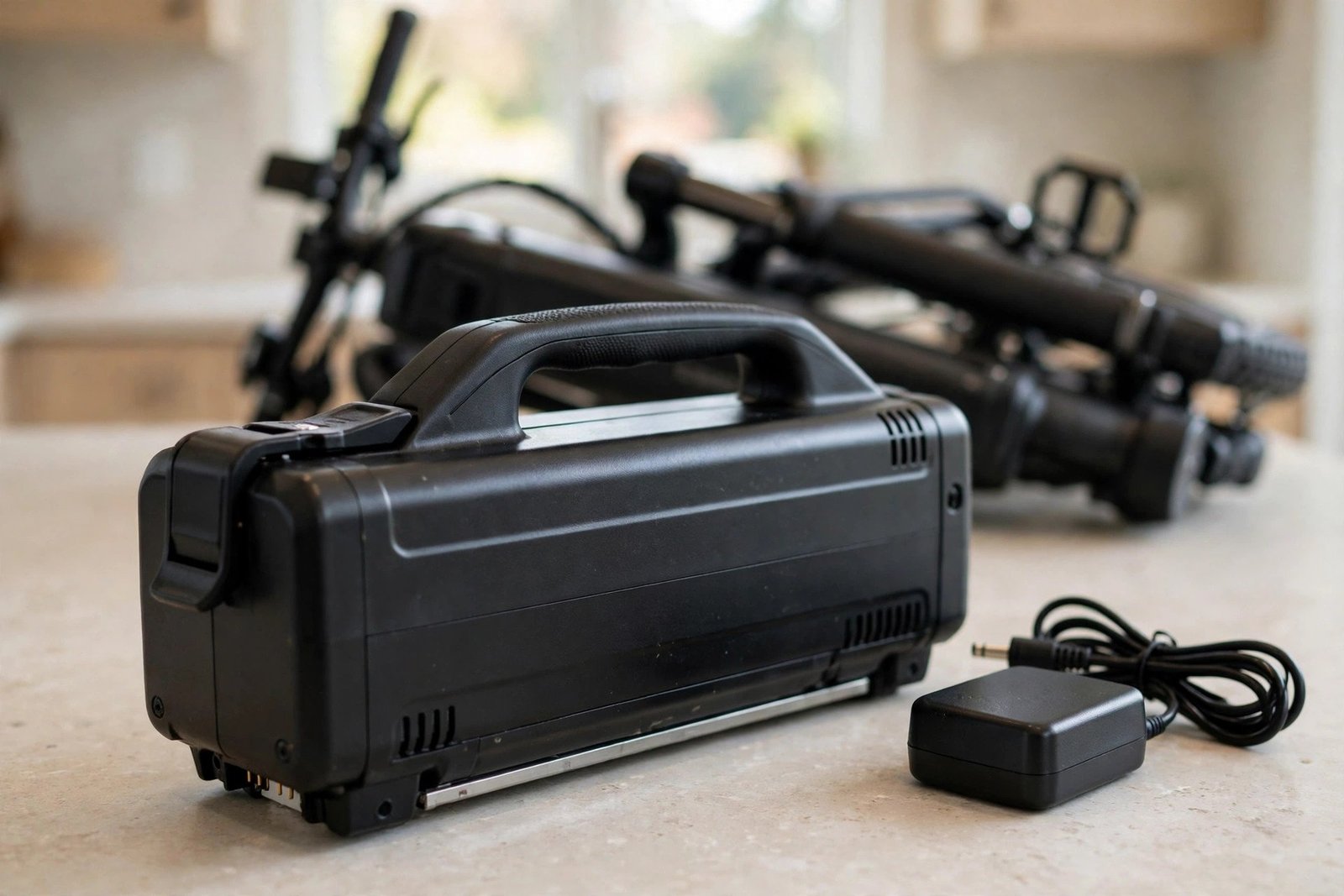
The battery is the most expensive part of any e-bike, and at $500 it is where the money went — or did not. Batteries in this price group run from about 281Wh at the small end to about 500Wh at the big end, and that gap decides whether you get to work and back. Range comes first, because range is the one thing you cannot fix later. You cannot make a small battery bigger.
The maths is simple: a 499Wh battery holds roughly twice the energy of a 281Wh battery, so it goes roughly twice as far. The ANCHEER Hummmer carries a 48V 10.4Ah (499Wh) removable battery, the biggest pack here, and its maker claims 25–55 miles per charge on pedal assist. The rule we use is that real range is 60–70% of the maker claim, and you should keep 20% in reserve so you are never pushing a dead bike home. On that rule, the Hummmer’s 25–55 miles becomes roughly 15–35 real miles. A small battery is lighter and cheaper, but it means charging every night. Buy the battery first and the bike second.
Trade-off 2: the brakes and parts are basic, not broken
Budget e-bikes use basic brakes, basic gears, and basic suspension — and basic is fine, as long as it is not broken. A basic mechanical disc brake stops you in the rain; a broken one does not, and no bike here has broken brakes. What they have is cheaper versions of the same parts on a $1,000 bike: mechanical discs, a twist shifter, a spring fork. They work. They just need more attention — a brake adjustment, a chain that wants oil, bolts that want checking.
A $500 bike asks you to be its mechanic, a little. Not a lot — a set of Allen keys and ten minutes a month covers most of it. If you want a bike you never touch, this is not the price group for it. The Jasion EB5 is the clearest example: its 1000W peak motor pulls hard up a hill, but it is still a budget bike underneath. Power does not fix parts. Cheap suspension forks are mostly for show — spend your attention on the brakes and the battery.
Trade-off 3: the replacement battery question
Batteries wear out. A lithium battery lasts roughly 500 to 800 full charges before it holds noticeably less charge — about two to three years for a daily commuter. After that, the range shrinks. The question to ask before you buy is simple: can you buy a replacement battery for this bike, and how much does it cost?
This is where the cheap bikes split into two groups. The bikes from brands with a real parts catalogue — ANCHEER, Jasion, and the bigger sellers — have replacement batteries you can order. The no-name bikes do not, and when their battery dies, the bike becomes scrap. The cheapest bike with no replacement battery costs more in the end than a slightly dearer bike with one. So before you buy, check the listing for a replacement battery. If nothing comes up, ask yourself whether a two-to-three-year bike is fine for you. Either answer is right, as long as you chose it on purpose.
The apartment test: folds, fits, and stairs
A commuter e-bike for a flat has to pass a test a garage bike never takes. It has to fold, or fit, and it has to get up the stairs. Fail any of the three and it lives chained outside in the rain.
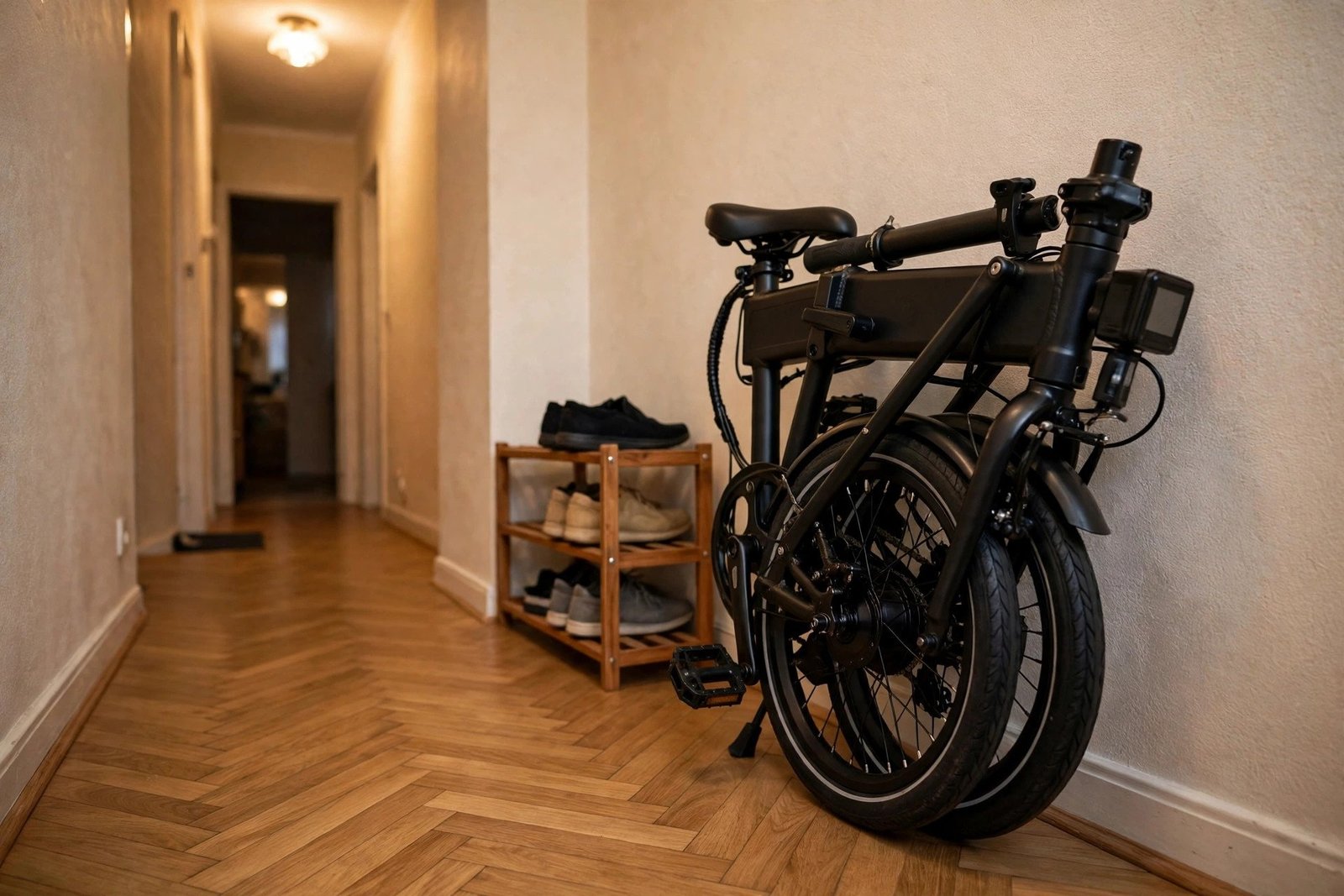
First, does it fold? Two bikes in this guide fold: the AYOLNY Foldable 14″ and the ANCHEER Foldable. A folder goes under a desk or into a hallway cupboard. The other five do not fold, and that is not a flaw. A full-size bike rides better and carries more, but it needs a place to live, usually the hallway or the balcony. If you have a hallway, a full-size bike is fine. If you have a cupboard, buy a folder. For the lightest folders, see our guide to the lightest folding e-bikes you can actually afford.
Second, does it fit? A full-size e-bike is about six feet long — measure your door and hallway before you buy. The Funhang is a full-size bike, and it is not a small one — it weighs roughly 56 to 63 lb, and it is built for riders 5’3″ and taller, so shorter riders should look at the folders instead. If height is the problem, not space, read our guide to the best e-bikes for short riders.
Third, can you carry it up the stairs? This is the test that decides more purchases than any other, and it is the one people skip. A 60 lb bike is not a 60 lb suitcase. It is long, awkward, and it has a wheel that wants to spin. If your flat is up two flights and there is no lift, a folder you can carry in one hand is worth more than a full-size bike with a bigger battery. The ANCHEER Foldable and the AYOLNY Foldable 14″ pass the stairs test honestly. If you have a lift or a ground-floor spot, the test does not apply — buy on battery and comfort instead.
The seven bikes
Here are the seven, cheapest first by what they are for, not by price. Every price is Approx — Amazon prices move, so check the latest price on the listing before you buy.
| Bike | Approx price | Best for |
|---|---|---|
| Funhang Electric Bike | Check latest price | Cheapest commuter |
| ANCHEER Hummmer 27.5″ | Check latest price | Biggest battery |
| AYOLNY Foldable 14″ | Check latest price | Smallest folder |
| ANCHEER Foldable | Check latest price | Folding commuter |
| AYOLNY Electric Bike 26″ | Check latest price | Full-size commuter |
| Hoverfly OUREA 26″ | Check latest price | All-rounder |
| Jasion EB5 | Check latest price | Strongest motor |
Funhang Electric Bike — Check latest price
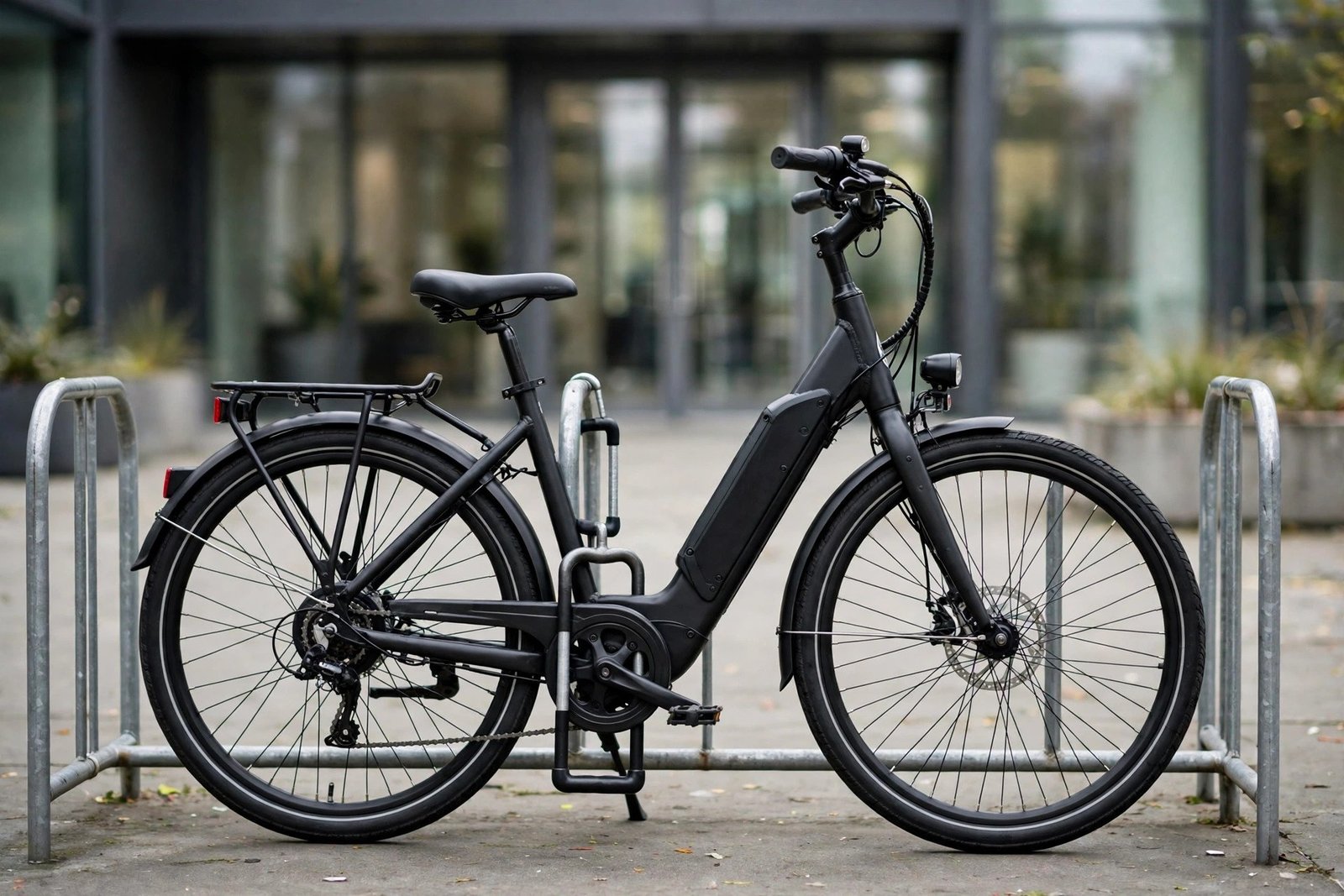
The cheapest full-size commuter in this guide, and the lead pick. It weighs roughly 56 to 63 lb, and it is built for riders 5’3″ and taller — shorter riders should look at the folders below. Two honest notes. The listing does not pin down the exact step-through model — EB-C1 versus EB-C2 is unconfirmed — so check the frame in the listing photos. It is sold as UL 2849-certified, the maker’s claim.
ANCHEER Hummmer 27.5″ — Check latest price
The biggest battery for the money. Its 48V 10.4Ah (499Wh) removable battery is the largest pack here, its 500W motor (750W peak) is strong, and it charges in about 3 hours — the listing headline says 3-hour fast charge, the manual says 3–4 hours. The maker claims 25–55 miles per charge on pedal assist; on the 60–70% rule, that is roughly 15–35 real miles. It is a mountain-style bike, not a folder, with 27.5″ wheels and 21 speeds — buy it for the battery and the range, not for carrying it upstairs.
AYOLNY Foldable 14″ — Check latest price
The smallest folder here, and the one for the tightest flat. Its 14″ wheels fold the whole bike down to something that fits in a hallway cupboard or under a desk, and it is the easiest bike here to carry up stairs. A small folder carries a small battery, so this is a bike for a short, flat commute, not a ten-mile each-way ride. Five miles and a small flat: this is the honest pick.
ANCHEER Foldable — Check latest price
The folding commuter for riders who want a folder without giving up a real motor. Its 350W motor is modest on paper, but on a folding frame it is enough for flat city streets, and it folds down for the hallway, the train, or the office corner. It folds and commutes without asking you to pay for power you will not use.
AYOLNY Electric Bike 26″ — Check latest price
The full-size 26″ commuter for riders who do not need to fold. Its 26″ wheels roll better than a folder’s small wheels, it rides like a normal bike, and it does not fold — so it needs a hallway, a balcony, or a ground-floor spot. If you have the space, the bigger wheels are worth it.
Hoverfly OUREA 26″ — Check latest price
The full-size 26″ all-rounder. It sits in the middle of this guide on price and on everything else — full-size frame, 26″ wheels, and a comfortable riding position for a daily commute. It is the pick for the rider who wants a normal bike with a motor and somewhere to keep it.
Jasion EB5 — Check latest price
The strongest motor in this guide, and the pick for the hilliest route. Its 1000W peak motor pulls hard where the cheaper bikes ask you to pedal, and it does not fold — this is a full-size bike for a rider with a hill on the way to work and somewhere to park it. One honest number: on throttle alone, its range is about 14–16 miles by our maths, so budget the battery for it if you plan to ride on throttle all the way.
What the commute really costs
The bike is not the whole cost. The commute is. A $500 e-bike that replaces a bus pass or car trip pays for itself fast. The running cost is small: a full charge of a 500Wh battery is about half a kilowatt-hour — roughly a dime at the calculator’s default electricity price. The real costs are the ones you forget — a lock, a helmet, a pump, and a new tyre once a year. Put the numbers into our free Cost-to-Own Calculator and compare the bike against your bus fare or fuel bill. For most commuters, the bike wins in months, not years.
The range reality check
Before you buy, check the range honestly. Maker range claims are measured on flat ground, with a light rider, on pedal assist, in warm weather. Your commute is none of those things. The rule: take the maker claim, take 60–70% of it, and keep 20% in reserve. A bike that claims 40 miles gives you roughly 24–28 real miles, and you should plan your route on 20. Run your own numbers through our free Battery Range Calculator — put in the battery size and your weight, and it will tell you what the bike will really do. Buy the bike whose honest range covers your commute twice over. That is the margin that keeps you from pushing a dead bike home.
Mistakes to avoid, and where to read next
The most common mistake at $500 is buying on the motor number alone. A big motor with a small battery is a fast bike that does not go far, and a cheap bike with no replacement battery is a bike with a two-year life. The second mistake is skipping the apartment test — measure the door, hallway, and stairs before you buy. The third is forgetting the lock. A $500 bike is worth stealing, and a cheap cable lock will not stop anyone. Read our guide to the 7 mistakes to avoid when buying your first e-bike before you spend anything.
The short answer is this. Buy the Funhang for the cheapest full-size commuter. Buy the ANCHEER Hummmer for the biggest battery. Buy the AYOLNY Foldable 14″ for a small flat and a short commute. Buy the ANCHEER Foldable for a folder with a real motor. Buy the Jasion EB5 for a hilly route. Any of the seven is a real bike. The right one fits your flat, your stairs, and your route.
And when the bike arrives, lock it properly — our guide to how to lock an electric scooter covers the same locks and thieves, and the advice holds for bikes too.
Previous: How to Lock an Electric Scooter (So It Stays Yours): Locks That Actually Work
Next: Best Portable Tire Inflators for E-Bikes & Scooters (Small, Fast, and Worth Carrying)
