

Some links in this article are affiliate links. If you buy through them, we may earn a commission at no extra cost to you.
An e-bike and an electric scooter will both get you across a city without a car, and both fold or park in a small space. They feel very different to use, though, and the right choice depends on your distance, your roads, your storage and how much you want to pedal. This guide compares them honestly, without declaring a winner for everyone.
We look at comfort, range, safety, cost, storage and the law, so you can decide which suits your life.
Comfort and the ride itself
Comfort is the biggest difference. On an e-bike you sit on a saddle, hold handlebars, and pedal with assistance. Your weight is supported, your posture is natural, and larger wheels smooth out bumps.
On an electric scooter you stand on a narrow deck, with your feet close together. It can be tiring over longer distances, and small wheels mean you feel every bump in the road.
Range, speed and carrying things
E-bikes generally have larger batteries and longer ranges than scooters — often 40 to 70 kilometres (25 to 45 miles) on a charge, against 15 to 40 kilometres (10 to 25 miles) for most scooters. Carrying capacity differs, too: an e-bike can take panniers, a child seat or a trailer, while a scooter offers a small deck and little storage.
Speed is similar in practice: both are usually limited to around 15 to 20 miles per hour in the United States, though some e-bikes can assist up to 28 miles per hour.

Storage and portability
This is where scooters fight back. A folding electric scooter is light — often 12 to 16 kilograms — and folds to a compact shape you can carry onto a train or into an office. It takes up little space at home and is easy to store.
An e-bike, even a folding one, is bigger and heavier, and it needs more storage space. It does, however, fold to a long, thin shape that fits under a desk or in a hallway, and many models have a handle or wheels for carrying.

Safety and the law
Safety is a serious consideration. E-bike riders are more visible, sit higher, and have larger wheels, which helps them see and be seen. Scooters have small wheels that can catch on potholes or kerbs, and standing gives you less control in an emergency.
The law also differs. In the United States, e-bikes are regulated in most states under a three-class system; scooters are often treated like bicycles, but rules vary by city, and some places ban scooters from pavements or cycle paths. Always check your local rules before you ride.
Cost and running costs
Scooters are usually cheaper to buy — a capable commuter scooter often costs Check latest price, while a capable commuter e-bike costs Check latest price. Running costs are low for both: electricity is cheap, and maintenance is mainly tyres, brakes and the occasional battery replacement. E-bikes have more parts to maintain — a chain, gears and a larger battery — but they also last longer and hold their value better. A scooter’s small wheels and tyres wear faster, and its battery is smaller, so it may need replacing sooner.
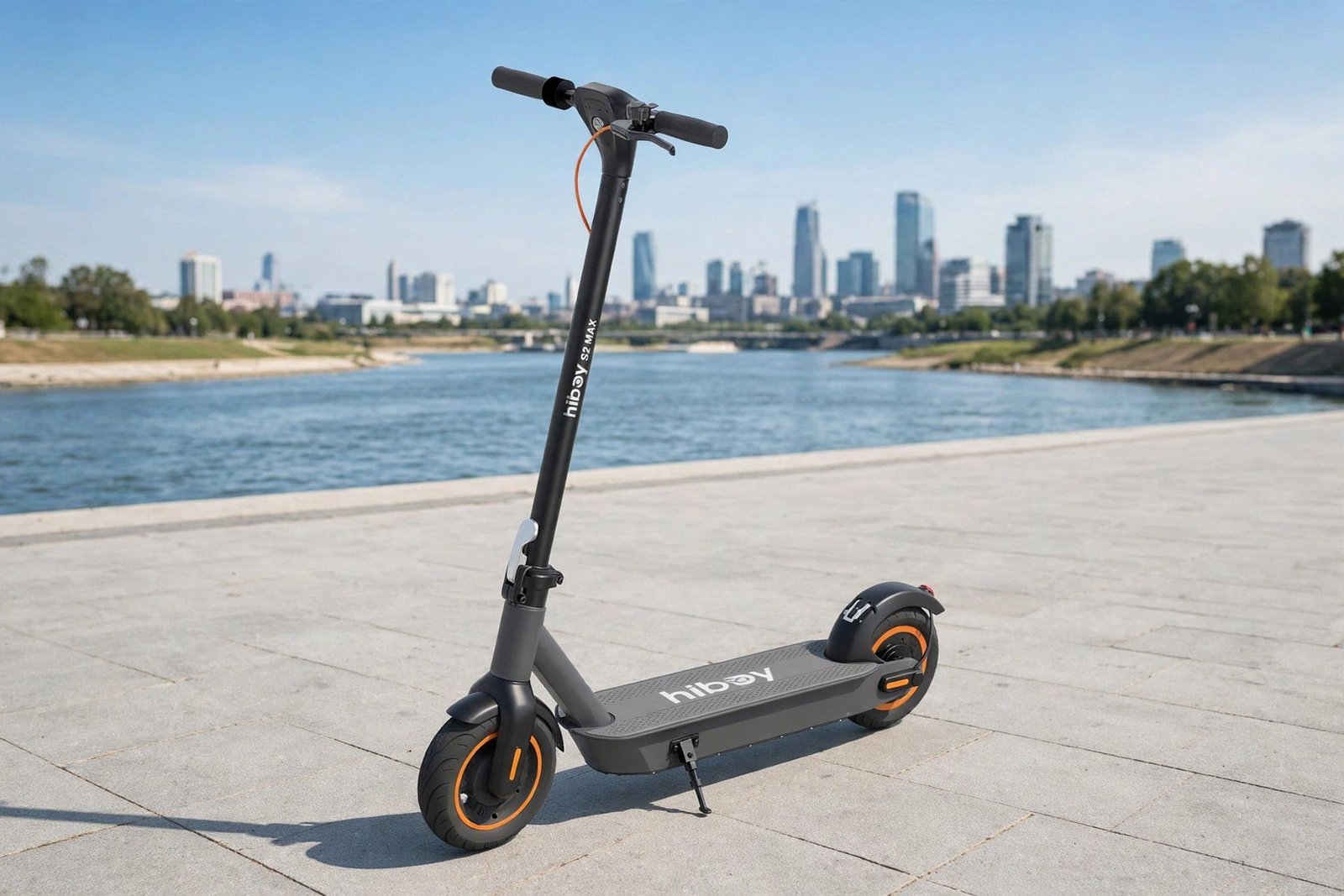
You may also like: Segway Ninebot MAX G2 — the scooter side of this decision · Jasion EB5 — the e-bike side.
Which should you choose?
- Choose an e-bike if your commute is more than five kilometres, if you ride on rough roads or hills, or if you need to carry things.
- Choose an electric scooter if your trip is short and flat, if you combine it with a train or bus, or if you have very little storage space.
- Consider both if you have different needs on different days — some riders use a scooter for short trips and an e-bike for longer ones.
For most commuters, and for most apartment dwellers who want one vehicle that does everything, the e-bike wins.
Frequently asked questions
Which is better for commuting — an e-bike or electric scooter?
E-bikes win for range, hills and cargo; scooters win for portability and price — the right answer depends on your commute.
How far is too far for an electric scooter?
Over about 5 miles each way, an e-bike is usually the better tool; under that, a scooter is often the cheaper and easier option.
Which is cheaper — an e-bike or a scooter?
Scooters start lower (Check latest price for a usable commuter) while a solid e-bike starts around Check latest price.
Which is safer?
Neither is categorically safer — scooters see more falls, e-bikes see more collisions with motor vehicles.
Can I take both on public transit?
A folding scooter is easier to carry on than a folding e-bike, but rules vary by system — check your local operator before you travel.
Browse by category: Folding E-Bikes · Commuter E-Bikes · Electric Scooters · E-Bike Accessories
As an Amazon Associate, BoltWander earns from qualifying purchases.
Keep reading
Related articles:
- Lectric vs Aventon — Commuter E-Bike Comparison — two commuter favourites compared
- Best Commuter E-Bikes Under $1,500 — solid picks at every level
- How Far Can an E-Bike or Scooter Go on One Charge? Real-World Range vs the Box Claim — range is the number that decides it
Previous: Best E-Bike Accessories for Commuters
