

Some links in this article are affiliate links. If you buy through them, we may earn a commission at no extra cost to you.
Our Top Picks
The best folding e-bikes for apartment living — tap Check latest price to see the live price on Amazon.


If you live in a flat or a small apartment, a folding e-bike can change the way you get around. It rides like a proper e-bike, then folds down small enough to slide under a desk, stand in a hallway cupboard or tuck beside a sofa. You do not need a garage, a bike room or a ground-floor flat. You do need to choose carefully, though, because not every folding e-bike is easy to live with in a small home.
In this guide we look at what really matters for apartment living — folded size, weight, how it carries, battery range and everyday comfort — and at the types of folding e-bike that suit different riders and budgets. Some links in this guide are affiliate links — if you buy through them, we may earn a commission at no extra cost to you, and no bike is right for everyone, so we focus on trade-offs rather than hype.
What makes a folding e-bike good for apartment living?
The first thing to check is the folded size, not the unfolded size. Two bikes can look similar on the road and fold to very different shapes. A compact folder with 20-inch wheels will usually fold to roughly the size of a large suitcase, while a fat-tyre folder with the same wheel size can be much bulkier because of its wide tyres and frame. Before you buy, measure the space where the bike will live — under a bed, in a cupboard, behind a door — and compare it with the manufacturer’s folded dimensions. Add a few centimetres for handlebars and pedals that stick out.
Weight is the second test, and it is the one most people underestimate. A folding e-bike typically weighs between 20 and 30 kilograms, and many sit at the heavier end of that range once you add a rack, mudguards and a lock. That is fine if you can roll it into a lift, but it is a serious lift if you have to carry it up two flights of stairs. If stairs are part of your daily routine, look for a bike under 22 kilograms, with a clear carrying handle and a frame that stays locked together when folded. A bike that flops open halfway up the stairs is not a bargain at any price.
The third test is the fold itself. A good folding mechanism should be quick, secure and easy to learn — ideally under 30 seconds once you know it. Hinges should lock firmly, with no wobble when you ride. Try the fold in a shop if you can, or watch a real owner fold the bike rather than a polished advertisement. If the fold needs three hands and a lot of force, you will dread using it every day.
The best options, by type of rider
Best for most apartment dwellers: a light 20-inch folder
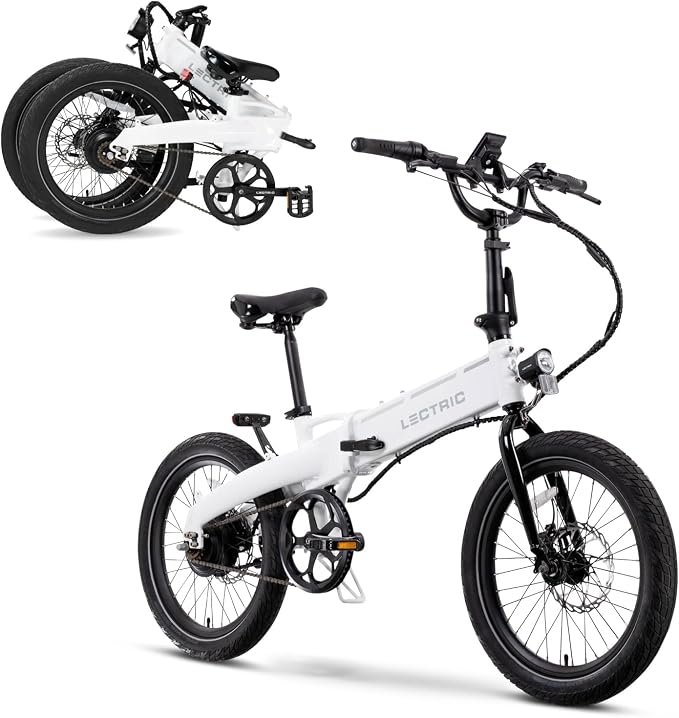
For most people in a one- or two-bedroom flat, a light folder with 20-inch wheels is the sweet spot. It folds small, it is stable enough for city streets, and it usually has enough range — often 40 to 65 kilometres on a charge — for a daily commute and errands. Look for a 250-watt or 500-watt motor (depending on your local class rules), a battery you can remove for charging indoors, and a comfortable, upright riding position. Bikes in this group, such as the Lectric XP Lite 2.0 (Check price on Amazon), are popular precisely because they keep the weight down and the price reasonable, while still feeling like a real bike rather than a toy.
Best for longer commutes: a folding commuter with gears and a rack
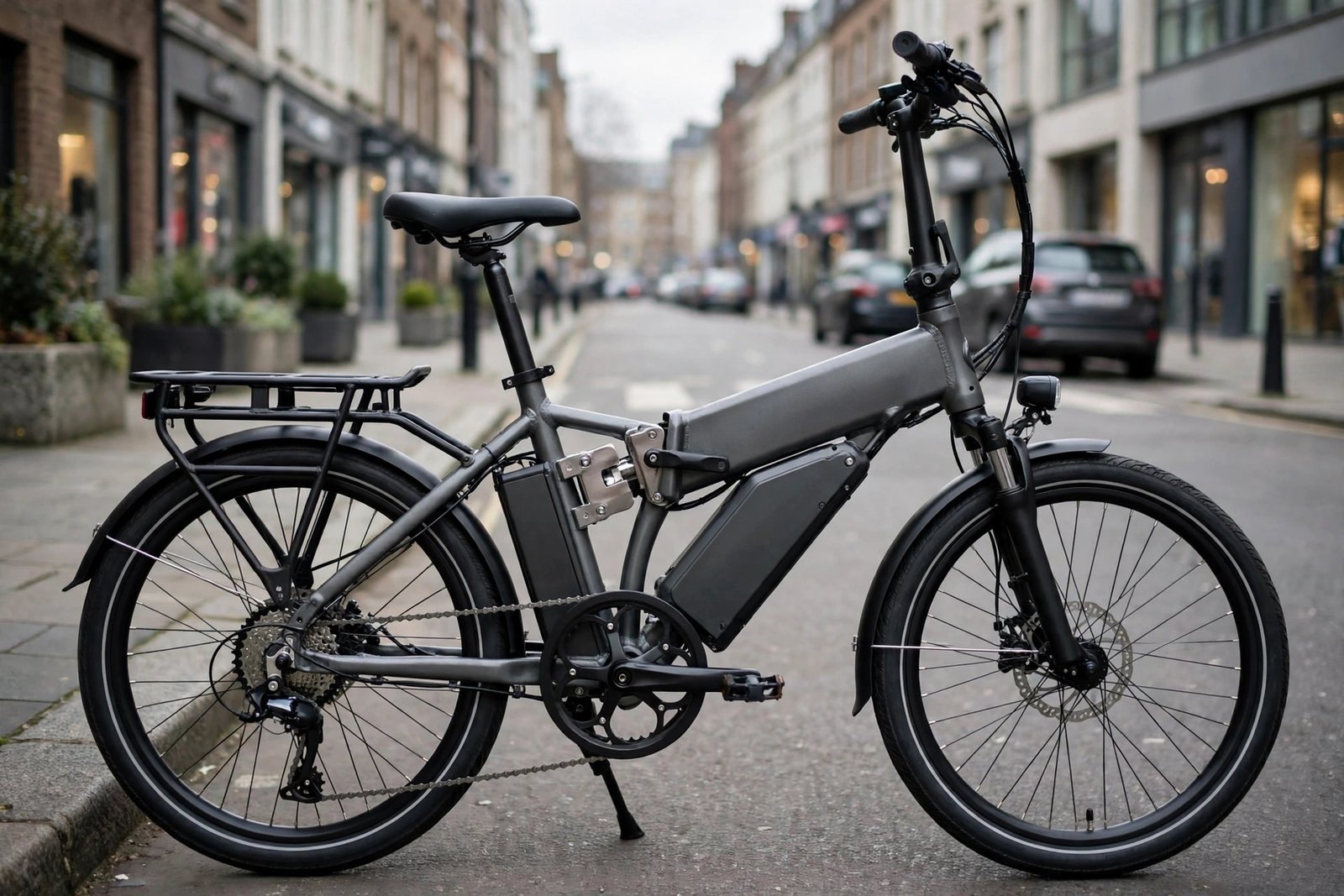
If your commute is 10 to 20 kilometres each way, you will want more than a basic folder. A folding commuter adds gears — usually seven or eight — a rear rack, mudguards, lights and a larger battery, often 500 watt-hours or more. It is heavier and folds a little larger, but it is far more comfortable at speed and in bad weather. A folding commuter of this type is a capable all-rounder, but it is noticeably heavier than a lightweight folder, so it suits a ground-floor flat, a lift building or a rider who is happy to roll rather than carry it.
Best for mixed travel: a compact folder for trains and buses
If you combine cycling with a train or bus, folded size and weight matter even more than range. A compact 16-inch or lightweight 20-inch folder, with a small battery and a tidy folded shape, is easier to carry onto public transport and to store under a seat. You will give up some speed and comfort, and the smaller wheels feel bumpier on rough roads, but for a short ride to and from the station that trade-off is usually worth it. Check your local transit rules first, as some operators limit folded size or battery size.
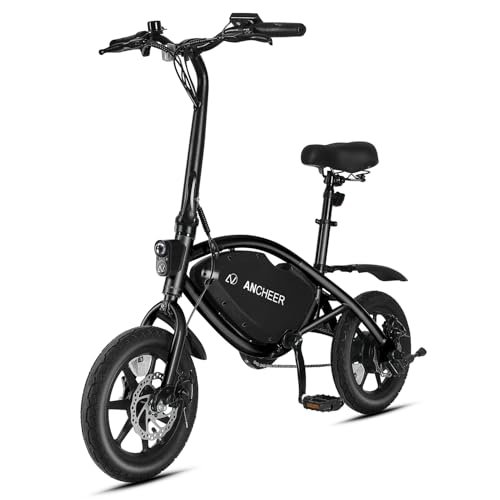
You may also like: Lectric XP Lite 2.0 — the lightest folder in our guides, and ANCHEER Foldable — a budget folder for small flats.
Best for comfort and rough roads: a fat-tyre folder
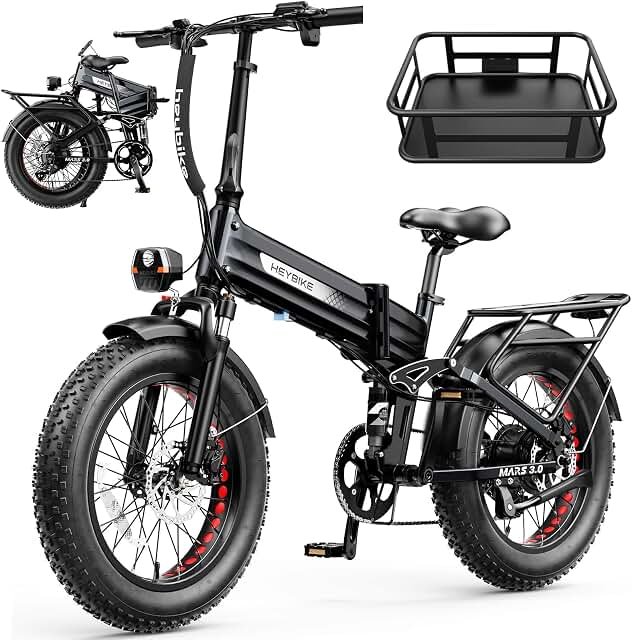
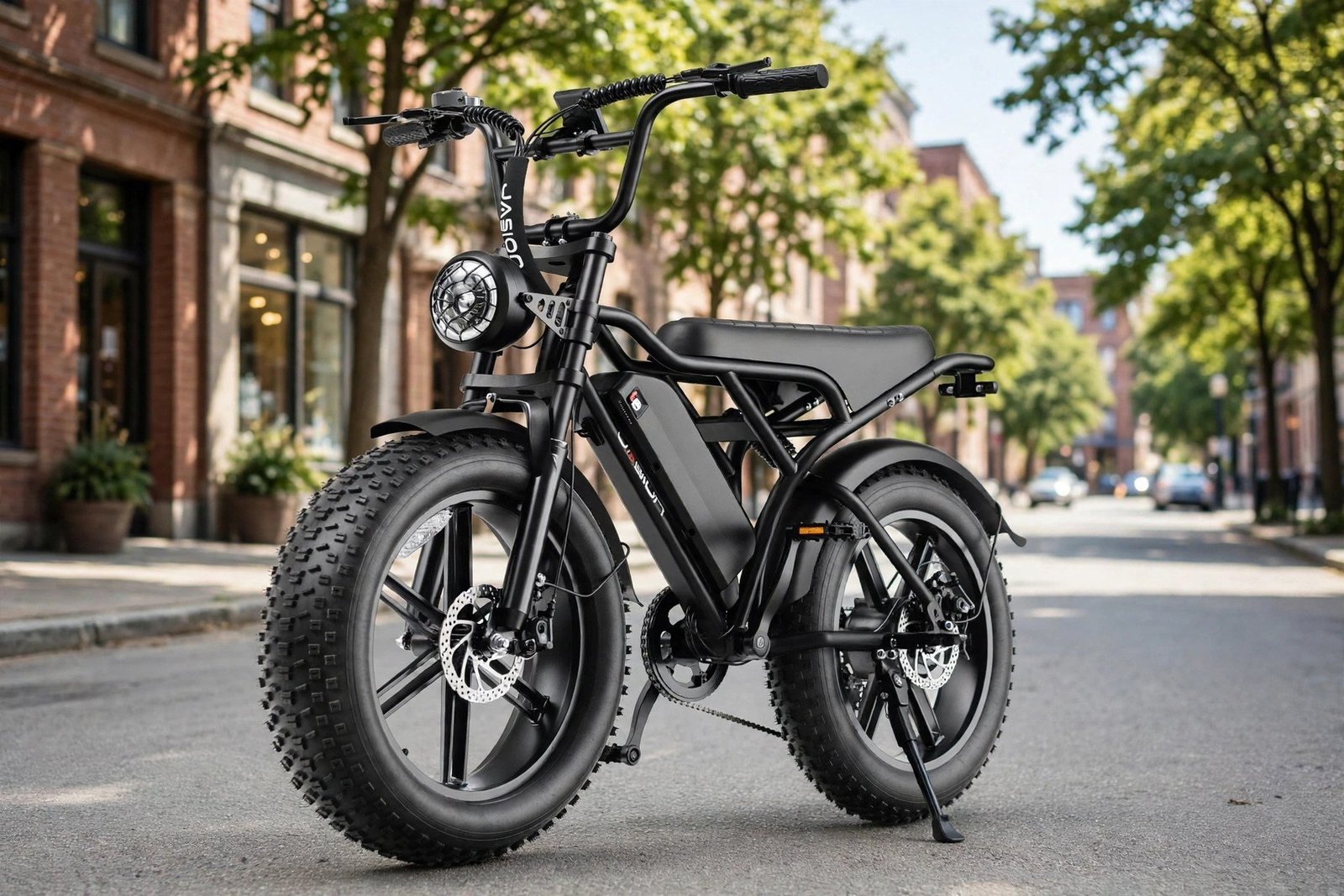
Fat-tyre folders, with tyres around four inches wide, are comfortable on potholes, gravel and kerbs, and they feel stable and planted. The cost is size and weight: they are often the heaviest folders on the market, and they take up more floor space when folded. They suit riders with a garage-style storage space, a large cupboard or a ground-floor flat, and riders who value comfort over carrying the bike upstairs. If you live on the third floor with no lift, a fat-tyre folder is probably the wrong choice, however comfortable it is to ride.
Five questions to ask before you buy
- Where will it live? Measure your storage space and check the folded dimensions, not just the weight.
- How will you carry it? Stairs, lifts, car boots and public transport all set a different weight limit.
- Can you remove the battery? A removable battery lets you charge indoors and makes the bike lighter to carry.
- Is the battery certified? Look for UL 2849 certification for the whole e-bike system, and charge only with the supplied charger.
- Can you get it serviced? Check whether there is a local shop, a mobile mechanic or a clear warranty and parts service in the United States.
What to avoid
Be cautious about very cheap folders from unknown brands with no safety certification, no US service network and vague specifications. A low price is not a saving if the battery is unsafe, the brakes are weak or you cannot get a replacement part. Also be wary of folders that are marketed mainly on top speed: in the United States, e-bikes are usually limited to 20 or 28 miles per hour depending on their class, and a bike that promises much more may not be legal on bike paths where you plan to ride.
Best product for apartment living
Heybike Mars 3.0 — the pick in our folding guide above: a fat-tire folder with a big battery for city and trail. Before you buy, check the folded size and weight on the live listing — especially if you carry it upstairs. Check latest price on Amazon
Frequently asked questions
Are folding e-bikes good for apartments?
Yes — a folded bike fits a closet, corner or balcony where a full-size bike cannot, which is the whole point for small flats.
How heavy is a folding e-bike to carry upstairs?
Most fat-tire folders are 60–70 lb, so check the weight before buying if you have stairs and no lift.
Can I charge my e-bike battery inside my apartment?
Yes with care — use the original charger, charge on a hard surface away from exits, and never charge overnight or unattended.
Does a removable battery help in an apartment?
Yes — the battery comes upstairs to charge while the bike stays downstairs or in a bike room.
Can I store my e-bike in my apartment hallway?
No — keep hallways, stairwells and exits clear; a battery fire there can block your escape route.
Browse by category: Folding E-Bikes · Commuter E-Bikes · Electric Scooters · E-Bike Accessories
As an Amazon Associate, BoltWander earns from qualifying purchases.
Keep reading
Related articles:
- How to Store an E-Bike in a Small Apartment — where the folded bike actually lives
- Folding E-Bike Buying Guide for Beginners — what to check before your first folder
- Small Space E-Bike Storage Ideas — more ways to fit a bike in a flat
